

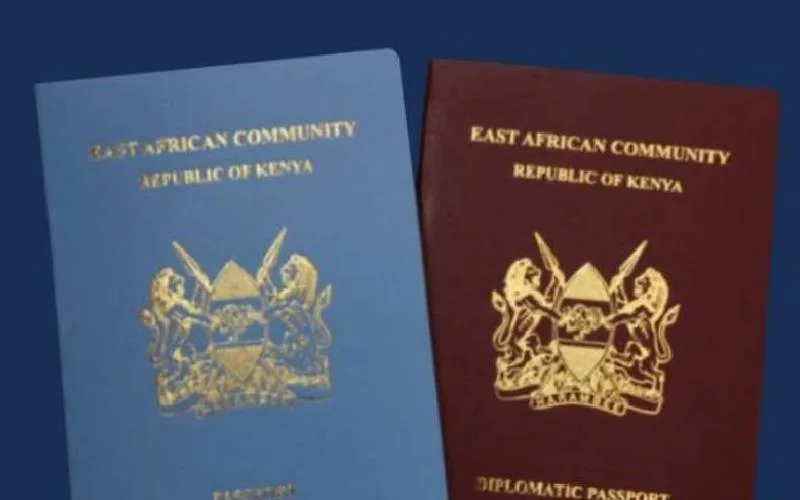
Kenya is facing one of the most serious national security threats in its recent history — and it's happening inside the government's own offices.
Foreigners from Somalia, Ethiopia, Burundi and Uganda are walking into Kenya and walking out with Kenyan identity cards and passports, all thanks to rogue officials within the Immigration Department and the National Registration Bureau.
The Standard spent weeks infiltrating these dangerous networks. What they found is a well-oiled syndicate driven by bribery and corruption, where proper vetting, scrutiny and verification are completely bypassed.
"For weeks, The Standard infiltrated the dangerous networks and uncovered how rogue officials within the Immigration Department and the National Registration Bureau facilitate this dubious syndicate."
This isn't a small operation. Nationals from four neighbouring countries are systematically acquiring Kenyan documents — documents that grant them the same rights as any Kenyan citizen. The right to vote. The right to own land. The right to travel on a Kenyan passport.
The implications are enormous. Kenya's national identity system is meant to be a secure record of who is and isn't a citizen. If foreigners can buy their way in, the entire system is compromised. And with it, national security.
Think about what this means. Someone who has never set foot in a Kenyan school, never paid taxes in Kenya, never contributed a shilling to the economy can now claim to be Kenyan. They can register to vote in elections. They can get a Kenyan passport and travel anywhere in the world. They can buy land in Kenya as a citizen.
And all it takes is money.
The rogue officials are the gatekeepers. They're the ones who process the applications, who stamp the documents, who look the other way when the paperwork doesn't add up. For a fee, they make the system work for foreigners instead of for Kenyans.
The Standard's investigation doesn't name the specific officials involved yet, but the pattern is clear: this is organised, it's ongoing, and it involves people inside the very institutions meant to protect Kenya's borders.
This isn't the first time Kenya has faced questions about the integrity of its identity system. In the lead-up to the 2017 elections, there were widespread allegations that non-citizens were registered to vote. The issue has simmered for years, but this undercover investigation brings fresh, concrete evidence.
What happens next is unclear. The government hasn't yet responded to The Standard's findings. But if this syndicate isn't dismantled quickly, Kenya could find itself with thousands of people who have no real connection to the country holding the most powerful document a nation can give: citizenship.
For ordinary Kenyans, the message is unsettling. The system that proves who you are — your ID, your passport — may no longer mean what it used to. If anyone with enough money can get one, what does being Kenyan even mean?
- Agents inside Immigration and National Registration Bureau facilitate the process.
- Nationals from Somalia, Ethiopia, Burundi, and Uganda are the main beneficiaries.
- The syndicate operates through bribery, bypassing all verification steps.
- The investigation was conducted over several weeks by The Standard.
- Acquired documents grant full citizenship rights: voting, land ownership, and passport use.