

Beatrice Mwange hasn't attended a single family gathering in over three years. The 32-year-old from Mbale in Vihiga County stopped going to church. She stopped visiting friends. Her world shrank because she couldn't conceive.
The silent pain of infertility pushed her into isolation. She watched her peers become mothers while she remained childless. The shame, she says, was heavier than any physical ailment. But doctors argue this suffering could have been avoided.
The missing step before 'I do'
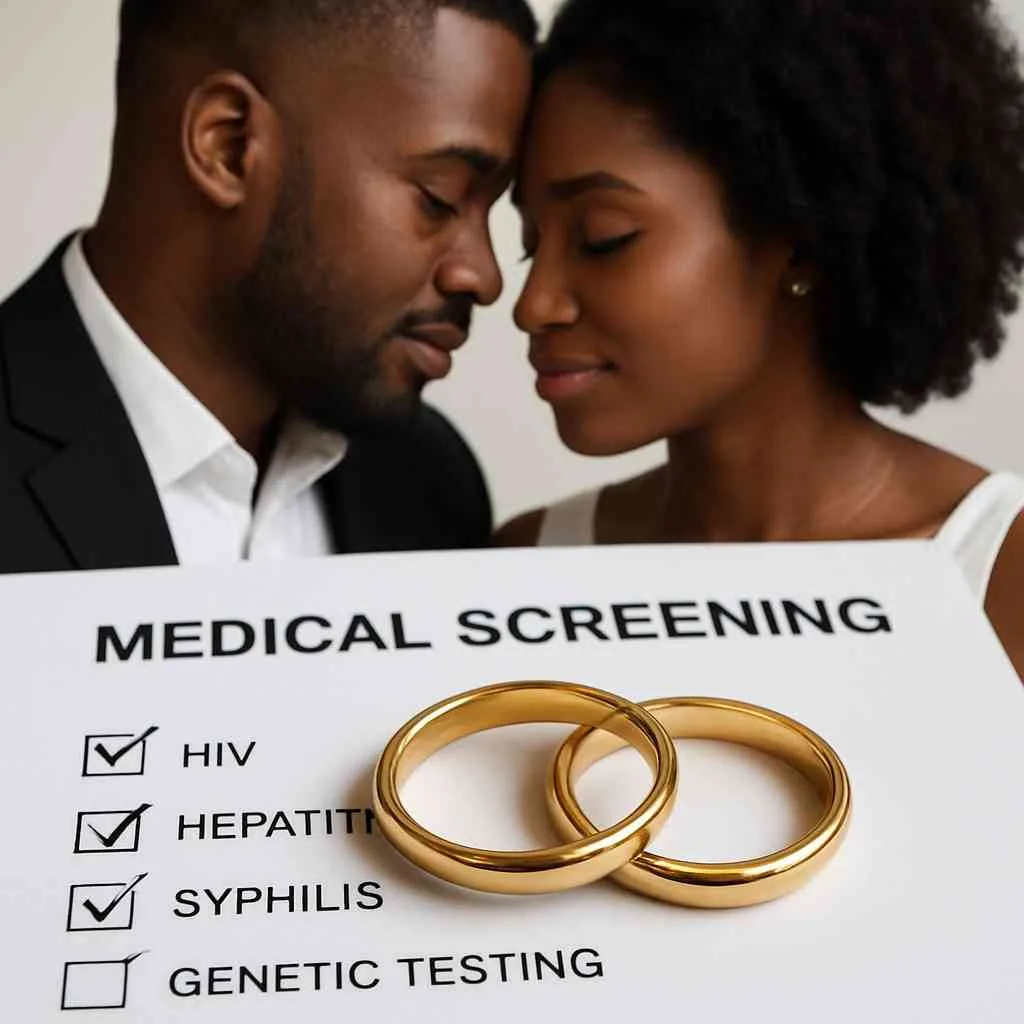
Medical experts say many Kenyan couples walk into marriage blind. They know each other's favourite food and childhood dreams — but not their reproductive health. Premarital medical screening, which costs as little as Ksh 3,000 at public hospitals, can detect issues like blocked fallopian tubes, low sperm count, or hormonal imbalances before vows are exchanged.
Dr. Mary Nyang'au, a reproductive health specialist based in Nairobi, says the test isn't about assigning blame.
For Beatrice, the discovery came too late. She and her husband waited five years before seeing a doctor. By then, the emotional damage was done. She'd already lost her social circle and her confidence.
The cost of silence
Infertility affects roughly one in four couples in Kenya, according to the Kenya Medical Research Institute. Yet it remains a taboo subject, especially in rural areas like Vihiga. Women are often blamed regardless of the cause. Men rarely agree to be tested.
Beatrice's husband eventually got tested. The results showed he had a low sperm count. But by that point, Beatrice had already endured years of whispers and judgment from her community.
What screening involves
A standard premarital screening includes blood tests for HIV, syphilis, and hepatitis B, plus a urine test and a general health check. For reproductive health, doctors recommend a pelvic ultrasound for women and a semen analysis for men. The entire process takes less than a day.
Dr. Nyang'au insists the tests should be normalised.
Some churches in Kenya already require medical certificates before conducting weddings. The Catholic Church and several Protestant denominations have guidelines encouraging couples to undergo screening. But enforcement is patchy, and many couples skip it entirely.
Beatrice's new chapter
Today, Beatrice is undergoing treatment for a hormonal imbalance that was discovered during her belated check-up. She and her husband are also considering IVF, which costs between Ksh 150,000 and Ksh 400,000 in Kenya. The price tag is steep for a family that relies on subsistence farming.
But she's started attending church again. She's reached out to two old friends. The isolation, she says, was the hardest part.
Key Facts
- Infertility affects about 25% of couples in Kenya
- Basic premarital screening costs Ksh 3,000 at public hospitals
- IVF in Kenya ranges from Ksh 150,000 to Ksh 400,000
- Many churches require medical certificates but enforcement is inconsistent
- Women are disproportionately blamed for infertility in rural communities