

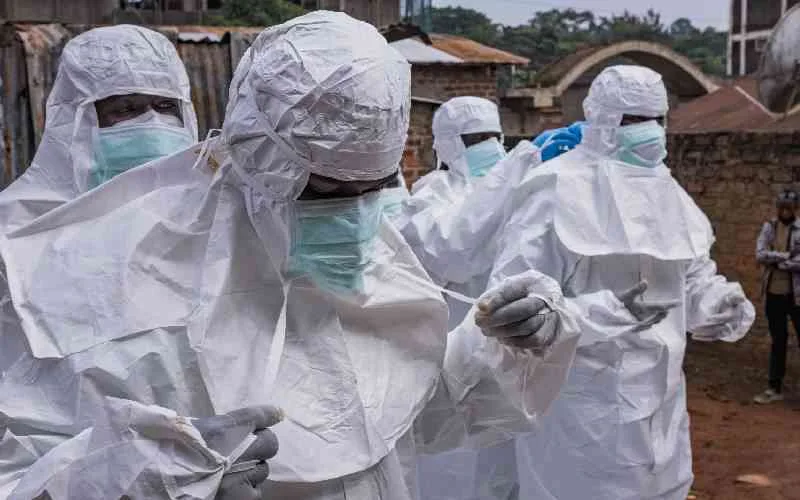
The Kenya Kwanza government has been ordered by the High Court in Nairobi to disclose a Sh1.7 billion deal with the US for an Ebola quarantine facility. The facility is reportedly being built at the Laikipia Military base in Nanyuki.
The High Court made the orders on June 2, 2026, after being sued by Katiba, the Law Society of Kenya, and Fred Isaboke. The Attorney General, Dorcas Oduor, failed to appear in court despite being served with court papers.
Katiba's lawyer, Malidzo Nyawa, stated that it was unfortunate the government had opted to stay silent despite claims it was constructing the controversial quarantine facility. The lobby group argued the arrangement between the President William Ruto-led administration and that of Trump had not been subjected to institutional accountability, public participation, parliamentary oversight, or full disclosure of its health, environmental, and security implications.
The Katiba Institute argued it was ironic for the Ministry of Health officials to accept a disease that would kill and cause problems to the public, owing to the government's willingness to sacrifice Kenyans' lives for a secret deal. They stated that despite the World Health Organisation (WHO) warning that the disease emanating from Congo is a moving killer with no approved cure and with limited treatment options, the Kenya Kwanza government opted to risk Kenyans' lives for a secret deal.
Justice Patricia Nyaundi extended orders to block the President William Ruto-led administration from either accepting or entertaining Americans or foreigners who are infected by the deadly virus into the country until the cases filed by the Katiba Institute, the Law Society of Kenya, and Fred Isaboke are heard and determined. The government will not be allowed to take in anyone with the disease until the court case is resolved.
Laikipia County also joined the case as an interested party, arguing Laikipia was in the dark about the deal and only learned about it from the media. The county's lawyers, Levy Munyeri and Lydia Gichuru, claimed the applicant was never consulted or prior-informed about the deal to enable some form of consultation and public health preparedness to safeguard the interests of the people of Laikipia.
Laikipia County's lawyers further claimed they had requested for prior-informed consent about the deal from the applicant but did not receive any. They stated this failure to consult Laikipia County is a major oversight, given their role in protecting the public health of the people of Laikipia.
The case has sparked controversy over secrecy and constitutional carelessness. This secrecy has led to suspicions about the true intentions of the Kenya Kwanza government in accepting the deal. Katiba stated the arrangement between the President William Ruto-led administration and that of Trump has not been subjected to institutional accountability, public participation, parliamentary oversight, or full disclosure of its health, environmental, and security implications.
Katiba's statement raises serious concerns about the government's actions and their motivations. They have questioned the need for secrecy and the impact it has on public health. The group is demanding full transparency about the deal and its implications.
““The Government of Kenya, through a secret agreement with the government of the United States of America, is about to open its borders to US citizens who have been affected by this deadly disease.””
— Health Cabinet Secretary Aden Duale