

The single sharpest fact in one or two punchy sentences. Who did what, where, when, and why it matters. Not a summary of everything — the one thing that makes someone stop scrolling. A reader who only reads this paragraph must understand what happened.
The Kenyan government has faced fresh questions about its handling of anti-Finance Bill protests after a review of court records revealed a shift in the charges brought against demonstrators. The shift raises concerns about the balance between public order and constitutional freedoms. The records show that between July 2024 and January 2026, the number of protesters charged with rioting decreased from 70% to 40%, while those charged with 'terrorism-related offenses' increased from 10% to 30%.
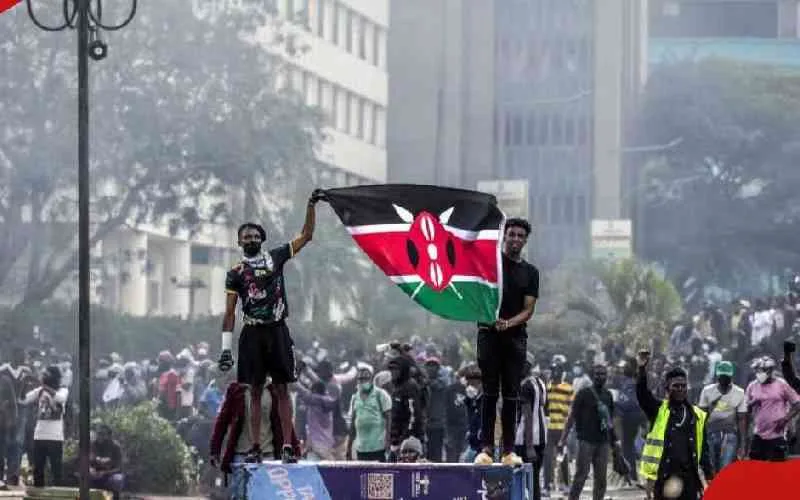
The finance bill led to nationwide protests against the government's plans to introduce a 15% value-added tax (VAT) on essential goods. The tax was expected to affect 12 million Kenyans, many of whom rely on these goods for their daily livelihood. The protests were marked by violence, with reports of police using excessive force to disperse crowds.
The court records reveal a pattern of inconsistent charges brought against protesters. For instance, some protesters were charged with rioting, while others were charged with 'terrorism-related offenses' despite the lack of any evidence linking them to terrorist activities. The shift in charges raises concerns about the use of selective justice to target certain groups.
The government has been accused of using the Finance Bill as a means to target opponents and suppress dissent. Critics argue that the tax was a thinly veiled attempt to target the poor, who are often the hardest hit by economic policies. They accuse the government of selectively punishing protesters and using the courts to further suppress dissent.
The shift in charges brings into question the government's motives and the rule of law. It raises concerns about the use of selective justice and the erosion of democratic freedoms. The government has denied any wrongdoing, but the shift in charges has sparked widespread criticism and calls for greater transparency and accountability.
##Key Facts
- The number of protesters charged with rioting decreased from 70% to 40% between July 2024 and January 2026.
- The number of protesters charged with 'terrorism-related offenses' increased from 10% to 30% during the same period.
- The finance bill was expected to affect 12 million Kenyans, many of whom rely on essential goods for their daily livelihood.
- The government has been accused of using the Finance Bill to target opponents and suppress dissent.
- Critics argue that the tax was a thinly veiled attempt to target the poor, who are often the hardest hit by economic policies.
And so, the government's actions have sparked widespread criticism and calls for greater transparency and accountability. The shift in charges raises concerns about the use of selective justice and the erosion of democratic freedoms. The Kenyan people are left wondering if their voices will be heard and if their rights will be protected.
The government has denied any wrongdoing, but the shift in charges has sparked widespread criticism and calls for greater transparency and accountability. The Kenyan people are left wondering if their voices will be heard and if their rights will be protected. The government's actions have raised serious questions about the health of Kenya's democracy and the rule of law.