

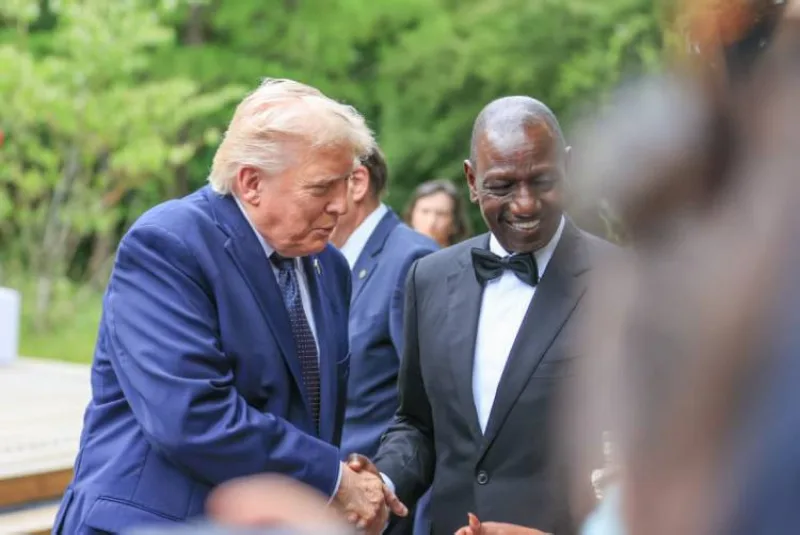
America has beaten China to a massive minerals deal with Kenya — worth an eye-watering Sh9.7 trillion ($62.4 billion).
President William Ruto announced the preliminary agreement on the sidelines of the G7 summit in France on Thursday. It gives the US access to some of the world's largest untapped deposits of rare earths and niobium. These metals are critical for making smartphones, electric cars, and military hardware.
But here's the twist that has everyone talking: the deal requires that these strategic minerals be processed right here in Kenya. That's a fundamental break from the old model where Africa dug up the raw stuff and shipped it out, only to buy back finished products at ten times the price.
Niobium is a key ingredient in high-strength steel used for pipelines and jet engines. Rare earths — a group of 17 elements — are essential for magnets in wind turbines, laptops, and guided missiles. China currently controls about 60% of global rare earth mining and over 80% of processing, giving it enormous leverage over global supply chains.
This deal is a direct blow to Beijing's dominance. The US has been scrambling to secure alternative sources of critical minerals after China threatened to restrict exports in recent trade tensions. Kenya sits on one of the last major untapped rare earth deposits on the planet.
The exact location of the deposits hasn't been disclosed, but geologists have long known that significant rare earth reserves exist in coastal areas around Mombasa and in the Rift Valley region. Niobium deposits have also been identified in parts of eastern Kenya.
For Kenya, the deal means more than just revenue. If the processing actually happens locally, it could create thousands of jobs and build a whole new industrial sector. Instead of exporting dirt, Kenya could export magnets, alloys, and other high-value products.
But Kenyans have heard promises before. The devil will be in the details — including what environmental safeguards are in place and how much of the Sh9.7 trillion value stays in the country versus flowing out as profits.
The deal is still preliminary. A final agreement will need approval from Kenya's parliament and must pass environmental reviews. China, meanwhile, isn't expected to give up without a fight. Beijing has invested heavily in African mining projects over the past decade and could respond with counter-offers or political pressure.
For now, though, Ruto's government has picked a side. And it's a side that brings both opportunity and risk — because when superpowers compete for your resources, you can win big or get crushed in the middle.