

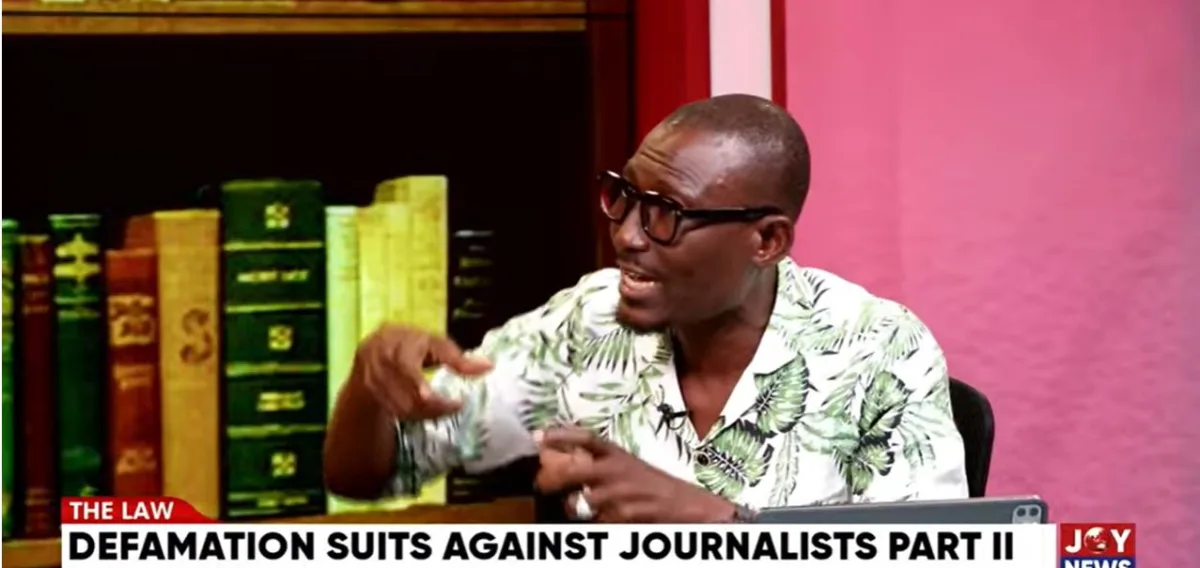
Zakaria Tanko Musah, a lawyer and lecturer at the University of Media, Arts and Communication (UniMAC), has reassured journalists that defamation law does not shut the door on robust reporting. Speaking on JoyNews' The Law, Mr Musah said the growing wave of defamation suits against journalists should not leave media practitioners feeling paralysed or afraid to publish stories in the public interest.
It's not all doom and gloom, as some people might think. Mr Musah explained that the law provides several defences that journalists can rely on in defamation cases, provided they are able to show that they followed the right processes before publication.
'There are certain defences that make sure you are ticking the boxes, so that when it comes to that, you can defend yourself,' Mr Musah noted. He said the courts are often mindful of the critical role journalists play in a democratic society and would take that into account when assessing defamation claims, especially where the journalist has acted responsibly and without malice.
Mr Musah stressed that where journalists have done what is expected of them professionally, including verifying facts, acting fairly and avoiding malice, they stand a reasonable chance of successfully defending themselves if sued. 'In performing that function, if you have done what you are supposed to do, especially where there is no malice, then you would have a reasonable defence,' he added.
The lawyer and lecturer explained that journalists can protect themselves from liability if they adhere to the basic standards of responsible journalism. This includes verifying facts, acting fairly, and avoiding malice when reporting on individuals or organisations.
Zakaria Tanko Musah's comments come at a time when journalists in Ghana are facing a growing number of defamation suits. Mr Musah's reassurance may provide some relief to media practitioners who are worried about being sued for defamation.
Defamation suits against journalists should not leave media practitioners feeling paralysed or afraid to publish stories in the public interest. Mr Musah's comments highlight the importance of responsible journalism and the need for journalists to adhere to basic standards of reporting.
'It's not all doom and gloom. People think the journalists are almost throwing their hands in despair and saying, 'So does that mean we can't write anything at all about anybody?' No,' Mr Musah said.
Key Facts
- Zakaria Tanko Musah is a lawyer and lecturer at the University of Media, Arts and Communication (UniMAC).
- The law provides several defences that journalists can rely on in defamation cases.
- Journalists can protect themselves from liability if they adhere to the basic standards of responsible journalism.
- The courts are often mindful of the critical role journalists play in a democratic society.
- Where journalists have done what is expected of them professionally, including verifying facts, acting fairly and avoiding malice, they stand a reasonable chance of successfully defending themselves if sued.