

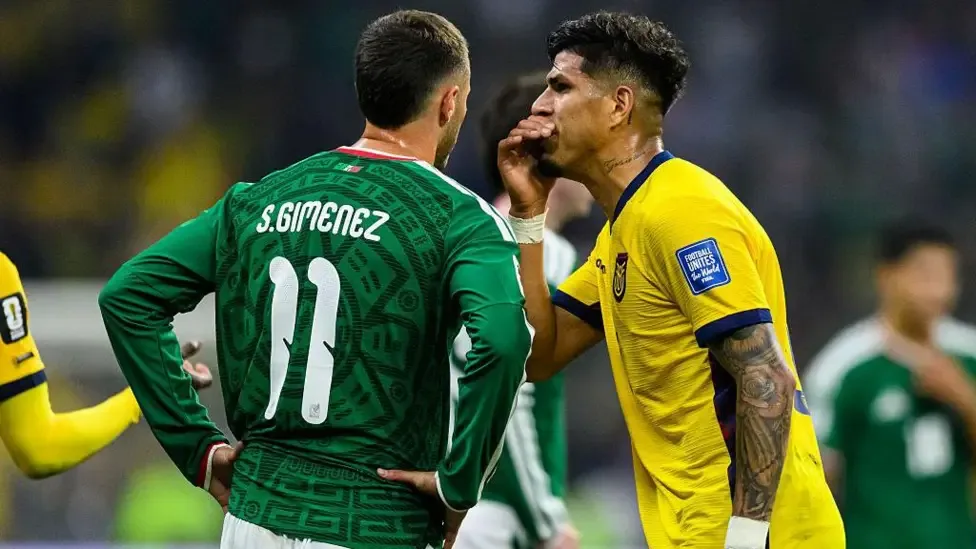
In a shocking decision, Uefa has abandoned plans to use red cards for players who cover their mouths during confrontations with opponents. European football's governing body made the announcement on Thursday, sparking widespread debate among fans and players alike.
The change was prompted by a high-profile incident in February when Benfica winger Gianluca Prestianni raised his shirt while speaking to Real Madrid's Vinicius Jr during a Champions League game. Prestianni was accused of racist abuse and provisionally banned for one match, but was later found guilty of homophobic conduct and banned for six matches – three of which were suspended.
The law change was the brainchild of Fifa president Gianni Infantino, who wanted something with a 'deterrent effect' at the World Cup. But Uefa has decided against using Infantino's opt-in, saying referees should assess situations individually and consider whether a yellow card should be shown if it's 'an attempt to conceal communication as an act of unsporting behaviour'.
Uefa added: 'This is obviously without prejudice to any disciplinary investigation or proceedings that may follow as a consequence of, or in connection with, such behaviour.' The decision has been met with confusion, as England's Jude Bellingham was not sent off when covering his mouth in conversation with Ghana's Jordan Ayew in their group game.
The law change has been controversial, with some arguing it presents the presumption of guilt rather than innocence. Others have raised concerns that it could be used to get an opponent sent off when nothing abusive has been said.
Gianni Infantino, the Fifa president, had proposed the law change to crack down on unsporting behaviour. But Uefa has decided to go against his wishes, saying referees should use their discretion when dealing with incidents.
Meanwhile, Uefa will exercise the option of VAR checking incorrect corners, with 22 reversed to a goal-kick so far at the World Cup. But it will not issue red cards to players who leave the field in protest at a referee's decision – another law brought in at the discretion of a competition organiser.
The decision has left many players and fans scratching their heads, wondering what exactly constitutes unsporting behaviour. But one thing is certain: Uefa's decision has sparked a heated debate that is unlikely to die down anytime soon.
'This is obviously without prejudice to any disciplinary investigation or proceedings that may follow as a consequence of, or in connection with, such behaviour,' said Uefa.
In an effort to clarify the situation, Uefa has released a statement outlining the new guidelines for referees. According to the statement, referees should assess each situation individually and consider whether a yellow card should be shown if it's 'an attempt to conceal communication as an act of unsporting behaviour'.