

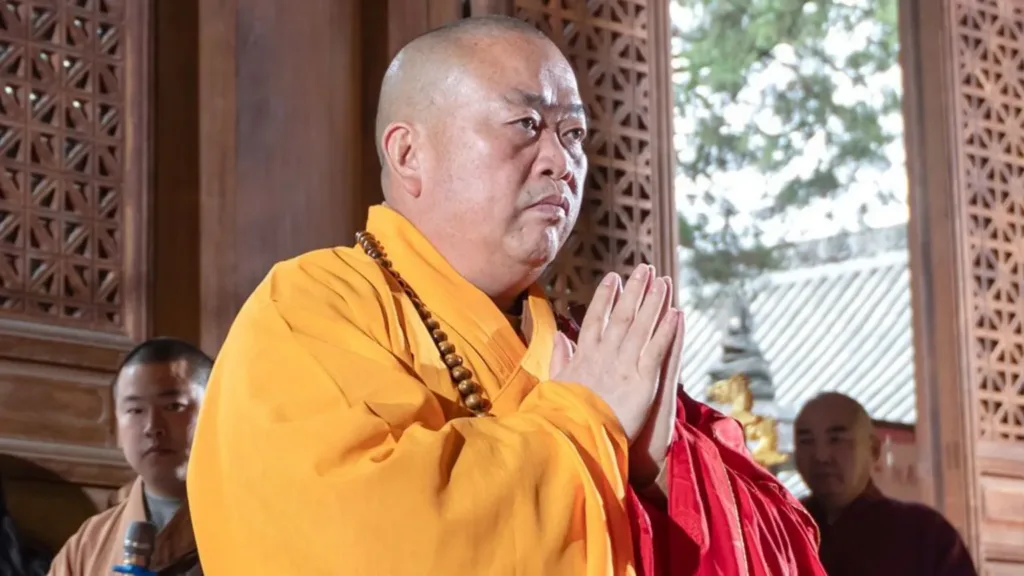
Shaolin Temple Defaced by Former Leader's Greed
For over two decades, Shi Yongxin was the face of the Shaolin Temple, turning a 1,500-year-old sanctuary into a global franchise. Today, the man formerly known as Shi Yongxin is trading his saffron robes for a prison jumpsuit after a court in China's Henan province handed him a 24-year jail sentence.
His crimes didn't stop at just one thing; the charges spanned from systematic embezzlement to the high-level bribery of officials. Between 2003 and 2025, investigators found that he had siphoned off temple assets totaling more than 282 million yuan, or about $42 million. This money didn't just vanish into thin air—it was diverted from various temple construction projects that were meant to expand the monastery's reach, and it's estimated Shi Yongxin pocketed most of it for himself.
"It's worth noting that" the BBC had interviewed him back in 2015, when Shi Yongxin dismissed allegations of financial impropriety and personal scandals. "If there were a problem, it would have surfaced long ago," he claimed, but he clearly underestimated the reach of the investigators.
While he was cleared during that initial 2015 inquiry, the deeper rot was only just beginning to be unearthed. The court proceedings revealed that Shi Yongxin had been systematically misusing his office to enrich himself, far removed from the ascetic life expected of a Buddhist leader. By the time the Chinese Buddhist Association finally decided to defrock him last year, the damage to the temple's reputation was already done.
Shi Yongxin, born Liu Yingcheng, climbed the ranks to become the abbot of the mountain temple in 1999. He quickly earned his notorious 'CEO monk' nickname by masterminding an aggressive expansion strategy that turned the temple into a massive commercial brand.
He established schools across the globe and launched a professional performance troupe that toured the world showcasing Shaolin martial arts. These ventures made it a household name for anyone who grew up watching kung fu cinema or listening to the heavy beats of the Wu-Tang Clan.
His downfall, however, is a sobering reminder that even the most sacred of institutions aren't immune to the greed of those who run them. The temple, which sits high in the mountain range, has seen millions of disciples walk its halls, all looking for spiritual guidance or martial arts discipline. Now, the focus shifts to how the temple recovers from the shame of having its leader proven to be a man who prioritized personal wealth over the monastery's code of ethics.
State Intervention Needed to Restore Sanity to the Temple
Following the verdict, Shi Yongxin stated he wouldn't appeal the court's decision, effectively putting a final stamp on his tenure. This acceptance of his fate serves as the final chapter in a saga that gripped not just China, but the international community interested in martial arts history.
The legal process was exhaustive, involving years of tracking financial flows and interviewing temple insiders who had long whispered about Shi Yongxin's extravagant spending habits. With the case closed now, it's clear that Shi Yongxin's actions tarnished a legacy that spans over a millennium, and the state plans to take drastic measures to restore sanity to the temple's management.
The sheer scale of the embezzlement makes the road ahead difficult, but there's no doubt that Shi Yongxin's actions will have a lasting impact on the temple's reputation. It's inspired countless spin-offs in video games like Mortal Kombat, but now it's left to grapple with the aftermath of one man's pursuit of money at the expense of its soul.