

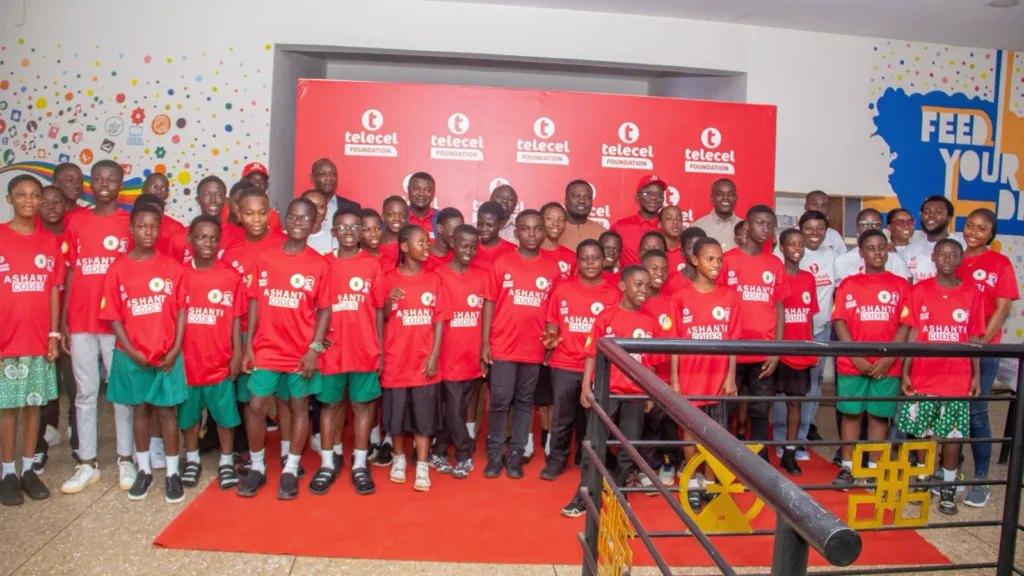
The Telecel Ghana Foundation wants to train 1,000 young people in coding, robotics, and Internet of Things (IoT) technologies before the end of the year. The programme, called Telecel Ashanti Codes, was launched at the Nana Afia Kobi Serwaa Ampem II Library in Kumasi on Monday.
It targets upper primary and junior high school students in Kumasi, Wiamoase, Nsuta, and Obuasi. Training will happen at five learning centres in those communities, including four libraries and the Obuasi Robotics Centre.
Ashanti Regional Minister, Dr Frank Amoakohene, said the initiative is a timely intervention that aligns with the region's goal of preparing young people for a technology-driven future. He pledged the Regional Coordinating Council's support to expand youth skills development.
"The world is changing rapidly, and it's either you fit into the future economy or you risk being left behind. I'm glad that the younger generation is being integrated into the future and prepared to help create the AI and humanoid robotic solutions that are shaping our world today."
Dr Amoakohene added that young people should use what they learn to solve everyday challenges in their communities.
The curriculum covers coding, robotics, design thinking, problem-solving, and IoT applications. Participants will work on capstone projects that address local problems. Training will be delivered on weekends by technology specialists from Asustem Robotics.
Mayor of Kumasi, Hon. Richard Ofori Agyemang Boadi, described digital literacy as essential for participating in the modern economy. He urged students to take the programme seriously.
"In the 21st century, everything is hinged on technology. We can't be effective in the digital economy without the digital literacy required to participate fully. The future of our country's economy is digitalisation. Learn as if your whole life depends on this programme because the skills you acquire here can help transform your future and contribute to the growth of our region."
The initiative is part of Telecel Ghana Foundation's Connected Learning pillar. It's one of the Foundation's biggest education investments during this year's Ashanti Month celebrations.
Komla Buami, Director of External Affairs at Telecel Ghana, said the company is investing in equipping young people with skills to participate in the digital economy. He wants young Ghanaians to become creators of sustainable digital solutions that improve quality of life.
The programme is delivered in partnership with the Ghana Library Authority. Four library facilities in the region will serve as learning centres: the Nana Afia Kobi Serwaa Ampem II Library, Kumasi Central Library, Wiamoase Library, and Nsuta Community Library. In Obuasi, the Obuasi Robotics Centre will host weekend training.
Board Chair of the Ghana Library Authority, Dr Michael Ato Essuman, said the partnership has already delivered nine digital libraries for innovation and digital learning. He noted that the Authority has over 150 public libraries nationwide, creating safe spaces for young people to access knowledge and develop digital competencies.
"We're particularly excited that Telecel Ashanti Codes is intentionally creating pathways for girls to engage confidently in digital technology, where women remain significantly underrepresented."
At the launch, graduates from a pilot cycle showcased projects they developed after training. These included a Bluetooth-controlled obstacle-avoiding robot, a smart bin, a smart drying line, and a smart toll gate system. The demonstrations showed how young learners are already applying technology to solve practical problems.
Emmanuella Konadu Appiah of St. Anne's Anglican Junior High said the training has given her new knowledge that will benefit her career.
"I've learnt a lot about making robots and technology. I want more young people to learn robotics because it helps us think differently and gain knowledge that can be useful in the future."
June is Telecel Ashanti Month, a period when the company focuses on initiatives in the Ashanti Region.