

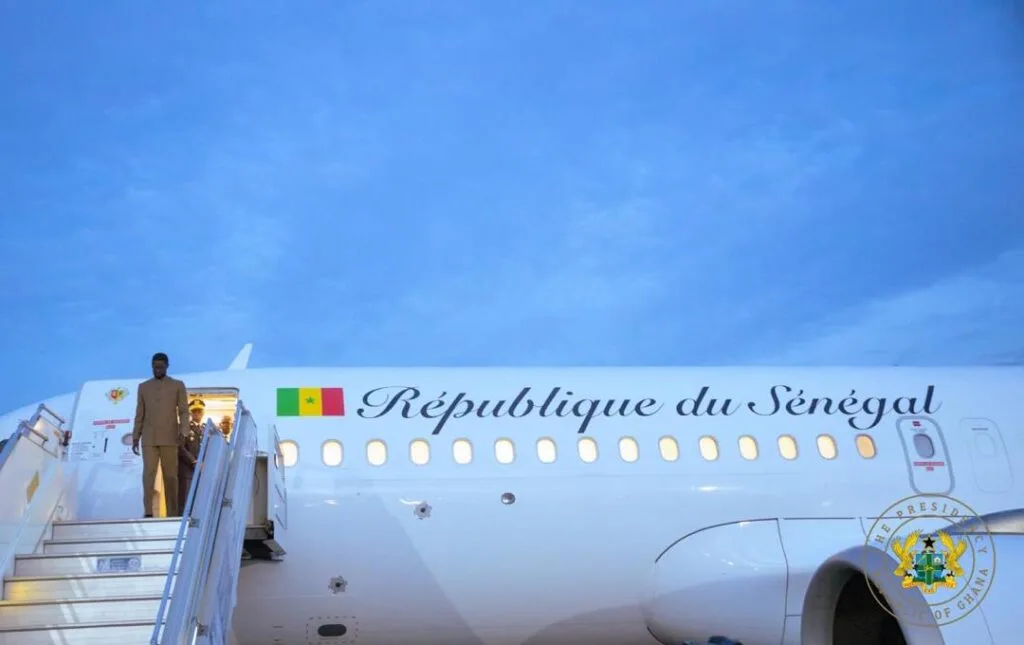
Senegalese President Bassirou Diomaye Faye touched down in Accra on Wednesday evening for a conference that could reshape how the world talks about slavery and reparations.
The High-Level Consultative Conference on the next steps to the United Nations resolution on the trafficking of enslaved Africans runs from June 17 to 19. It comes after the UN General Assembly adopted Resolution A/RES/80/250 on March 25, 2026 — a landmark declaration that calls the transatlantic trafficking of enslaved Africans and racialised chattel enslavement the "gravest crime against humanity."
President Faye is one of several dignitaries expected at the conference. The goal is to push for reparatory justice and accountability for the lasting damage of the Trans-Atlantic Slave Trade, and to figure out how to actually implement the UN resolution.
This isn't just another talk shop. The UN resolution gives fresh legal and moral weight to demands for reparations that've been made for decades. Caribbean nations, led by the CARICOM Reparations Commission, have been pushing for a formal apology, debt cancellation, and financial compensation from former colonial powers. African countries, including Ghana, have joined the call.
Ghana has positioned itself as a hub for the reparations movement. The country's "Year of Return" in 2019 brought thousands of African Americans and diaspora Africans to the continent, and the government has since pushed for a more structured approach to reparatory justice. President Nana Akufo-Addo has spoken at several global forums calling for reparations.
The conference in Accra is expected to produce a roadmap for countries to take the resolution forward — from national apologies to setting up funds for education, healthcare, and infrastructure in communities that still bear the scars of slavery.
For everyday Ghanaians, the conversation might feel distant. But the effects of the slave trade are still visible: the castles along the coast, the family histories lost, the economic disadvantage that traces back centuries. The conference is an attempt to turn that history into concrete action.
The UN General Assembly's March 25 adoption of Resolution A/RES/80/250 as a landmark declaration designates the transatlantic trafficking of enslaved Africans and racialised chattel enslavement as the "gravest crime against humanity."
So what happens next? The conference will produce a communiqué and a plan of action. Countries will be expected to report back on their progress. But the real test is whether the resolution leads to actual money changing hands or policies changing — or if it remains just words on paper.
President Faye's presence is significant. Senegal was a major departure point for enslaved Africans, particularly from Gorée Island. His attendance signals that West African leaders are serious about taking the lead on reparations, not leaving it to the Caribbean or Europe alone.
The conference ends on Friday. By then, the world will know whether this is a turning point or another meeting that gets filed away.