

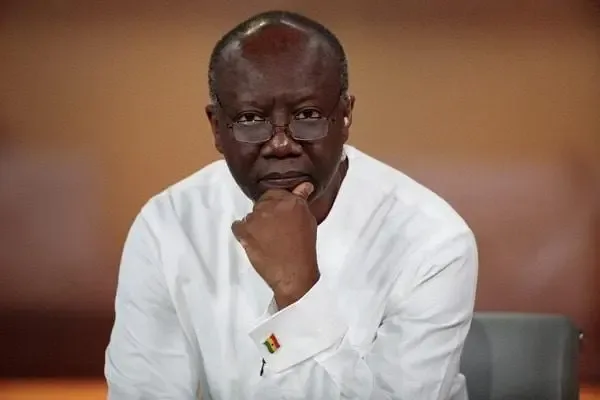
Former Finance Minister Ken Ofori-Atta's health could become a major obstacle if Ghana tries to bring him back from the United States to face justice.
Private legal practitioner Martin Kpebu dropped this warning on Joy FM's Top Story on Tuesday, June 16. He explained that even if Ghana wins in court, American authorities have the final say — and they can use health issues as a reason to block extradition.
"His health could be a key factor in the eventual decision to extradite him or not," Kpebu said.
He broke down how extradition works in the US. It's not just a legal process. There's also a political stage where the Secretary of State holds serious power.
"In American law, even when the judge is done, there are still huge political elements where the Secretary of State has a lot of discretion to use humanitarian grounds, bad prison conditions and many other factors to decide whether or not to extradite a person," Kpebu added.
This means Ofori-Atta's legal team could argue that his medical condition makes travel dangerous or impossible. If that argument sticks, American officials could delay the transfer or look for alternative solutions.
But Kpebu didn't stop there. He warned that Ghanaians won't accept any health claim at face value. People will demand proof — independent verification, not just a doctor's note.
"It's not just that somebody will come up with a document and say Ofori-Atta isn't well. We'll be asking for more accountability and transparency," he stated.
The comments come at a time when Ofori-Atta's legal troubles are heating up. Reports say a US immigration court has already granted him permanent residency. That complicates things further.
The Office of the Special Prosecutor has made it clear that immigration proceedings in America are separate from the criminal investigations Ghana is pursuing. In other words, one doesn't cancel the other.
Kpebu believes public sentiment will play a role too. Ghanaians are watching closely, and they want to see the law applied fairly — especially in a case involving a former minister who handled billions of cedis.
Ofori-Atta served as Finance Minister under President Nana Akufo-Addo from 2017 until his resignation in early 2024. During his tenure, Ghana's public debt ballooned, the economy struggled with inflation and currency depreciation, and the government eventually had to go to the International Monetary Fund for a $3 billion bailout.
He has been under investigation by the Office of the Special Prosecutor for alleged financial misconduct related to several transactions, including the controversial National Cathedral project and COVID-19 procurement deals. Ofori-Atta has denied any wrongdoing.
The legal road ahead is long. Ghana would first need to formally request extradition and provide evidence to US authorities. A US judge would then examine the case. If the judge approves, the Secretary of State still decides whether to sign off — and that's where health and humanitarian arguments could come in.
Kpebu's analysis suggests that even if Ghana builds a strong case, Ofori-Atta's health could buy him time or even block extradition entirely. The question now is whether Ghana's legal team is ready for that fight.