

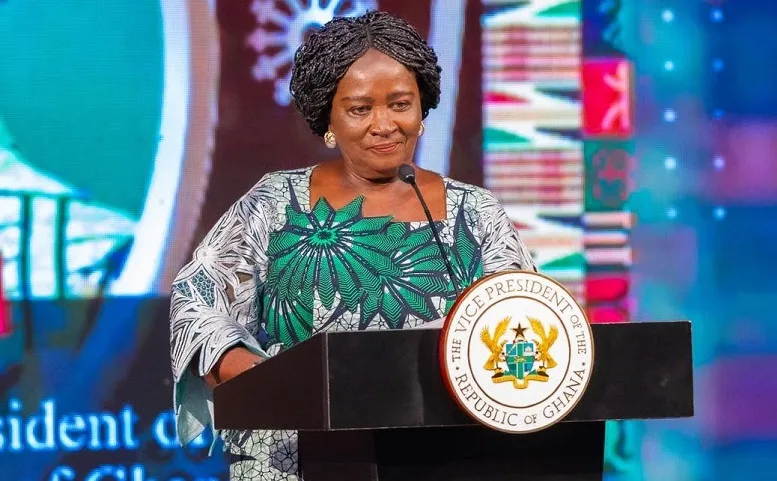
Vice President Professor Jane Naana Opoku-Agyemang has urged Ghanaians to pick up at least one new language beyond their mother tongue. She made the call on June 9, 2026, at the National Theatre in Accra during the launch of Ghana's revised National Cultural Policy.
“I want to propose that each of us tries to learn one language away from our mother tongue. Just one,” she said. The Vice President argued that in today's interconnected world, language skills and cultural intelligence are critical tools for development. She didn't just talk about personal growth—she tied it directly to the country's progress.
The policy itself is a big deal. It replaces the old version from 2004, which had been gathering dust for over two decades. Work on this new edition started seven years ago and involved extensive consultations with stakeholders across the cultural sector. The result is a strategic roadmap that aims to preserve Ghana's heritage while using culture and creativity to drive economic growth and job creation.
“These achievements remind us that our cultural expressions are not only the treasures of Ghana, but that they are gifts to the world.”
Professor Opoku-Agyemang also highlighted how technology, especially artificial intelligence, can help promote Ghanaian culture and languages. She said AI can be used to digitise culture, promote local languages, and amplify the reach of Ghanaian artistes. But she added a word of caution: the technology must be used in ways that are innovative and rooted in local values, with benefits flowing to the people—especially in job creation.
The Vice President called on everyone to get involved: government, traditional authorities, the youth, and the diaspora. “Let this launch mark the start of a bold chapter in Ghana's cultural journey,” she said. “We must build a nation that draws strength from its heritage, create opportunities through innovation, and projects its voice with confidence and influence on the world stage.”
Minister for Tourism, Culture and Creative Arts, Abla Dzifa Gomashie, said the policy is the result of years of hard work. She expects it to support creative entrepreneurs, attract cultural investment, and integrate culture into national development planning. The policy aligns with the United Nations Sustainable Development Goals and the African Union's Agenda 2063, positioning culture as a key pillar of development.
The revised policy covers several areas: culture and heritage, culture and society, culture and governance, culture across the economy, culture and technology, as well as national oversight, implementation, and regulation. It's a broad document that touches almost every part of national life.
For the average Ghanaian, the Vice President's call to learn another language is practical advice. Ghana has over 80 languages, and English is the official one. Adding a third language—whether it's Hausa, Ewe, French, or Mandarin—could open doors in trade, diplomacy, and the creative industries. The Veep's message is clear: in a globalised world, speaking only your mother tongue and English may not be enough anymore.