

Abdul Rahman Muniru had his bags packed. His documents were ready. He was set to fly to Dubai in search of a better life — like so many young Ghanaians before him. Then he heard about a training programme at KNUST.
He stayed.
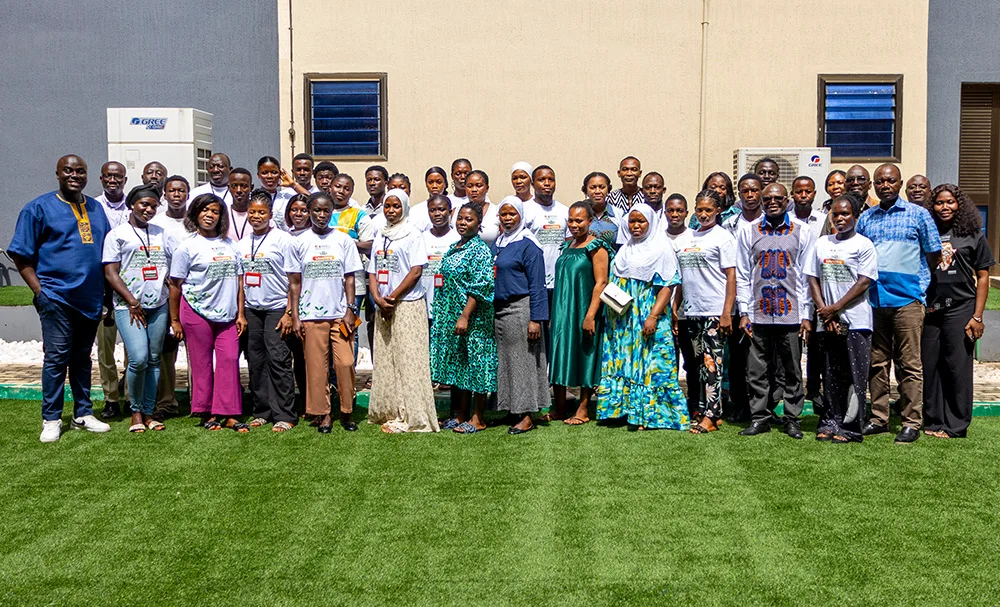
Muniru is one of 32 participants who completed the Kwame Nkrumah University of Science and Technology's Multi-purpose Integrated Programme (MIP) Training, run by the KNUST Nkabom Collaborative in partnership with the Mastercard Foundation. On Saturday, they pitched their business ideas to secure funding to start agribusinesses in their communities.
The programme isn't your typical pitch competition where one person wins and everyone else goes home empty-handed. Prof. Wilberforce Achiaw Owusu-Ansah, the Entrepreneurship Pillar Lead of the Nkabom Collaborative, made that clear.
"This isn't like the ordinary pitch where the emphasis is placed on who wins. We're engaging them to scrutinise their businesses and determine the kind of support they need to succeed," he said.
Every business proposal that shows it can work will get support to start operations — with a focus on setting up in the participant's own community.
The training lasted one year. The first three months were classroom instruction in greenhouse vegetable production, agribusiness management, poultry production, micro-livestock farming, and tree crop seedling production. Then came six months of hands-on learning at a dedicated MIP facility. Finally, three months of mentorship and internship placements with agribusinesses and food system institutions.
Muniru said the programme changed his thinking entirely.
"The training has really enlightened me that Ghana has great opportunities in agribusiness for the youth. With just a small push, there's no need to travel outside the country, and this is what the Nkabom MIP training has made me believe," he said.
Mary Owusu, another participant, described the training as a game changer. She gained practical skills in greenhouse vegetable farming and now sees agriculture as a profitable business.
"The MIP training has been a game changer for me. It has equipped me with practical skills in greenhouse vegetable farming and shown me that with the right knowledge and support, agriculture can be a profitable and sustainable business," she said.
She highlighted the advantages of greenhouse farming: efficient land use, better yields, year-round production, and higher quality produce. For young people looking for sustainable livelihoods, she says it's an attractive option.
The pitch session marked the end of the programme's first full cycle. The 32 participants who made it through are now ready to launch their ventures — right here in Ghana.
Muniru, for one, isn't looking back. He no longer needs a ticket to Dubai.