

The Kofi Annan International Peacekeeping Training Centre (KAIPTC) is breaking up its Faculty of Academic Affairs and Research into two separate bodies. The goal is to produce research that actually helps governments and security agencies deal with West Africa's growing instability.
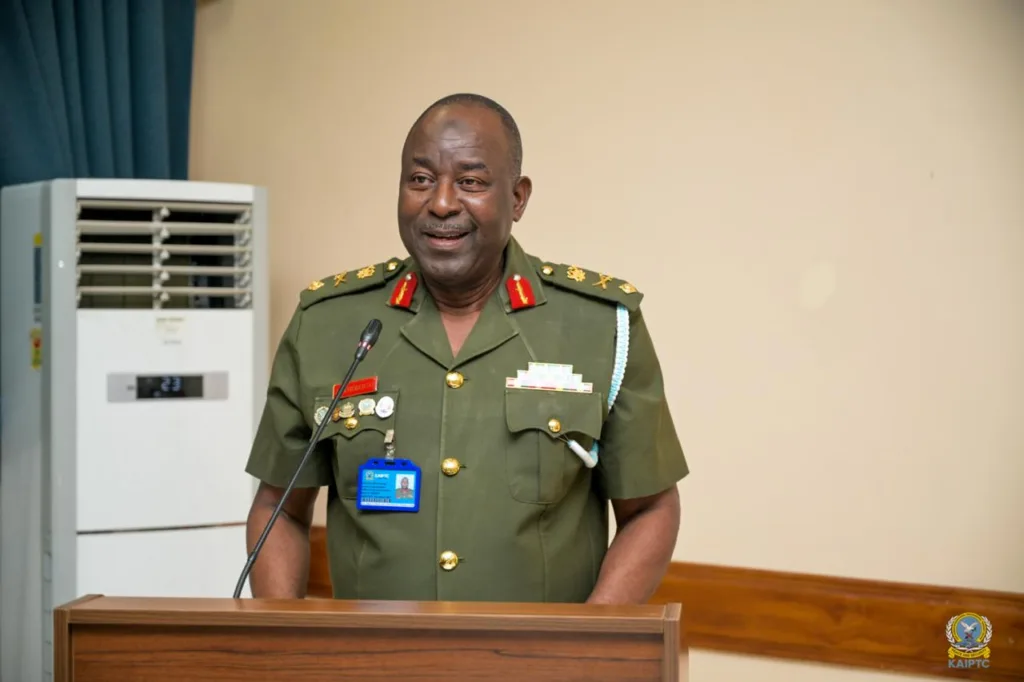
Brigadier General Zibrim Ayorrogo, the Centre's Deputy Commandant, announced the restructuring on Saturday at a Partners' Meeting in Accra. He described it as a "new chapter" for KAIPTC, which has been training peacekeepers and security personnel for over two decades.
The new setup creates a standalone Academic Faculty and a Department of Applied Research and Innovation in Peace and Security (DARIPS). DARIPS will focus on turning academic knowledge into practical policy solutions. According to Ayorrogo, the department will serve as the Centre's "primary engine for applied research and innovation."
Ayorrogo didn't mince words about why the change is necessary. He pointed to violent extremist networks expanding from the Sahel into coastal West African states. He also mentioned unconstitutional changes of government that have disrupted governance and put pressure on regional security frameworks. "These aren't abstract concerns confined to security briefings," he said.
He stressed that training alone is no longer enough. Countries need responses that are "informed by robust evidence" and agile enough to match the speed of emerging threats. DARIPS is designed to bridge that gap between what researchers know and what policymakers do.
The new department will focus on four thematic areas: Conflict, Governance and Leadership; Technology and Security; Climate Security and Migration; and Peace Operations, Stabilisation and Peacebuilding. These reflect how threats are interconnected — from governance failures and tech disruption to climate-induced displacement.
Ayorrogo called on partners to engage critically with the new programmes. He asked them to point out overlaps, identify gaps, and give frank assessments. This, he said, will help ensure that KAIPTC's research remains relevant and impactful.
KAIPTC is an ECOWAS Centre of Excellence. Its mandate includes supporting Member States in building sustainable capacity for peace and security. The Centre's credibility over more than 20 years has been built on partnerships with governments, international development agencies, research institutions, and civil society organisations.
The restructuring is part of KAIPTC's 2024–2028 Strategic Plan. The plan prioritises strengthening institutional structures to respond more effectively to the rapidly changing peace and security landscape across Africa and beyond.
Key Facts
- KAIPTC splits Faculty of Academic Affairs and Research into Academic Faculty and DARIPS
- DARIPS will focus on applied research and innovation in peace and security
- Four new thematic programmes: Conflict, Governance and Leadership; Technology and Security; Climate Security and Migration; Peace Operations, Stabilisation and Peacebuilding
- Announcement made on June 18, 2026, at Partners' Meeting in Accra
- Centre was established in 2003 and is an ECOWAS Centre of Excellence