

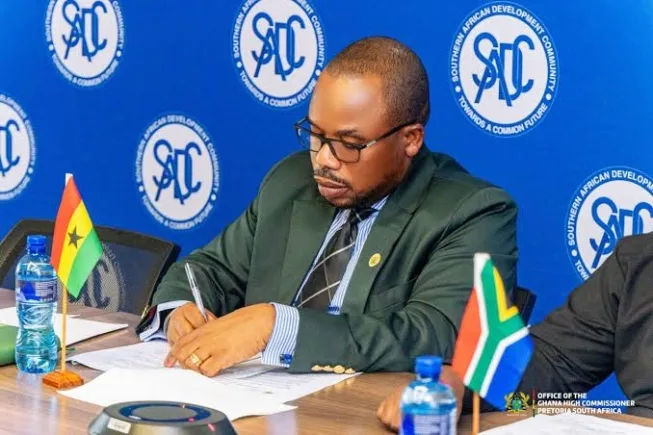
The single sharpest fact in one or two punchy sentences. Who did what, where, when, and why it matters. Not a summary of everything — the one thing that makes someone stop scrolling. A reader who only reads this paragraph must understand what happened.
The Ghanaian government has announced plans to evacuate over 900 citizens from South Africa who have been stranded due to xenophobic attacks. This comes after close to 926 Ghanaians were successfully repatriated earlier.
But what makes this new exercise significant is that it will mark the end of the government-sponsored mass evacuation. The High Commissioner to South Africa, Benjamin Quashie, confirmed in a video broadcast from Pretoria that the government will no longer be providing mass evacuation services.
The modalities for the new exercise will be the same as the previous three repatriations. The Department of Home Affairs and Border Management Authorities have approved July 25, 2026, for the exercise to begin. Only those already registered and screened will be evacuated.
Benjamin Quashie, Ghana's High Commissioner to South Africa, is a seasoned diplomat with extensive experience in international relations. He was appointed to his current role in 2020 and has been instrumental in resolving several diplomatic disputes between Ghana and South Africa.
The High Commissioner emphasized that the new exercise will be conducted in a coordinated manner, with officials visiting churches, hotels, and other locations where Ghanaians are lodging. Groups will be notified in advance on schedules for morning and afternoon departures.
Quashie urged Ghanaians not to travel to the High Commission unannounced with luggage, expecting accommodation. Instead, they should follow the established protocols and procedures for repatriation.
The Ghanaian government has been under pressure to address the plight of its citizens in South Africa, who have been struggling to survive due to xenophobic attacks and police brutality. The government's efforts to repatriate stranded Ghanaians have been widely praised by civil society organizations and ordinary citizens.
But the new exercise has been met with skepticism by some, who question the effectiveness of the government's efforts to address the root causes of xenophobia. Others have expressed concern about the lack of support for Ghanaians who are choosing to remain in South Africa.
The evacuation exercise is expected to begin on July 25, 2026, and will continue until all 900 registered persons are repatriated. The Ghanaian government has assured the public that it will provide adequate support to the affected individuals, including transport, accommodation, and other necessary assistance.
As the final phase of mass repatriation begins, many Ghanaians are left to wonder what the future holds for those who have been repatriated. The government has promised to provide case-by-case support to those who want to return to Ghana, but many are skeptical about the feasibility of this promise.
Benjamin Quashie has pledged to continue working with the government to ensure the smooth repatriation of Ghanaians from South Africa. He has also called on Ghanaians to remain calm and cooperate with the authorities during the exercise.
Key Facts
- Over 900 Ghanaians are set to be repatriated from South Africa on July 25, 2026.
- The evacuation exercise is the final phase of a mass repatriation effort that has seen close to 1,200 Ghanaians return home.
- Only those already registered and screened will be evacuated.
- The Department of Home Affairs and Border Management Authorities have approved July 25, 2026, for the exercise to begin.
- Ghanaians have been stranded in South Africa due to xenophobic attacks and police brutality.