

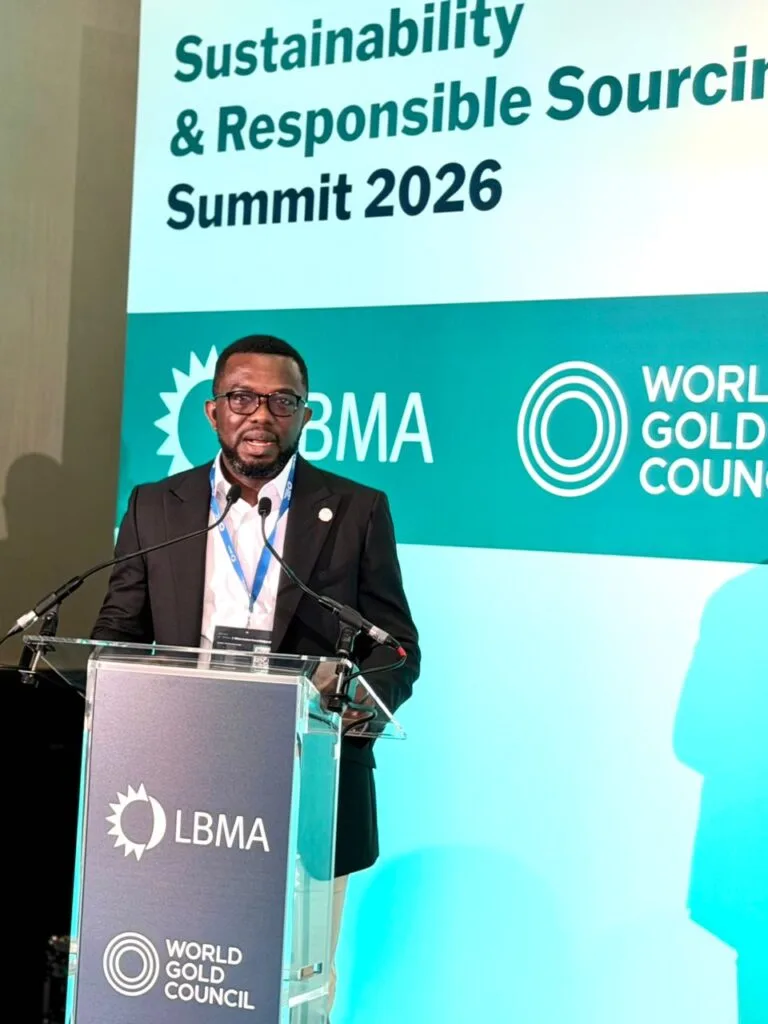
Ghana's Gold Board (GoldBod) just got a major global nod of confidence. At the London Bullion Market Association's Sustainability & Responsible Sourcing Summit on June 18, 2026, the LBMA and the World Gold Council threw their weight behind Ghana's agenda for responsible sourcing, traceability, and formalising the artisanal and small-scale mining (ASM) sector.
GoldBod's Deputy CEO, Richard Nunekpeku, represented Ghana at the summit. He laid out the country's new regulatory model and ongoing reforms aimed at strengthening responsible sourcing, local refining, and traceability. The presentation earned Ghana a seat at the high-level Roundtable of the International Bullion Centres (IBC) Association — a recognition of the country's growing importance in the global gold value chain.
A key outcome: the LBMA officially recognised Ghana's increasing strategic role in the global precious metals market. It also committed to exploring policy frameworks that would boost international recognition of Ghana as a significant market participant. More concretely, the LBMA pledged to work closely with GoldBod on traceability systems, responsible sourcing standards, and compliance frameworks tailored for the ASM sector.
"The discussions reflect growing international confidence in Ghana's reforms and reinforce the country's ambition to become a leading responsible gold-producing nation," Richard Nunekpeku said after the summit.
The LBMA also said it would help develop practical tools and industry best practices to promote transparency, improve auditability, and gradually integrate Ghana's ASM sector into global responsible gold supply chains. This is a big deal for a country where artisanal mining has long been associated with illegality, environmental damage, and smuggling.
GoldBod was set up to centralise the buying, selling, and export of gold in Ghana, cutting out middlemen and ensuring that more value stays in the country. One of its key goals is to formalise the ASM sector — an estimated one million Ghanaians work in small-scale mining, and much of it isn't regulated. The LBMA's backing gives GoldBod international credibility as it pushes miners to adopt cleaner, traceable practices.
The summit, organised jointly by the LBMA and the World Gold Council, brought together bullion market players from around the world. Ghana's invitation to speak signals that the country isn't just a source of raw gold anymore but an emerging force in shaping how the metal is sourced responsibly.
What happens next? GoldBod will work with the LBMA to design traceability systems that can track gold from the pit to the refinery. If successful, Ghanaian gold could soon carry a stamp of approval that makes it more attractive to buyers in Europe, the US, and the Middle East who are increasingly demanding ethical sourcing.
For now, the GoldBod team returns to Accra with a promise of technical support and a seat at the table where global gold standards are set.