

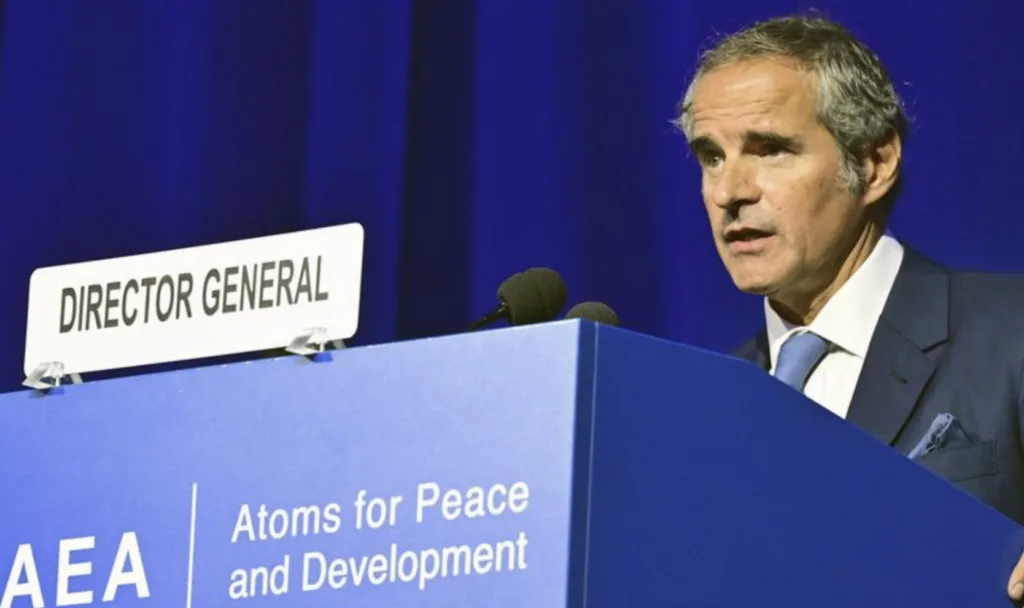
The International Atomic Energy Agency (IAEA) has confirmed it's backing Ghana's push to join the nuclear club, as the country races to build a 1,000-megawatt power plant.
IAEA Director General Rafael Mariano Grossi told the Ghana News Agency in Vienna that Ghana has been working with the Agency for a while. He said African countries are increasingly placing nuclear energy at the centre of their long-term development plans.
Ghana is targeting the completion of Phase Two of its nuclear programme within the first term of the current project leadership. That phase covers site studies, public communication, institutional strengthening, and vendor negotiations. Once done, it clears the way for Phase Three — actual construction.
Grossi explained that the IAEA's support varies depending on where a country is in its nuclear journey. For those just starting, the Agency provides technical advice, institutional development, and capacity building to set up the foundations for a safe programme.
“Some have research reactors, for example, and in the continent there are many nuclear research reactors. So you have people who are already quite expert in the functioning of a reactor, people who are experts in radiation protection and so on,” Grossi said. He added that Kenya, Ghana, and Egypt are all at different stages, and the IAEA tailors its help accordingly.
One of the Agency's key roles is helping countries choose the right technology without commercial bias. “We advise countries in the bidding process because we are neutral; we don't have any commercial interest in this. Nuclear is a marriage for life,” Grossi said. “Nuclear power plants operate for close to 100 years. It means several generations will be benefiting from it and working around it. So it's a very consequential decision.”
The IAEA also helps countries set up independent national regulators to enforce safety and security standards. For countries further along, the Agency applies its Milestones Programme — a structured framework that guides governments through the stages of nuclear infrastructure development, based on decades of global experience.
Demand for IAEA support in Africa has shot up and is turning into real projects. Grossi pointed to four nuclear plants under construction in Egypt and renewed expansion plans in South Africa as proof that the continent's energy landscape is shifting.
In Ghana, Chief of Staff Julius Debrah recently said the government is signing a bilateral agreement and engaging local and international partners to build small modular reactors. The plan is to use nuclear as baseload power — meaning it runs constantly — to secure the country's energy future and drive industrialisation.
Ghana's current electricity generation is heavily reliant on hydro and thermal sources. Hydro is vulnerable to climate change and seasonal rainfall, while thermal plants burn gas or crude oil, exposing the country to volatile global fuel prices. Nuclear offers a steady, low-carbon alternative.
Grossi expressed confidence that nuclear will play a bigger role in Africa's energy mix. He said Ghana's renewed international recognition could strengthen national discussions on energy diversification and long-term planning to support economic growth.
For the ordinary Ghanaian, this means the government is betting big on a technology that could stabilise electricity supply and lower bills in the long run — but it'll take years to deliver. The IAEA's stamp of approval gives the project credibility, but the hard work of building the plant and convincing a sceptical public is only just beginning.