

The single sharpest fact in one or two punchy sentences. Who did what, where, when, and why it matters. Not a summary of everything — the one thing that makes someone stop scrolling. A reader who only reads this paragraph must understand what happened.
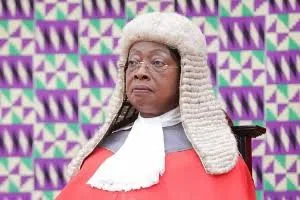
Sophia Akuffo, a former Chief Justice of Ghana, resigned from the Council of State amidst a controversy over her testimony in a case against then Chief Justice Gertrude Torkornoo. Akuffo, who appeared before the Article 146 committee investigating Torkornoo, testified in Torkornoo's defence while still a sitting Council of State member.
Kwaku Ansa-Asare, a senior Ghanaian legal academic, has now argued that Akuffo's appointment to the Council was flawed from the start. Ansa-Asare, Dean of the Faculty of Laws at Mountcrest University College and former Director of the Ghana School of Law, made the remarks on Newsfile on Saturday. According to Ansa-Asare, the government's handling of the announcement was itself a problem, as it confirmed the resignation only after it leaked to the media.
And the controversy over Akuffo's appointment to the Council of State goes deeper than just her resignation. According to Kwaku Ansa-Asare, the government bypassed a more senior and constitutionally appropriate candidate, former Chief Justice Georgina Theodora Wood. Ansa-Asare cited Article 89 of the Constitution, which provides for the inclusion of a retired Chief Justice in the Council of State. Wood, who served for ten years and was therefore the most senior living retired Chief Justice, was bypassed in favour of Akuffo.
But Ansa-Asare's deeper criticism was directed at the original appointment. He argued that Wood's prior service on the Council of State did not disqualify her from returning, saying the constitutional requirement was seniority, not novelty of appointment. Ansa-Asare also acknowledged that Akuffo had not publicly confirmed that she abstained from the Council's vote on the prima facie case against Torkornoo.
However, he said the manner in which the information became public — through a private disclosure that found its way into the media —amounted to the same thing under her oath. Ansa-Asare said Akuffo likely recognised that her own conduct had made her position on the Council untenable, and that her resignation followed naturally from that realisation.
The resignation of Sophia Akuffo from the Council of State has sparked a broader debate about the independence of the judiciary and the role of the Council of State. As the debate rages on, one thing is clear: the appointment of Akuffo to the Council was constitutionally flawed, and it will have far-reaching implications for the judiciary in Ghana.
Key Facts
- Sophia Akuffo, a former Chief Justice, resigned from the Council of State amidst a controversy over her testimony in a case against then Chief Justice Gertrude Torkornoo.
- Kwaku Ansa-Asare, a senior Ghanaian legal academic, argued that Akuffo's appointment to the Council was flawed from the start.
- Former Chief Justice Georgina Theodora Wood was bypassed in favour of Akuffo for the Council of State appointment, despite Wood's seniority and longer service on the Council.
- Akuffo abstained from the Council's vote on the prima facie case against Torkornoo, but did not publicly confirm her decision.
- The resignation of Akuffo has sparked a broader debate about the independence of the judiciary and the role of the Council of State.
'A person resigning in September and the government coming out under public pressure to make some half-truth — it should be roundly condemned,' Kwaku Ansa-Asare said on Newsfile on Saturday.
Context: The Role of the Council of State
The Council of State is a constitutional body established to advise the President on matters of national importance. The body consists of the Vice-President, the Speaker of Parliament, and ten other members, including the Chief Justice, who serves as the Chair. The Council plays a crucial role in the governance of Ghana, and its independence and impartiality are essential for the effective functioning of the judiciary.
In the case of Sophia Akuffo, her appointment to the Council was widely seen as a strategic move by the government to increase its influence over the judiciary. However, the controversy surrounding her testimony in the case against Gertrude Torkornoo has brought the Council's independence and impartiality into question.
And the implications of Akuffo's resignation will be far-reaching. The Council of State will have to redefine its role and ensure that its members are independent and impartial in their decision-making. The judiciary, too, will have to re-examine its relationship with the Council and ensure that it maintains its independence and impartiality.