

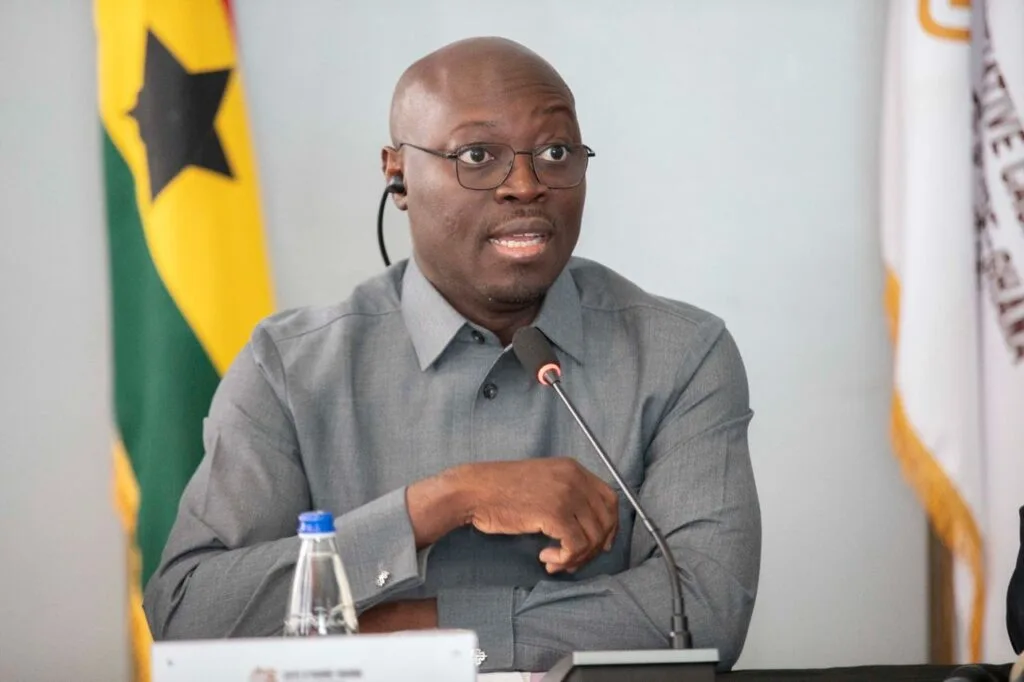
Ghana's Finance Minister, Dr. Cassiel Ato Forson, has declared that the cocoa sector needs a fundamental transformation — making it more resilient, prosperous, and profitable for farmers and the economies of both Ghana and Côte d'Ivoire.
Speaking as Chair of the 7th Steering Committee Meeting of the Côte d'Ivoire-Ghana Cocoa Initiative in Abidjan on Monday, Dr. Forson said the future of cocoa depends on how closely the two biggest producers work together.
“The cocoa sector deserves to be transformed into one that's more resilient, prosperous, and profitable for the benefit of both our countries and our farmers,” he said.
The two nations together produce over 60% of the world's cocoa. But farmers on both sides face the same struggles: prices that swing wildly, unpredictable weather linked to climate change, and diseases that wipe out trees.
Dr. Forson argued that stronger cooperation can help Ghana and Côte d'Ivoire spot problems early, protect their economies, and stop being pushed around by global market forces.
“As the world's two leading cocoa-producing countries, we must engage more consistently and strategically to protect our economies. By doing so, we can better anticipate challenges, mitigate shocks, and shape the future of the industry rather than merely reacting to its disruptions,” he said.
The Finance Minister warned that dialogue between the two countries can't just be for show. It must deliver real benefits to the millions of farmers who depend on cocoa for their livelihoods.
He urged the Steering Committee to focus on practical solutions and concrete actions that would strengthen the partnership and advance the interests of cocoa-growing communities.
Dr. Forson also revealed that Ghana's President John Dramani Mahama and Côte d'Ivoire's President Alassane Ouattara are expected to hold a high-level meeting soon to reaffirm their shared commitment to the cocoa sector.
The Côte d'Ivoire-Ghana Cocoa Initiative was launched in 2018 to give the two countries more control over cocoa pricing and improve farmer incomes. But progress has been slow, with prices still largely dictated by international buyers.
For Ghanaian cocoa farmers, many of whom live below the poverty line, the promise of transformation can't come soon enough. The average farmer earns just a fraction of the final value of a chocolate bar sold in Europe or America.
Dr. Forson, who was appointed Finance Minister by President Mahama in January 2025, has been pushing for economic reforms that reduce Ghana's dependence on raw commodity exports. His call for a stronger cocoa sector fits into that bigger picture.
“The cocoa sector deserves to be transformed into one that's more resilient, prosperous, and profitable for the benefit of both our countries and our farmers.”
No date has been set for the presidential meeting yet, but the expectation is that it'll happen within the next few months.