

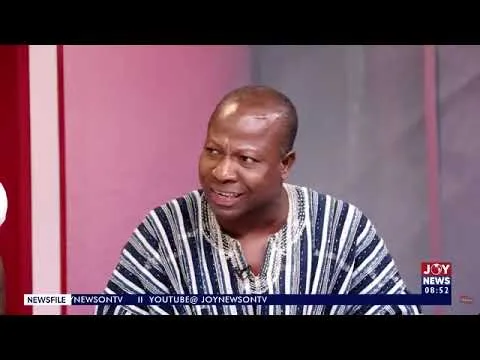
James Kwabena Bomfeh, the Chief Executive Officer of the Centre for Citizenship, Constitutional and Electoral Systems (CenCES), has fired a sharp warning: locking up former MASLOC CEO Sedina Tamakloe Attionu is useless if the state doesn't also recover the money she allegedly stole.
Speaking on JoyNews' Newsfile on Saturday, June 13, Bomfeh made it clear that punishment alone won't cut it. “We need to look at that so that it isn't as if someone gets the opportunity, abuses it to amass money at the expense of the state, serves a sentence and then comes back to enjoy it,” he said.
He drilled into the real question: “Whatever the money was used for, where is the money? Has the state addressed that?”
For Bomfeh, accountability can't stop at convictions and jail terms. The state must actively trace and recover public funds lost through corruption or financial impropriety. Otherwise, he warns, the ultimate loser is the Ghanaian taxpayer.
“We need to look at that so that it isn't as if someone gets the opportunity, abuses it to amass money at the expense of the state, serves a sentence and then comes back to enjoy it.”
Sedina Tamakloe Attionu was the Chief Executive Officer of the Microfinance and Small Loans Centre (MASLOC), a state agency set up to provide microcredit to small businesses and vulnerable groups across Ghana. She was convicted alongside her deputy, Daniel Axim, for causing financial loss to the state — a case that has dragged through the courts for years.
The charges involved millions of cedis meant for microcredit schemes that were allegedly diverted or mismanaged. The exact amount at the centre of the case has been a subject of public debate, but Bomfeh's point is that whatever the figure, the state should be chasing it, not just celebrating a jail term.
Bomfeh's comments come as the case reaches a critical stage, with sentencing expected soon. But he insists that the real test of Ghana's anti-corruption fight is whether the state can actually bring back stolen funds — not just put people behind bars.
This is a familiar frustration for many Ghanaians who've watched high-profile corruption cases end with convictions but little or no recovery of stolen assets. The state has often struggled to trace funds that've been laundered or hidden, leaving taxpayers to absorb the loss.
Bomfeh's call is a reminder that justice in corruption cases must include financial restitution. Otherwise, as he put it, someone can steal, serve a sentence, and walk free to enjoy the loot.