

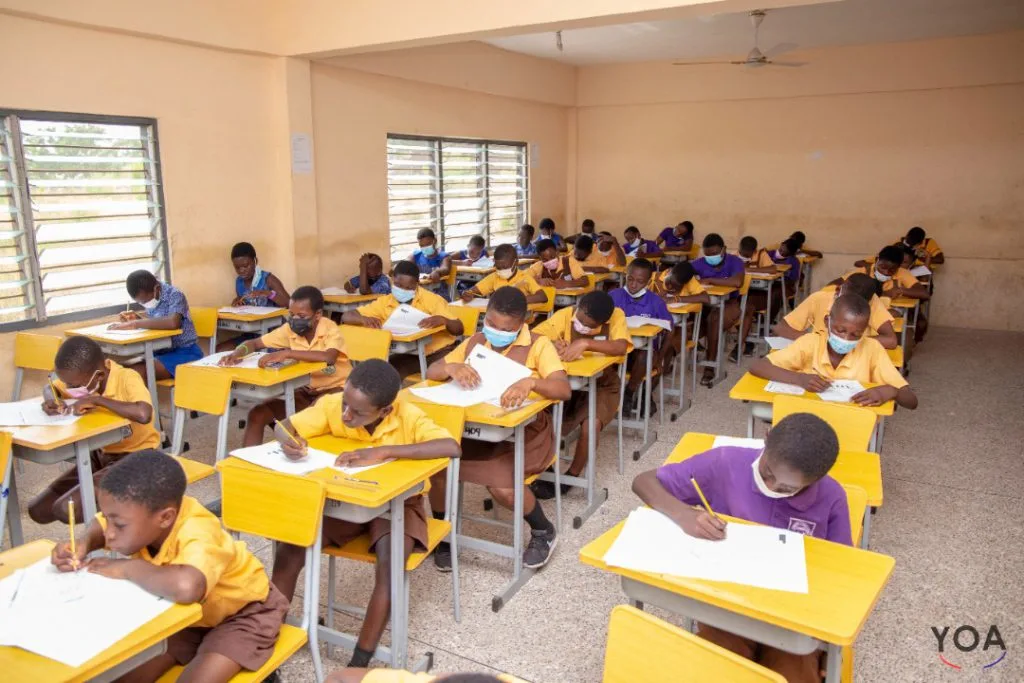
The single sharpest fact in one or two punchy sentences. Who did what, where, when, and why it matters. Not a summary of everything — the one thing that makes someone stop scrolling. About 16,000 learners from basic schools across Ghana are participating in a sample national standardised test aimed at measuring learning outcomes and providing data to improve the country’s education system.
The assessment, which is being conducted among selected learners at different levels of basic education, is expected to provide education authorities with a clearer understanding of learners’ progress and the challenges affecting teaching and learning. The exercise was monitored by the Minister for Education, Haruna Iddrisu, and officials from the Ministry during a visit to selected examination centres in Accra. The team visited St. Peter’s RC Basic School and Osu Salem 1 KG and Primary School to observe the conduct of the assessment and assess the progress of the exercise.
This year’s sample includes 2,500 Kindergarten Two (KG Two) learners, 4,500 Primary Two learners, 4,500 Primary Four learners and 4,500 Primary Six learners. Speaking to the media after the monitoring exercise, Mr Iddrisu said the assessment forms part of measures to strengthen Ghana’s education system by moving away from periodic assessments of separate groups of learners towards a cohort-based learning assessment model.
He explained that the new approach would allow the same group of learners to be tracked and assessed at different stages of their educational journey, providing more reliable information on their academic progress. Under the model, learners will first be assessed at the primary level and followed through Primary Four, Primary Six and later Junior High School Two, shortly before they write the Basic Education Certificate Examination (BECE). According to the minister, tracking learners over time will help education authorities identify specific learning gaps and develop targeted interventions to improve outcomes in schools.
The data generated from the standardised test would be crucial in guiding education policies and strengthening teaching and learning at the basic level. The assessment is expected to provide evidence on learners’ performance and support efforts to improve the quality of education delivery across Ghana’s basic education sector.
Key Facts
• 16,000 Ghana learners are taking part in a national standardised test. • 2,500 learners are at the Kindergarten Two level, while 4,500 are at the Primary Two, Primary Four, and Primary Six levels. • The test aims to identify learning gaps and develop targeted interventions to improve outcomes in schools. • The assessment will be conducted every two years. • The data generated from the test will be used to guide education policies and improve teaching and learning in schools.