

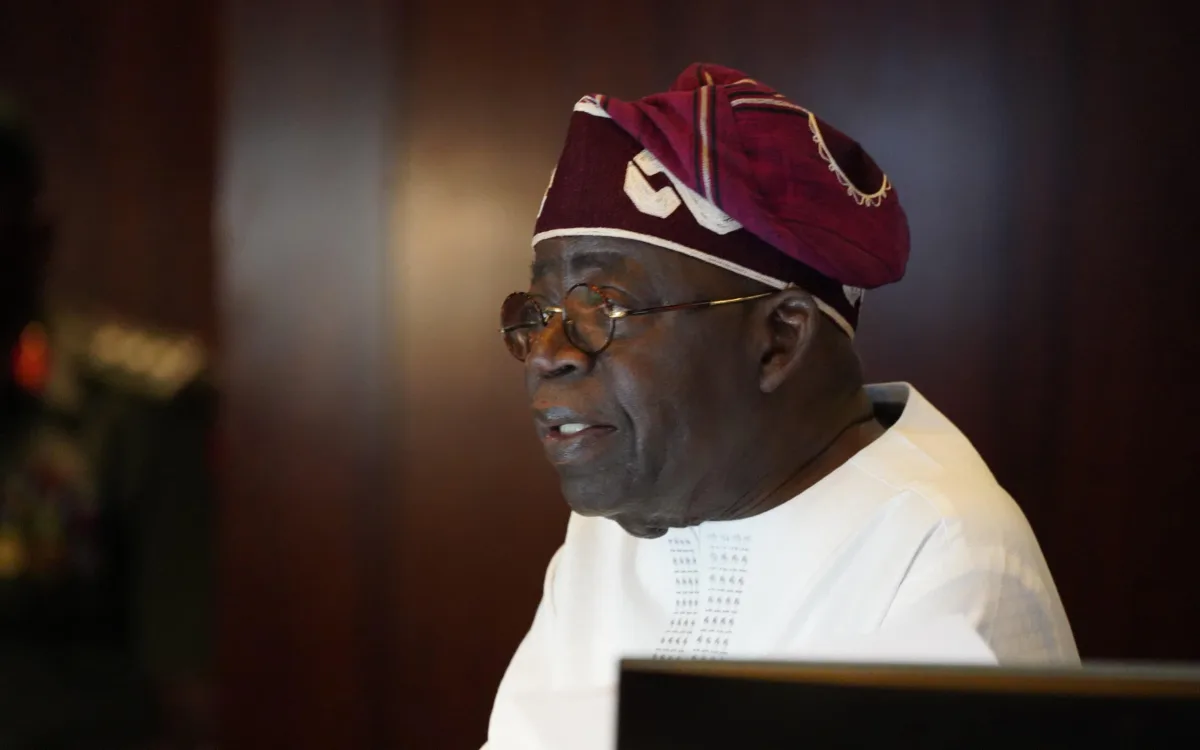
Nigeria's football administration is in for a major shake-up. President Bola Tinubu has directed a comprehensive reform of the Nigeria Football Federation (NFF) in the wake of the surprising resignation of its president, Ibrahim Gusau, and other top officials.
This directive, announced via a statement from presidential aide Bayo Onanuga on Thursday evening, signals a significant intervention from the presidency into the sport that's arguably Nigeria's most popular.
Ibrahim Gusau confirmed his own departure at a press conference held in Abuja. Shortly after, the NFF itself announced that General Secretary Mohammed Sanusi and members of the Executive Committee had also tendered their resignations, effectively clearing the decks for a new leadership.
President Tinubu stated that the upcoming reform is meant to tackle long-standing issues that have held back Nigerian football. "The reform must respond to a longstanding need to strengthen governance, administration, stakeholder representation, development pathways, domestic competitions and accountability across Nigerian football," he said.
The President has tasked the Chairman of the National Sports Commission (NSC) with overseeing this transition. This involves ensuring that the day-to-day running of football affairs continues smoothly while a broad, inclusive reform process is put in place. The plan also includes consulting with international bodies like FIFA and the Confederation of African Football (CAF) to make sure Nigeria stays in line with global football standards.
Tinubu pointed out that while other sports have seen progress since the NSC was revived, football hasn't. He noted that football, despite its massive following and public investment, has been hampered by systemic weaknesses. "Football, Nigeria’s most popular sport and the greatest beneficiary of public support, investment and national attention, has continued to struggle basically due to structural deficits within the system," the President remarked.
This presidential intervention comes at a particularly low point for Nigerian football. The Super Eagles, the men's senior national team, haven't qualified for the last two FIFA World Cups (2022 and 2026), a rare miss for a country that's historically been a continental powerhouse. Adding to the woes, the Super Falcons, the women's team, recently failed to secure a spot in the 2027 FIFA Women's World Cup. It's the first time they've missed the tournament since its inception in 1991.
Ibrahim Gusau had been NFF president since September 30, 2022. He was elected to a four-year term, and his resignation came just 34 days before its scheduled end. He had succeeded Amaju Pinnick, winning the election against Peterside Idah.
President Tinubu's directive places institutional reform at the forefront of the NFF's future. Key areas targeted for improvement include governance structures, ensuring all stakeholders have a voice, establishing clear development pipelines for players, strengthening domestic leagues and competitions, and implementing robust accountability mechanisms.
The reform process also aims to maintain administrative continuity. This prevents the current leadership vacuum from disrupting national team preparations or domestic league schedules. With the NFF's elective congress already scheduled for September 27 in Lafia, Nasarawa State, the reform directive casts a shadow over the planned elections. It raises questions about whether they will proceed as scheduled or be postponed and restructured.
The President has called on all football stakeholders and Nigerians to support this transition and work together towards building a more effective and accountable football ecosystem.