

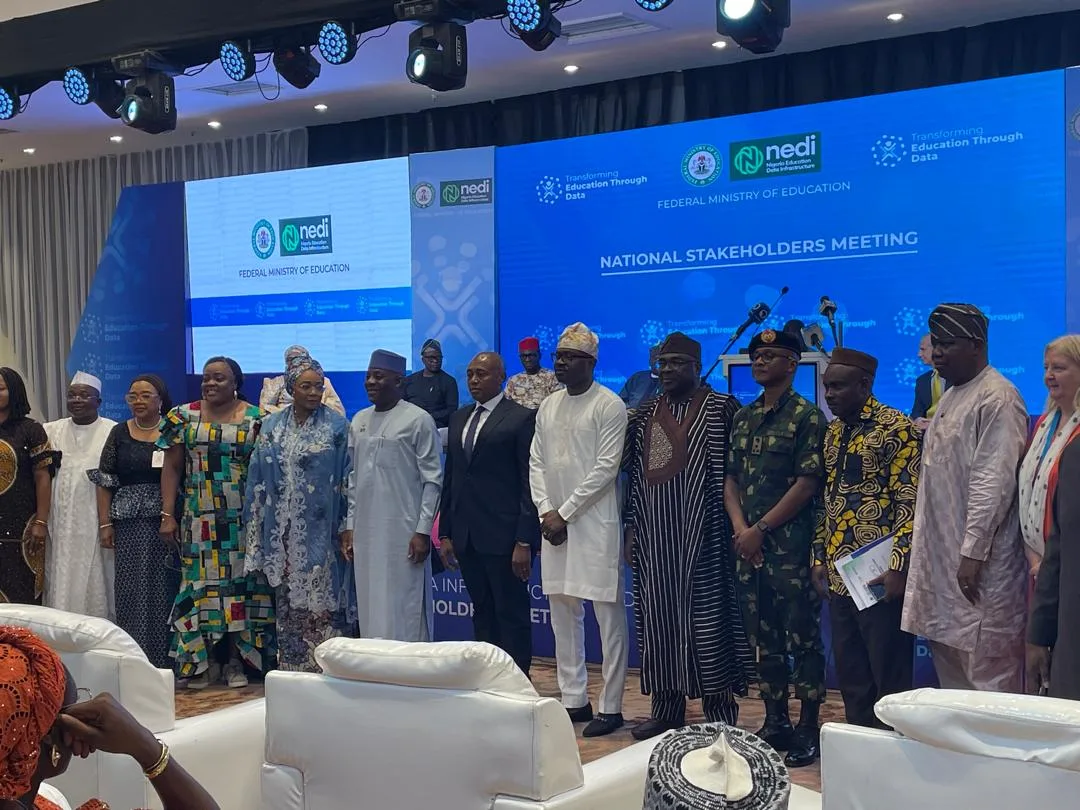
The Nigerian government has taken a significant step towards consolidating education records with the launch of the Nigeria Education Data Infrastructure (NEDI) platform. This move is expected to integrate data across all levels of education, strengthening evidence-based governance in the sector. It's a move that's been needed for a while, as the current system doesn't provide a unified view of education data.
The NEDI platform was launched at a stakeholders' workshop in Abuja, attended by key stakeholders from the education sector, government ministries, agencies, and development partners. The Minister of Education, Dr. Tunji Alausa, explained that the platform represents a shift towards a unified, data-driven education system. This system is aimed at improving planning, accountability, and policy execution across the country. It's a system that'll help the government make informed decisions, and it's a system that'll make the education sector more efficient and effective.
Dr. Alausa said, "What we are building is a unified education data system that allows us to move from scattered information to a single, reliable source of truth for decision making." He added, "For the first time, we will have a complete view of our education system from enrolment to completion, in a way that allows us to plan and intervene effectively." This means that the government won't have to rely on incomplete or inaccurate data, and it'll be able to target its interventions more effectively.
The Minister of State for Education, Prof. Suwaiba Said Ahmad, noted that the initiative is designed to resolve the chronic fragmentation of data across Nigeria's education sector. The absence of an integrated system has made it difficult to access reliable and timely information on enrolment, infrastructure, teacher distribution, and learning outcomes. This has made it hard for the government to identify areas where it needs to improve, and it's made it hard to evaluate the effectiveness of its interventions.
The Minister of Women Affairs, Hajiya Imaan Sulaiman-Ibrahim, commended the initiative, saying it would help boost the educational sector. She emphasized that accurate data enables the government to identify gaps, target interventions more effectively, improve coordination across institutions, and ensure that vulnerable children aren't left behind. This is crucial, as it'll help the government make sure that all children have access to quality education, regardless of their background or circumstances.
The Minister of Interior, Olubunmi Ojo, asserted that the system would improve national coordination and support rehabilitation planning within correctional facilities. This is because it'll provide access to learners' educational histories, which will help inmates when they're released. Olubunmi Ojo added that this would help inmates, so that when they come in, there's already an idea of what they've done, and they can just follow up from there. It's a system that'll help reduce recidivism, and it'll help inmates reintegrate into society.
The NEDI Coordinator, Dr. Abubakar Isah, described the platform as a transformative move towards a unified national education data system. By integrating previously fragmented datasets, the system is built to provide the actionable intelligence necessary for effective planning and governance. Dr. Isah remarked, "We have established a 'single source of truth' for education data." This allows for the seamless tracking of learners across all levels while generating real-time insights to drive policy and targeted interventions.
It's a system that'll help the government respond quickly to changes in the education sector, and it'll help the government make informed decisions.
The success of the initiative would depend on strong collaboration between federal and state governments, according to Barr. Ifeanyi Ossai, Enugu State Deputy Governor. He further described NEDI as a transformative tool that would help states better understand education gaps and align interventions with real-time data. This means that states will be able to identify areas where they need to improve, and they'll be able to develop targeted interventions to address these gaps.
NEDI is expected to create a single source of truth for the education ecosystem, allowing for better planning, accountability, and policy execution. The platform is a significant step towards improving the education sector in Nigeria, and its impact will be closely watched by stakeholders in the coming months. It's a system that'll help the government make informed decisions, and it's a system that'll make the education sector more efficient and effective.
Key Facts
- The NEDI platform was launched at a stakeholders' workshop in Abuja.
- The platform is designed to integrate data across all levels of education.
- The Minister of Education, Dr. Tunji Alausa, said the platform represents a fundamental reform in education data collection and management.
- The Minister of State for Education, Prof. Suwaiba Said Ahmad, noted that the initiative is designed to resolve the chronic fragmentation of data across Nigeria's education sector.
- The Minister of Women Affairs, Hajiya Imaan Sulaiman-Ibrahim, commended the initiative, saying it would help boost the educational sector.
The launch of the NEDI platform is a significant development in Nigeria's education sector, and it's expected to have a positive impact on the country's education system. With the platform, the government will be able to make informed decisions, and the education sector will become more efficient and effective. The government won't have to rely on incomplete or inaccurate data, and it'll be able to target its interventions more effectively.
In the coming months, the government will be working to ensure that the NEDI platform is fully operational. This will require strong collaboration between federal and state governments, as well as between the government and other stakeholders in the education sector. They'll need to work together to make sure that the platform is being used effectively, and they'll need to work together to address any challenges that arise.
As the NEDI platform becomes fully operational, it's expected to have a significant impact on Nigeria's education system. The platform will provide a single source of truth for education data, allowing for better planning, accountability, and policy execution. This will lead to improved outcomes for students, and it'll help to ensure that Nigeria's education system is effective and efficient. The government will be able to respond quickly to changes in the education sector, and it'll be able to make informed decisions.
The launch of the NEDI platform is a significant step towards improving the education sector in Nigeria. The platform has the potential to make a positive impact on the country's education system, and it's expected to be closely watched by stakeholders in the coming months. The government's decision to launch the NEDI platform is a testament to its commitment to improving the education sector. The platform is a significant investment in the country's education system, and it's expected to pay dividends in the coming years.
The launch of the NEDI platform is a significant development in Nigeria's education sector. The platform has the potential to make a positive impact on the country's education system, and it's expected to be closely watched by stakeholders in the coming months. The government will be monitoring the platform's progress closely, and it'll be making adjustments as needed. The NEDI platform is a significant step towards improving the education sector in Nigeria, and it's a step in the right direction. The government's commitment to education is clear, and it's a commitment that'll have a lasting impact on the country.