

A BBC investigation has uncovered a shocking network of UK-registered businesses that are being used by people smugglers to facilitate illegal Channel crossings. The smugglers are directing migrants to pay for these crossings using these firms, with payments of nearly £3,000 being made through them. This network is complex, and it's clear that the smugglers have found a way to exploit the system.
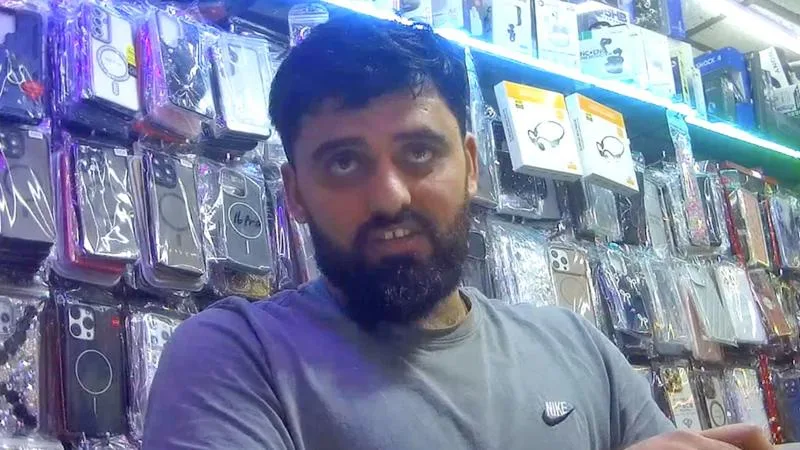
The investigation, which lasted three months, found that a mobile phone shop in south-east London was one of the businesses being used. Staff at the shop told an undercover researcher that they could deposit cash and send it to a smuggler in France. The shop worker said, 'You put your money here. If your friends reach the UK, you shouldn't come back.' This attitude by smugglers is brazen, according to Tom Keatinge, from the Royal United Services Institute (Rusi) security think tank. He didn't mince words when discussing the situation.
The smuggler in France provided bank account details of two UK-registered companies, which he said could take electronic transfers for migrant crossings. One of the companies is a wholesale business in Newcastle upon Tyne, and the other is a car wash in Cambridgeshire. The smuggler also provided details of several businesses in Europe where payments could be made in cash, including a car wash in Antwerp, Belgium, and a restaurant in Paris, France. These businesses seem to be unwittingly involved in the smuggling operation.
The BBC sent an undercover researcher to a migrant camp in Dunkirk, known as 'the jungle', where many migrants live in tents before attempting to cross the Channel. Within minutes of arriving, men approached and appeared to be touting for rival gangs. The researcher made contact with two separate smugglers, one of whom took them to meet a smuggler who called himself Zia. Zia said he could book a place on a small boat crossing, and that money exchange shops in the UK could take payment for the crossing. He didn't seem to care that he was talking to an undercover researcher.
'In London, they don't give you a receipt. They call me to say they've got the money. When you cross, they transfer to me,' Zia said. He seemed confident in his operation, and it's clear that he's been doing this for a while.
The second smuggler the researcher met gave them the phone number of the smuggler Ahmad, who had been operating out of northern France for more than five years. Ahmad told the undercover researcher that they could pay via one of three UK businesses, including the mobile phone shop in Woolwich. The BBC then visited the phone shop on three occasions, secretly filming conversations with two shop workers. They didn't know they were being filmed, and their conversations were revealing.
The shop workers told the undercover researcher that the money would be transferred to the smugglers only after a successful crossing. 'If your people don't cross, if he tells me to return your money back to you, I'll do it,' one of the workers said. However, he acknowledged that a safe crossing couldn't be guaranteed. 'You can't count on boats, you never know, God forbid the boat sinks, and all of them drown,' he said. It's clear that the shop workers are aware of the risks involved.
When confronted later, the shop worker denied moving money for people smugglers. The mobile phone shop, and the other two UK firms investigated, are all listed at Companies House, the government's official registry of businesses. The BBC verified that Ahmad had given them correct bank details for both the Newcastle and Cambridgeshire firms. They're legitimate businesses, but they're being used for illegitimate purposes.
The government has made it a priority to 'break' the business model of the people-smuggling gangs. In January 2025, announcing sanctions on suspected people smugglers, Prime Minister Sir Keir Starmer said, 'If you're going to smash a gang that is driven by money, follow the money.' However, recent cases suggest authorities have struggled to recover the millions of pounds generated by the smuggling trade each year before it leaves the UK. They can't seem to keep up with the smugglers.
The National Crime Agency (NCA) says that two people smugglers who were jailed in Cardiff in April had very few assets in the UK, and most of the money had been transferred to their home country, Iraq. Authorities have recovered 10% of the money found to have been made by convicted people smugglers since 2020, according to figures from the Crown Prosecution Service (CPS). In that time, courts ruled that 45 people smugglers convicted in the UK had made more than £16m from their crimes, but judges issued confiscation orders totalling only £2.9m. It's clear that the authorities are struggling to keep up with the smugglers.
The NCA is devoting more resources to tackling the criminal networks behind people smuggling than ever, according to the agency's deputy director Dan Cannatella-Barcroft. They're working hard to disrupt the gangs. There are about 100 active NCA investigations into the 'top tier of gangs and individuals involved,' he adds. 'We are in no doubt that we are making the UK a more difficult place for them to target and operate in.' They're confident in their abilities, but it's a complex challenge.
The BBC has found that people smugglers are using UK-registered businesses to facilitate small-boat crossings. Payments of nearly £3,000 can be made through these firms. The government has made it a priority to 'break' the business model of the people-smuggling gangs. Authorities have recovered 10% of the money found to have been made by convicted people smugglers since 2020. Courts ruled that 45 people smugglers convicted in the UK had made more than £16m from their crimes, but judges issued confiscation orders totalling only £2.9m.
These are the key facts in the case.
Migration minister Mike Tapp MP told the BBC that there's a lot of investigative work that goes on behind the scenes, in part, looking at money transfers. When asked about smuggler Ahmad's use of UK-registered companies' bank accounts, Tapp said he'd love to see more of the results of the investigation but couldn't go into any detail on that. He's limited in what he can say, but it's clear that the government is taking the issue seriously.
Criminal gangs are agile and continuously changing their methods, Tapp says, and it's essential they keep up with that and they're continuously pressing for that. The NCA is working to disrupt the people-smuggling gangs, but it's a complex and ongoing challenge. As the investigation by the BBC has shown, the smugglers are using sophisticated methods to evade detection and continue to profit from their crimes. They're always one step ahead, it seems.
The impact of people smuggling on the UK is significant, with many migrants risking their lives to cross the Channel. The government's efforts to 'break' the business model of the people-smuggling gangs are crucial, but it's clear that more needs to be done to disrupt the gangs and prevent them from operating in the UK. The NCA's investigations and the CPS's efforts to recover the proceeds of crime are important steps, but the challenge of people smuggling is ongoing, and it will require continued effort and cooperation to tackle it effectively. It won't be easy, but it's necessary.
The use of UK-registered businesses by people smugglers is a concerning development, and it highlights the need for increased vigilance and cooperation between law enforcement agencies and financial institutions. The government's priority is to protect the public and prevent the exploitation of migrants, and it's essential that all relevant agencies work together to achieve this goal. They can't do it alone, and they need help from everyone involved.
The BBC's investigation has shed light on the sophisticated methods used by people smugglers to facilitate small-boat crossings. The use of UK-registered businesses to make payments for these crossings is a concerning development, and it highlights the need for increased vigilance and cooperation between law enforcement agencies and financial institutions. The government's efforts to 'break' the business model of the people-smuggling gangs are crucial, and it's essential that all relevant agencies work together to protect the public and prevent the exploitation of migrants. They're working towards a common goal, and they won't give up. The situation is complex, and it won't be resolved quickly, but they're making progress, and that's what matters.