

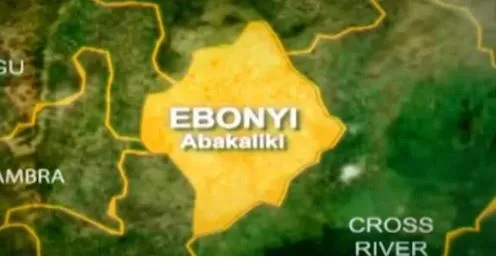
In the villages of Izzi land, the most dangerous thing you can be is sick or unlucky. A fever that refuses to break or a deformity someone was born with is enough for a neighbor to whisper the word 'witch.' Once that label sticks, the life you knew is effectively over. You don't just lose your reputation; you lose your place in the community.
Recent footage captured the horrific reality of this nightmare. In Isohumini Agbaja, a child suffering from a chronic illness wasn't taken to a hospital for proper care. Instead, a self-acclaimed prophet named James Nwankpu dragged the child onto bare, dirty ground. He handled the minor in a way so physically abusive it made even the most hardened observers wince. He claimed he was conducting a 'deliverance,' but to anyone watching, it was just a slow, cruel assault on an innocent.
Ebonyi State Police Commissioner Hope Urunwa Okafor eventually stepped in, ordering the arrest of James Nwankpu. The child was finally rescued and moved to the Federal Teaching Hospital, Abakaliki, where she's currently receiving medical attention. This rescue provides immediate safety for the child. The case serves as a dark reminder of how deep these superstitions run in rural parts of the state.
Chief Sampson Oko Nweke, the Chairman of the Ebonyi State Human Rights Defender, says the intervention was long overdue. He noted that the pastor had made clear, direct attempts to end the life of the child under the guise of religious cleansing. The arrests of both the prophet and the child's own parents have brought temporary relief. The underlying problem isn't going anywhere.
The Business of Witchcraft Accusations
Dr. Leo Igwe, who runs the Advocacy for Alleged Witches (AAW), has been tracking these abuses for years. He argues that this isn't just about old-fashioned superstition; it's about a system of exploitation. Many of these prophets are essentially charlatans who use fear to extort families. They often incite violence against those who can't defend themselves.
He points to the case of Chief Ekpono, an Izzi community leader who was forced to flee with his entire family after someone decided to slap a 'wizard' tag on him.
These accusations are rarely random. Traditional ruler Eze Sunday Oketa of Nkaliki Unuhu Achara confirms that many of these witch hunts are actually motivated by petty local politics. If a neighbor hates you, or if you refuse to play ball with a rising politician, a fake 'prophet' is often the weapon of choice to destroy your standing in the village. When you have a community where many people are struggling to survive, envy turns into a deadly game of branding the prosperous as ritualists who stole their luck.
The recent banishment in Izzi was caused by envy and jealousy. So, what they do now is if you didn't support a particular person in his political ambition, he can sponsor witchcraft on you through some youths or use a pastor to organise a prayer session just to implicate the person.
A Pattern of Impunity
Legal consequences for these actions are painfully rare. Even when police arrive to arrest the tormentors, suspects are often released after their relatives pay off the right people. Dr. Leo Igwe cites the case of 17 people arrested for the murder of one Uromchi Okorocha in Afikpo, who was accused of using spiritual means to kill his neighbors. That case effectively went cold, and no one was brought to justice for the killing.
Without a state-level policy to treat these witch hunts as serious crimes, the cycle repeats. Families are destroyed, children are left scarred, and the perpetrators move on to the next village. The law is supposed to protect the vulnerable, yet in these pockets of Ebonyi, the 'rule of law' is currently losing to the rule of the mob. If the state doesn't start prosecuting these 'prophets' and their enablers with real energy, these abuses will stay buried in the silence of rural communities.