

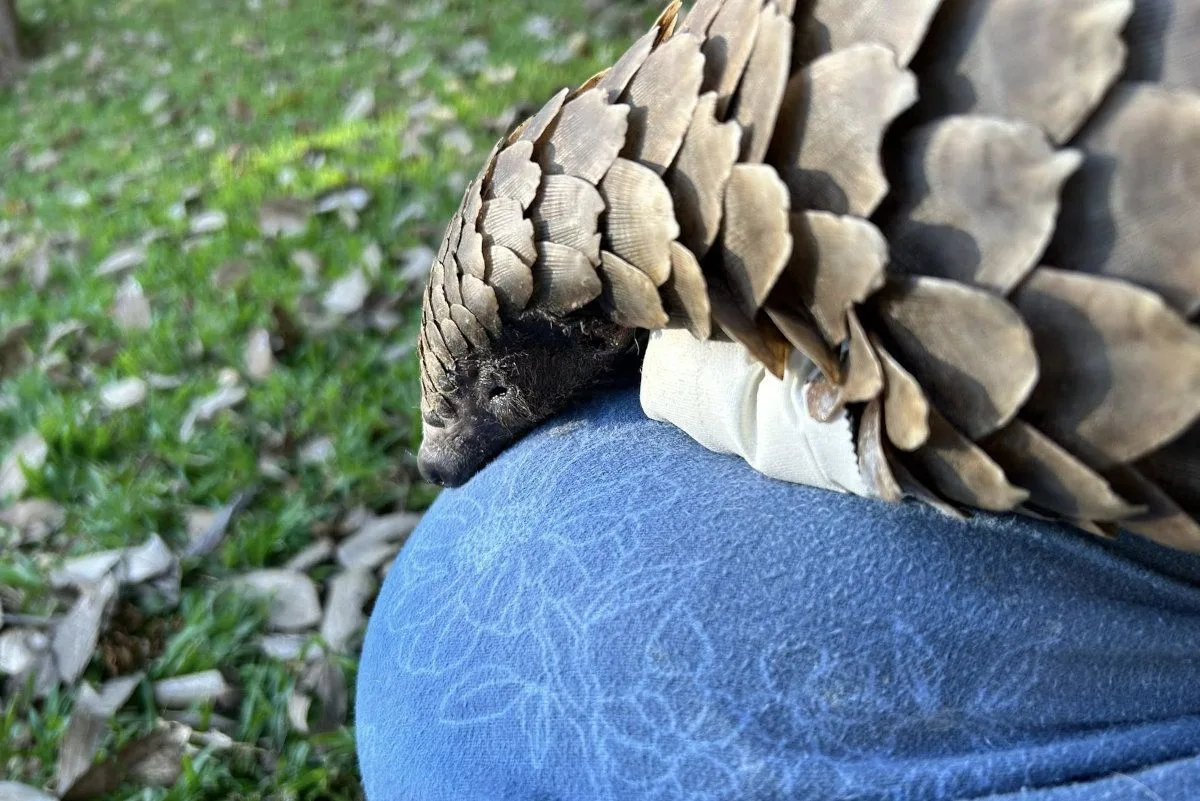
Naledi was just a sub-adult female Temminck’s pangolin when she entered the nightmare of the illegal wildlife trade. By the time the South African Police Service intercepted her in 2023, the damage was already done. She arrived at the Johannesburg Wildlife Veterinary Hospital in a state that left even the most seasoned vets shaken.
She was starving, severely dehydrated, and her kidneys were already shutting down. Her body condition score was a miserable 1 out of 5, meaning she was literally skin and bones. The most tragic part of this story came to light under the harsh lights of the exam room: she was carrying a baby.
The unborn baby had already been compromised due to prolonged starvation and stress caused by the ordeal.
Despite five days of around-the-clock fluid therapy and intense medical monitoring, neither Naledi nor her unborn pup could be saved. The physical toll of the trafficking process, which involves long periods cramped in small containers without food or water, proved to be too much for her fragile system to handle.
The Molopo Regional Court has handed down an eight-year direct prison sentence to the individual who poached her. This sentence stands out because it goes beyond just a slap on the wrist or a simple fine. The court also ordered the immediate forfeiture of the poacher’s vehicle, which carries a market value of roughly R800 000.
State Advocate Bennie Kalakgosi led the prosecution, working closely with conservation authorities in the North West Province to ensure the conviction held firm. This ruling is now being cited as a precedent-setter for future wildlife crime cases in the region. The judiciary is finally viewing these losses not as minor infractions, but as serious criminal acts against the country’s natural heritage.
Johannesburg Wildlife Veterinary Hospital staff expressed relief at the outcome, noting that these cases leave a heavy emotional scar on the teams tasked with picking up the pieces. Pangolins are notoriously difficult to treat because they're highly sensitive to stress. Once their immune systems crash, they rarely recover, even when they reach a professional facility.
Temminck’s ground pangolins are frequently targeted because of the massive global demand for their scales and meat. In many illegal markets, their scales—which are made of keratin, the same substance as human fingernails—are wrongly touted for medicinal properties. This misinformation fuels a cycle of violence that sees these gentle, ant-eating creatures snatched from the bush at an alarming rate.
South Africa acts as both a source and a transit hub for this trade, with illegal syndicates often trying to move product through major ports to reach buyers in other continents. The loss of a reproductive female like Naledi is particularly damaging to the species' survival. A single death doesn’t just mean the loss of one animal; it effectively wipes out a future generation that could have helped stabilize the local population.
While the prison term won't bring Naledi back, it serves as a stern warning to anyone thinking of cashing in on the illegal trade. Conservationists are watching to see if this judicial approach becomes the new standard for all wildlife trafficking prosecutions across the country. Protecting these animals requires more than just field rangers in the bush; it needs the backing of the law to make the risk of poaching feel real for those who profit from the destruction of our wildlife.