

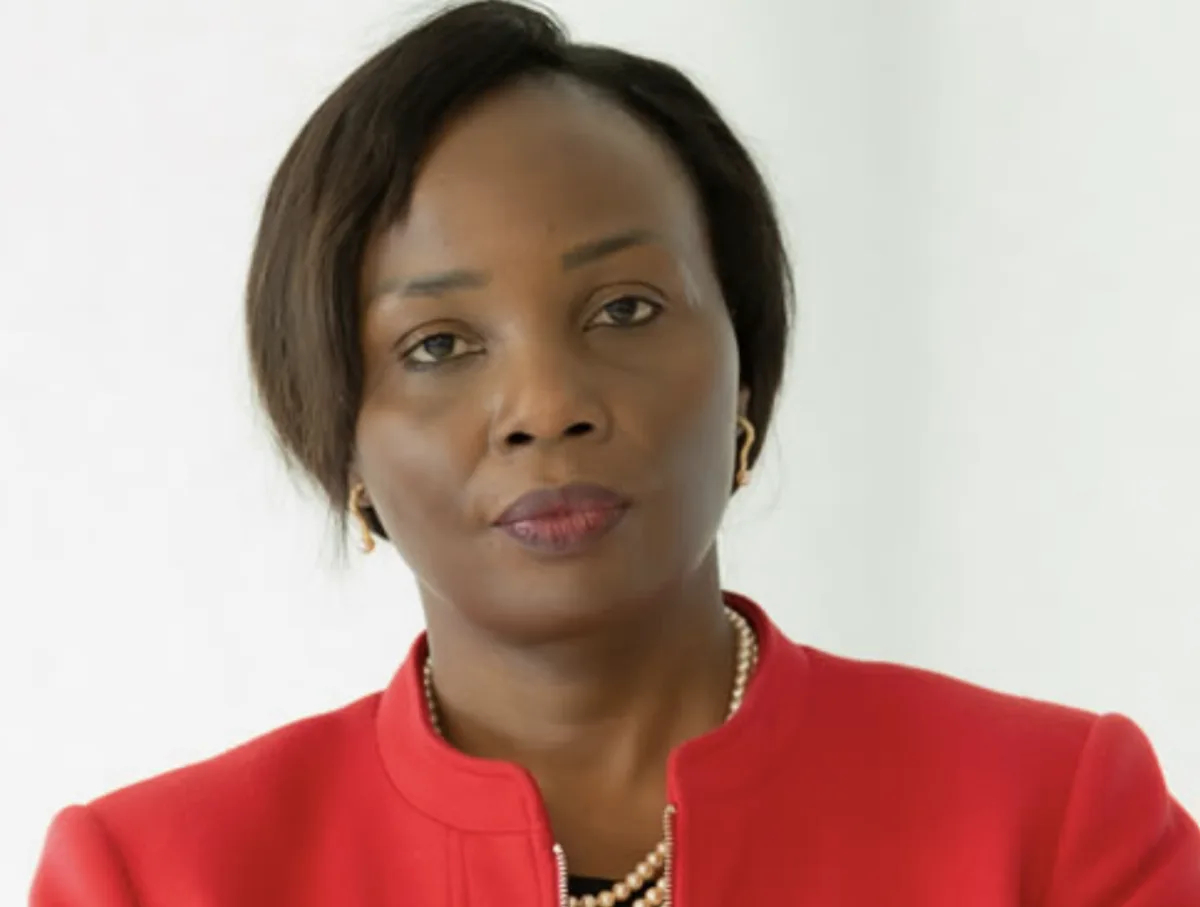
You think your land is an investment because the price goes up every few years. You’re holding onto it, waiting for that sweet capital appreciation that makes you feel like a genius when you sell it to a developer in five years. But Aggie Asiimwe Konde, who works as the Communications, External Engagements & Advocacy Director of AGRA, recently found out that her eight-hectare plot was actually dead weight.
### AGRA and African Farmers
AGRA, or the Alliance for a Green Revolution in Africa, focuses on finding ways for small-scale farmers to make more money from their soil. Last year, Aggie bought her land outside the city to diversify her assets and preserve her wealth. She thought she was being smart. Then she looked over the fence.
Her neighbor, Willy Kibuuka, was busy working his field. He wasn't worried about inflation or the latest breaking news. He was loading his second truck of tomatoes for the day. He had already sent one away, and there was enough produce left on the vines to fill a third.
"Survival, according to him, comes down to knowing when to harvest and how to price the crop."
"The tomato crop, specifically, was doing well for Willy. Each crate was fetching about $135, and with 60 crates per truck, Willy was hauling in roughly $8,100 while the season was still in full swing."
Aggie asked Willy about the impact of global issues like the closing of the Strait of Hormuz—the vital shipping lane that keeps global trade moving. Willy didn't care. He told her that global shocks are distant noises. For him, the business is about the timing of the harvest and the price at the market. He doesn't have the luxury of waiting for the perfect economic climate.
### Inaction in Africa
Africa is home to nearly 60 per cent of the world’s uncultivated arable land. We talk about food security like it’s a problem that requires a massive, complex solution from international bodies. But the real issue is what experts call the 'intention-action gap.' This gap is the space between the people who own the resources and the people who actually activate them to generate cash.
Aggie had more money, more education, and more professional connections than Willy, yet her land was doing nothing. Willy, on the other hand, had taken his smaller plot and turned it into an active cash-flow machine. It’s a harsh truth for those of us sitting on landed property in places like Accra or Lagos while complaining that the economy is ‘hard’.
There are other stories just like this one. In Kenya, an onion farmer struggled through two failed seasons before hitting a stride that now brings in $30,000 every month from 12 acres. There is also a massive, untapped opportunity in processing, such as creating banana puree for export. These stories aren't about the specific crops; they are about moving from passive ownership to active entrepreneurship.
### Active Entrepreneurship
Aggie is now looking for an agronomist to help her transform her land into an organic farming project. She’s shifting her focus from 'preserving' wealth to ‘creating’ it. The lesson here is simple: if you own land, you are holding a tool that can either sit there gathering dust or start working for you. You don't need a boardroom meeting to get started. You just need to stop viewing your dirt as a bank account and start viewing it as a factory.