

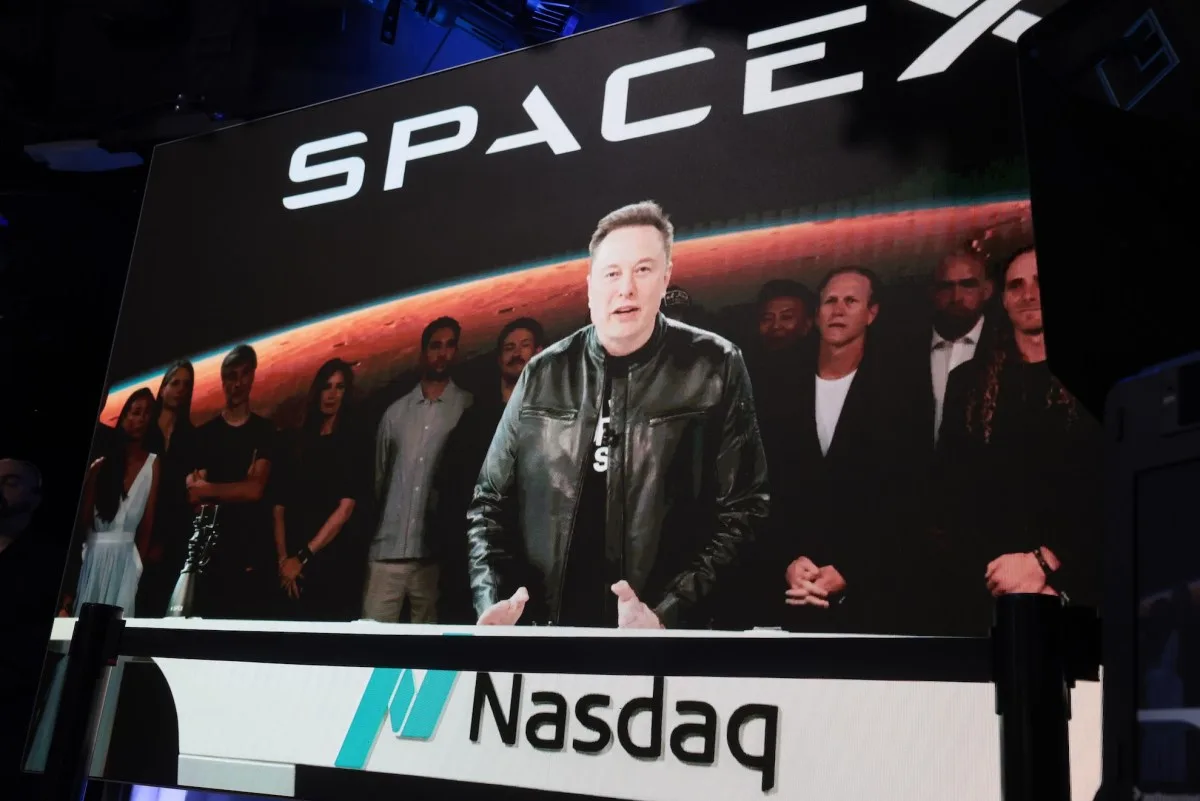
Elon Musk is now the world's first trillionaire. That's after SpaceX, the rocket company he founded 24 years ago, pulled off the biggest initial public offering in history — pricing 555.6 million shares at $135 each to raise $75 billion.
The IPO turned a company that was already a household name into a public market giant overnight. SpaceX priced its shares at $135, and the offering valued the company at roughly $180 billion. That's more than Boeing, Lockheed Martin, and Northrop Grumman combined.
SpaceX has been a private company since Musk founded it in 2002. For years, investors and fans begged for a chance to buy shares. The company stayed private, raising money in private rounds from big funds. Now, anyone with a brokerage account can own a piece of the company that launches astronauts, builds Starlink, and lands rockets on drone ships.
The IPO didn't just make Musk richer. It also minted a new class of millionaires — early SpaceX employees who held onto their stock. The company has about 13,000 employees, and many of them got equity grants over the years. At the IPO price, even a modest stake is worth life-changing money.
Musk already owned about 42% of SpaceX before the IPO, according to estimates. His net worth now sits above $1 trillion, a number that's hard to wrap your head around. For context, the entire GDP of Saudi Arabia is about $1.1 trillion. Musk's fortune is roughly equal to the economies of Nigeria and Egypt combined.
The $75 billion raised in the IPO is more than double the previous record — Alibaba's $25 billion IPO in 2014. It's also more than the combined IPOs of Uber, Lyft, and Pinterest. SpaceX didn't need the money — it was already profitable, thanks to Starlink's growing subscriber base and a steady stream of NASA and Pentagon contracts. But going public lets early investors and employees cash out, and it gives the company a currency to use for acquisitions.
SpaceX now trades on the Nasdaq under the ticker SPCE. Wait — that's Virgin Galactic. SpaceX's ticker is SPACX. The stock opened at $145, up about 7% from the IPO price, giving the company a market cap of around $190 billion on day one.
The listing is a milestone for the space industry. SpaceX has redefined what's possible with reusable rockets, cutting launch costs dramatically. It now launches more payloads to orbit than any other company or country. Starlink, its satellite internet service, has over 4 million subscribers globally and is on track to generate $10 billion in revenue this year.
Musk, who also runs Tesla, X, and Neuralink, is now in a league of his own when it comes to wealth. But being a trillionaire comes with scrutiny — expect more calls for higher taxes on the ultra-rich, and more attention from regulators. For now, though, Musk can say he built the biggest IPO ever and became the first person to hit 12 zeros in net worth.
"SpaceX has captured the attention of media, investors, and the public for years now — interest propelled by the company's reusable rocket launches, the rise of its Starlink satellite network, and, of course, for its founder and CEO Elon Musk." — Source
Key Facts
- IPO raised $75 billion, the largest in history
- 555.6 million shares priced at $135 each
- Musk's net worth exceeds $1 trillion
- SpaceX market cap on day one: ~$190 billion
- Starlink has 4 million+ subscribers
- Company founded in 2002, stayed private for 24 years