

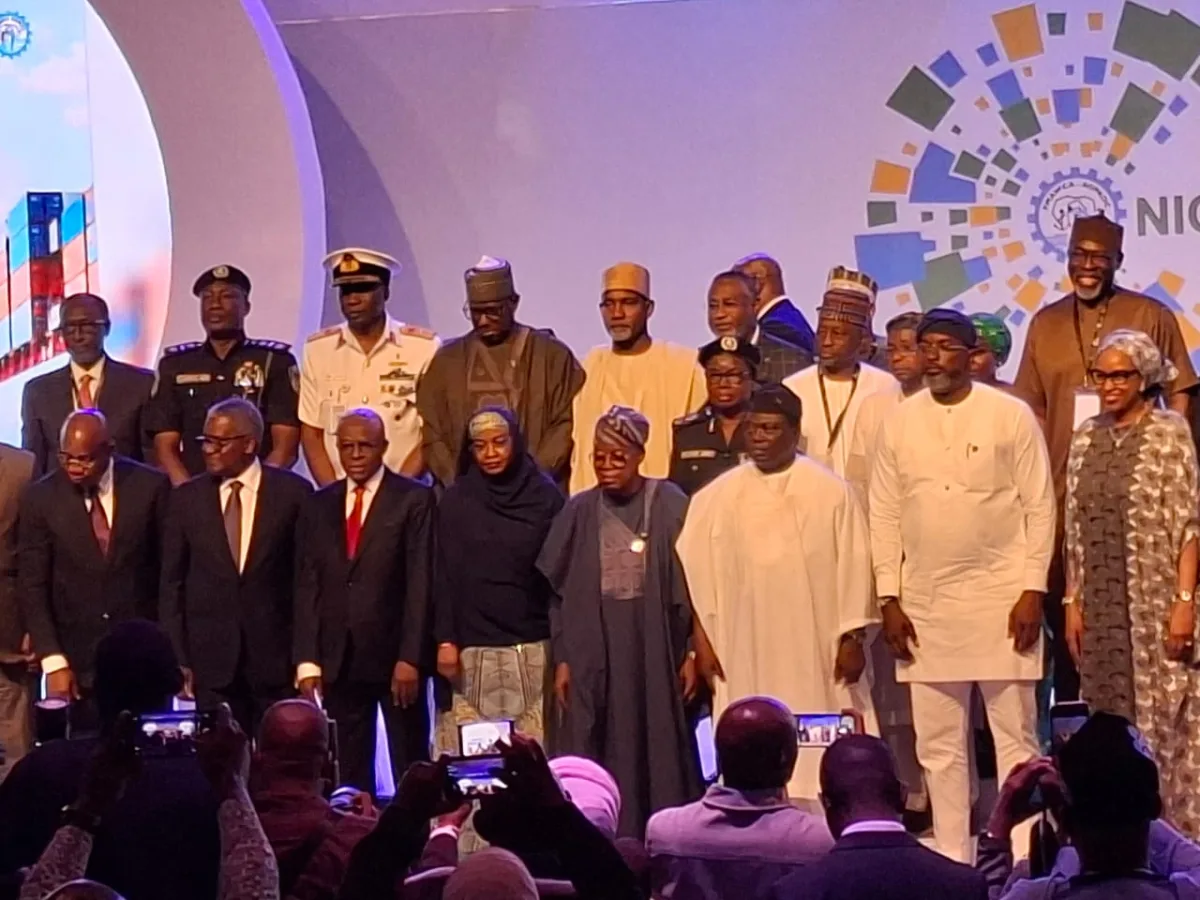
The Port Management Association of West and Central Africa (PMAWCA) is taking a step towards enhancing port operations across the region that will boost the competitiveness of West and Central African ports. PMAWCA has launched a new statistician network. This initiative, which was announced during the second day of PMAWCA's mid-year session in Lagos, is designed to push data-driven management across the region. It's a move that could have a significant impact on the region's port performance.
Speaking on the sidelines of the event, PMAWCA Project Manager, Mr. Tantoh Rowland, noted that a historical lack of reliable data has long hindered the region's port performance. "Prior to 2025 when the statistician network was created, we don't tell our story in figures and precision as we should," he said. According to Rowland, the network was built specifically to address this gap.
"There's a new network tool we created in 2025, it's called the statistician network. This was created because data-driven decisions are needed to shape our operations in the ports." Rowland explained that the network is crucial for the region's development.
The network focuses on collecting and processing operational data for regional use. "The network is tasked with collecting the right data, processing it, and deploying it rightly for our region," Rowland explained. This database will help track key performance indicators that influence global competitiveness. "So we're developing a strong database that will take into consideration container traffic, turnaround time, rotation time, and berthing time," he said. It's a complex process, but it's necessary for the region's growth.
PMAWCA's three-tier governance structure ensures coordinated action. The highest governing body is the Council, which is made up of all the port managing directors in the region. The Council has six members chosen through a rotational format determined by all the managing directors. These six members meet every mid-year to evaluate how the secretariat is implementing resolutions and the day-to-day running of the association. They're responsible for making key decisions that affect the region.
On digitalization, Rowland stressed urgency following new IMO rules. The digitalization of ports across the region is a task that must be done. "The competitive nature of our market has caught up with us and we must step up," he said. The International Maritime Organization (IMO) issued a 2024 mandate requiring all member states to streamline ship clearance procedures by permitting the electronic submission of port, customs, and immigration data through a single entry point. This mandate can't be ignored, and the region must comply.
PMAWCA collaborates closely with the IMO, SSATP (Africa Transport Policy Program), World Bank, and other bodies to roll out the Maritime Single Window across member states. A key December 2025 workshop in Abidjan shared lessons on MSW implementation, with follow-up sessions planned for English- and Portuguese-speaking nations in 2026. These platforms tackle fragmented procedures and promote single-entry electronic data submission for faster ship clearance. They're essential for the region's development, and they won't be optional for long.
Nigeria, a PMAWCA leader, is investing heavily in infrastructure upgrades, automation, and the National Single Window to position itself as West Africa's trade hub. Similar digital reforms are underway in ports across Côte d'Ivoire, Senegal, Ghana, and beyond. With over $27 billion currently invested in regional port projects, digitalization isn't a luxury - it's a necessity. It's now the fundamental driver for efficiency, transparency, and sustainable growth across the sub-region. It's what the region needs to stay competitive, and it's what they're working towards.
Key Facts
- PMAWCA launches a statistician network to enhance decision-making and boost port competitiveness.
- The network focuses on collecting and processing operational data for regional use.
- PMAWCA's three-tier governance structure ensures coordinated action.
- Digitalization of ports is a task that must be done due to new IMO rules.
- Over $27 billion is currently invested in regional port projects.