

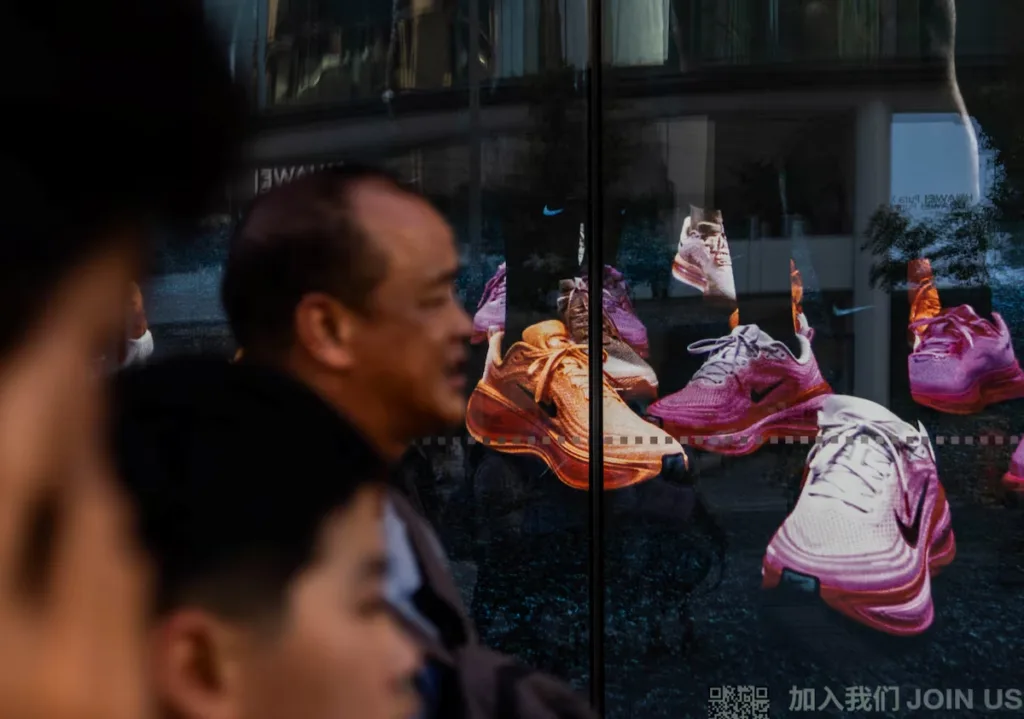
Nike, the world's biggest sportswear brand, is tightening its grip on the Chinese e-commerce market. According to Cathy Sparks, vice president and general manager of Greater China, the company's online marketplace has become 'cluttered' and lost its authenticity.
The e-commerce shift is part of Nike's broader effort to revive growth in China, where sales declined 17% in the fourth quarter. Domestic rivals like Anta and Li Ning have chipped away at Nike's market share, while foreign brands like On and Hoka have surged.
Nike's decision to restrict wholesale distributors' online sales is a strategic move to rebuild trust with Chinese shoppers and sell its products at full price. Starting in January, key sportswear retailers in China will stop selling Nike's clothing and shoes online and pivot to in-store sales. Online, the company's products will be sold through new Nike-branded digital storefronts on popular Chinese e-commerce platforms Tmall, JD.com, and Douyin, as well as Nike's website and app.
Cathy Sparks, a 25-year company veteran, was appointed to oversee Chinese operations earlier this year. She said the decision to restrict online sales was a response to consumer feedback, which sought a more premium and authentic brand experience. 'What consumers want is an experience that's premium, true to the brand, trustworthy, and certainly connected between digital and physical,' she stated.
Nike's China woes have reinforced for investors that CEO Elliott Hill's turnaround strategy still faces significant obstacles. Despite efforts to refocus on sports, rebuild wholesale relationships in North America, and introduce new products, Nike's sales in China continue to decline.
The e-commerce shift is a bold move by Nike to regain control of its market share in China. With domestic rivals gaining ground, the company must adapt to changing consumer preferences and maintain its premium brand image.
Key Facts
- Nike's sales in Greater China fell 17% in the fourth quarter.
- Domestic rivals like Anta and Li Ning have chipped away at Nike's market share.
- Foreign brands like On and Hoka have surged in popularity in China.
- Nike's products will be sold through new digital storefronts on Tmall, JD.com, and Douyin.
- Cathy Sparks was appointed to oversee Chinese operations in the first half of this year.
This decision to restrict online sales is a strategic move by Nike to rebuild trust with Chinese shoppers and maintain its premium brand image. It remains to be seen whether this strategy will pay off for the company.
Image Query: A photo of a crowded Nike store in Shanghai, with consumers waiting to purchase new products.