

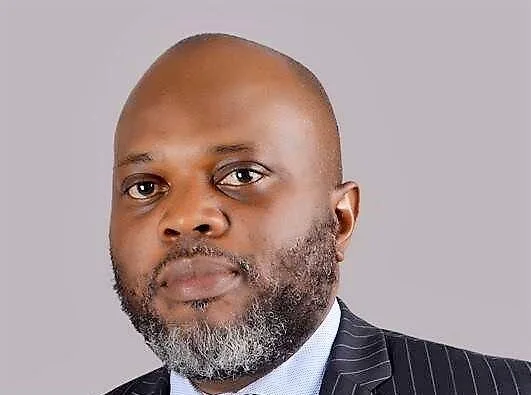
A former presidential aide is pushing back on the narrative that Nigeria’s foreign investment numbers are a failure — and he’s asking the country’s top analysts to think harder.
‘Tope Fasua, who served as Special Adviser on Economic Matters to former Vice President Yemi Osinbajo, wrote a sharp intervention on Monday aimed at Nairametrics, one of Nigeria’s most respected financial platforms. The debate started when Nairametrics reported that of the $10 billion in foreign investment that came into Nigeria in Q1 2026, $6.5 billion went into Treasury Bills — short-term government debt. For 2025, $13 billion of the $45 billion total also went into money market instruments. The platform argued that Nigeria should be chasing investments that build factories, hire workers, and transfer technology, not hot money.
Fasua agrees with the facts. But he disagrees with the conclusion.
“This is where the naivety shows,” he wrote. He called Nairametrics out for what he sees as one-sided analysis — focusing only on the downsides of a policy while ignoring its broader context. He even asked an AI to name the problem, and it came back with terms like cherry-picking, negativity bias, and the appeal to consequences fallacy.
Fasua’s deeper point is that Nigeria’s economy is largely informal, and domestic investment — the kind Nigerians make every day in small businesses, farms, and trade — doesn’t get the attention it deserves in GDP calculations. He recalled calling a senior official at the National Bureau of Statistics weeks ago to ask how investment is captured in the GDP formula (C+I+G+Nx). His worry: the country isn’t taking domestic investment seriously enough.
He also brought up a real-world example of policy trade-offs. When inflation crashed in 2025 and food prices fell, many farmers complained bitterly about the government’s grain imports. Fasua said he told them to be patient, but he also pointed out that 90% of Nigerians aren’t farmers. The policy, he argued, gave the majority relief from the food price spikes of 2023 and 2024.
“I believe that policy had had a good outcome.”
Fasua’s article isn’t just a defence of the government. It’s a challenge to economic commentators to be more balanced. He acknowledged that Nairametrics isn’t a frivolous platform — he called it a go-to source for financial analysis — and said his goal was to help it “get better and stay the course.”
The piece also touched on the concept of Pareto efficiency — the idea that the best outcome from any policy is one where 80% of people benefit, even if 20% are worse off. Fasua argued that too many analysts ignore this reality and instead build doomsday scenarios from the downsides alone.
So what does this mean for the average Nigerian? The debate over FDI numbers can feel abstract, but it gets at a real question: Is the economy working for most people, or only for a few? Fasua’s answer is that we need to look beyond the flashy foreign numbers and pay attention to what Nigerians are building at home.