

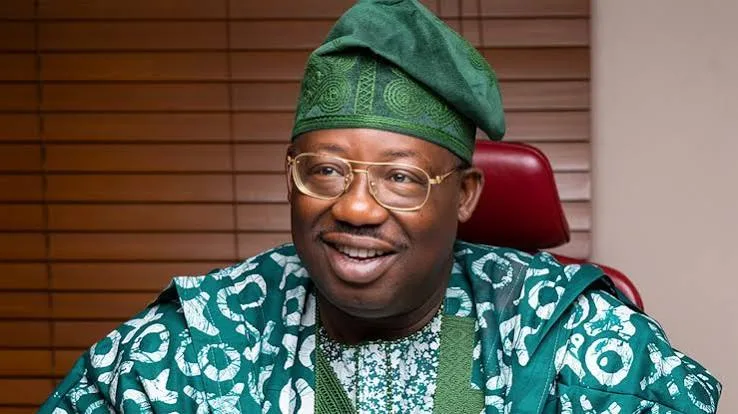
Nigeria’s economy is currently wrestling with severe strain, even as it managed to attract $10.37 billion in capital inflows. The big worry? According to Mr. Dele Oye, Chairman of the Alliance for Economic Research and Ethics (AERE), the type of money coming in isn't the kind that builds a strong, lasting economy.
Oye is flagging that this substantial inflow shouldn't be confused with actual, sustainable investment. He points out that much of it is foreign portfolio investment, which, frankly, is a bit like a fickle friend. This type of investment can pack its bags and leave in a hurry if interest rates change, the naira takes a tumble, or investors just get a bad feeling about things.
And speaking of interest rates, the recent decision by the United States Federal Reserve to hike its rates for the first time in over three years, now sitting at 3.75–4.00 per cent, is now a major test for Nigeria. Oye warns that any further hikes by the US Fed will put Nigeria’s foreign exchange reserves, currently at $54.61 billion, and the stability of the naira market under serious pressure. It means money might start flowing out of emerging markets like ours as investors chase better, safer returns elsewhere.
Nigeria's ability to hold onto its foreign capital and keep the naira steady now depends heavily on how strong its foreign reserves are and how much confidence investors have in the country's economic direction. While the reserves act as a buffer, the real challenge is whether the country can handle renewed pressure on the naira without draining these vital savings.
Oye stresses that Nigerian policymakers must keep a very close eye on all incoming capital, the demand for foreign exchange, and global interest rate shifts. He says they need to be smart about how they use the nation's reserves. More importantly, he says, Nigeria needs to boost its non-oil exports and attract more stable foreign direct investment (FDI). This is the only way to reduce how easily the country is shaken by global economic turbulence.
An economy can't grow properly just by getting a lot of money if that money doesn't actually build anything. Oye explains that simply recording large capital inflows isn't enough if it doesn't lead to more production, more jobs, better infrastructure, and an improved standard of living for Nigerians. The focus, he insists, must shift to creating an environment where long-term investors are willing to put their money into manufacturing, agriculture, technology, and infrastructure. Things like stable policies, good infrastructure, clear regulations, and making it cheaper to do business are key to attracting this kind of solid investment.
Ultimately, Oye argues, Nigeria's economic reforms should be judged not by how much money flows in, but by the tangible impact it has on businesses and everyday people. That means more investment, more jobs, higher production, and more purchasing power for everyone. Stronger FDI, he concludes, offers a much more dependable foundation for economic expansion than the shaky ground of volatile portfolio flows.