

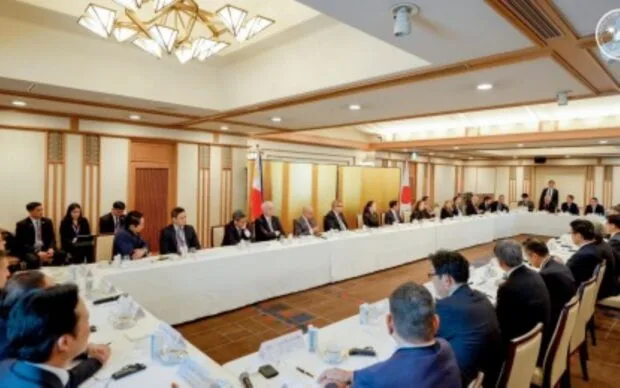
President Ferdinand R. Marcos Jr. didn't leave Tokyo empty-handed this Wednesday. He walked away with a staggering $3.4 billion—that’s about P210 billion—in fresh investment commitments from Japanese business titans. The deal was struck during a high-level roundtable meeting held at the historic Imperial Hotel. That setting saw top executives pledging their support for the administration’s current economic path.
It’s the kind of news that makes you wonder just how much of that will actually trickle down to our local industries, but for now, the mood in the room was undeniably optimistic.
The Presidential Communications Office (PCO) described the haul as a "massive visual vote of confidence" for the government's plans. When you hear figures like $3.4 billion, it’s easy to get lost in the zeros. The promise here is that these combined capital inflows will act as a catalyst for various sectors across the archipelago. We’re talking about massive shifts in how industries operate, from manufacturing to energy. These investments are potentially opening up doors that have been stuck for years.
Among those present at the Imperial Hotel were heavyweights from Japan’s private sector, companies that have long been the backbone of Philippine-Japanese trade relations. These aren't just fly-by-night operations; they're long-term partners who have survived every economic storm we’ve faced since the 80s. The meeting was curated to cut through the usual bureaucratic red tape. It allowed the President to speak directly to the boardrooms that actually pull the strings of the Tokyo Stock Exchange.
The current administration hasn't been shy about looking toward Tokyo to bolster local reserves. Japan has historically been one of our largest sources of Official Development Assistance (ODA). It has often provided low-interest loans for our biggest infrastructure projects, like the Metro Manila Subway. By shifting the focus toward private investment rather than just government-to-government loans, the Palace is trying to pivot toward a model where the private sector carries more of the weight. This change in strategy allows the government to allocate its own resources to other social services while private capital fuels industrial growth.
The roundtable concluded with a massive visual vote of confidence for the administration's economic agenda, yielding an aggregate investment commitment of USD3.4 billion from participating Japanese corporations.
If you're wondering how this affects your daily commute or the price of fish in the market, the answer is mostly a waiting game. These pledges usually take time to transform into actual factories, offices, or technology plants. The real test is how quickly the Board of Investments can process these leads. The agency needs to ensure they don't just stay on paper as "pledges" for the next decade.
For the young folks scrolling through their phones in a Cebu coffee shop or a Manila office, this represents potential job security in industries that are actually growing. We’ve seen enough "deals" announced in fancy hotels before, so the skepticism is natural. However, the sheer scale of this one is hard to ignore. If these Japanese firms deliver, we might finally see a shift away from the service-heavy economy we’ve been stuck in for so long.
This specific trade dynamic echoes some of the challenges we’ve seen in emerging economies like Nigeria. Foreign direct investment there is often sought to bridge the gap in local infrastructure development. Just as our friends in West Africa look to diversify their trade partners to move beyond just oil, we're clearly trying to balance our reliance on traditional markets by deepening ties with East Asian powerhouses. It’s a delicate dance of diplomacy and commerce. Today, it seems the music was playing in our favor.