

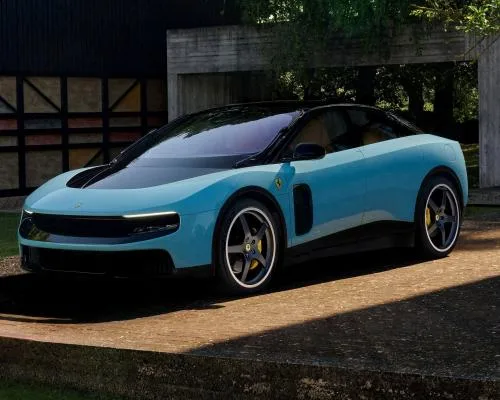
Ferrari's Electric Shift: Tradition Meets Progress
For decades, the Ferrari badge was a promise of pure, unadulterated Italian drama. You didn't just buy a car; you bought the soundtrack of a high-revving V12 engine that could wake the neighbors three streets away. The legendary manufacturer shattered that tradition with the launch of the Luce EV, an electric vehicle that is whisper-quiet and, if you believe the grumbling from the brand's die-hard fans, about as exciting as a kitchen appliance.
"How can you have a Ferrari without any vroom?"
That cutting question came from Fabio Barone, who leads the Italy-based Passione Rossa owners' club. He's a man who has lived and breathed these cars since he was a teenager peering through showroom windows in Rome. To him, the Luce isn't a masterpiece of design; he and many others have compared its look to a Nissan or even the infamously ugly Fiat Multipla. It's a harsh assessment, but when you are charging premium prices for a status symbol, you are essentially selling an image, and many feel this particular image has gone completely rogue.
Even the political heavyweights are weighing in. Matteo Salvini, who serves as Italy's deputy prime minister and transport minister, questioned whether Enzo Ferrari, the man who founded the company on pure speed and performance, would recognize his own creation today. Former CEO Luca Cordero di Montezemolo was even more brutal. He suggested the company should take the iconic Prancing Horse logo off the bodywork entirely, arguing that this electric experiment doesn't deserve the badge.
The company isn't sitting on its hands, though. They know that a silent Ferrari is a tough pill for the average petrolhead to swallow. To fix the issue, they have installed sensors by the axles that pick up the vibrations and amplify them through speakers, similar to how an electric guitar works. This digital 'vroom' will be tested to see if it can fool anyone with petrol in their veins.
Financial markets reacted with immediate jitters. Ferrari stock took a proper dive, sliding 8.4% on the Milan exchange last Tuesday. While shares managed to regain 3.5% by Thursday, the initial shock showed that even investors weren't quite sure how to handle a Ferrari that tries to mimic a Tesla. Benedetto Vigna, the current CEO, has stayed remarkably upbeat. He claims to have received messages from eager customers already queueing up to buy the car, praising the company's courage for trying something totally new.
John Elkann, a key figure in the Agnelli industrial dynasty, clearly wants to drag the brand away from its traditional roots. He brought in former Apple design guru Jony Ive and his creative partner Marc Newson to lead the look of the project. It's an obvious signal that they are hunting for a new kind of customer—one who cares more about slick, modern design than the roar of a petrol engine. They even went as far as presenting the car to Pope Leo to gain his stamp of approval.
Market Reaction and Analysis
The Luce EV has been met with widespread skepticism, but there is no denying the car's technical advancements. It features a five-seat layout, a significant departure from the brand's classic two-seater sports car history. Analysts predict that production will be extremely limited, with fewer than 1,000 units being built. The vehicle is being marketed to wealthy, open-minded buyers who aren't necessarily part of the traditional speed-obsessed fanbase.
Financial analysts from UBS and Berenberg suggest that the company's core business model is likely safe, as they only need to attract a niche group of collectors to make the project profitable. The interior cabin design has been a point of focus, with some critics admitting it is impressively well-appointed despite their dislike for the car's exterior shape.
Fabio Barone's perspective highlights the deep divide between the old guard and the new direction. He keeps his own F8 Tributo tucked away in a garage south of Rome, relying on a standard Fiat for his daily commute. He remembers the days when his club's cars were blessed by Pope John Paul II in St Peter's Square, a moment that solidified the Ferrari as a cultural totem rather than just a machine. For him, the loss of the engine's soul isn't just a technical change; it's an identity crisis for a brand that built its reputation on visceral emotion.