

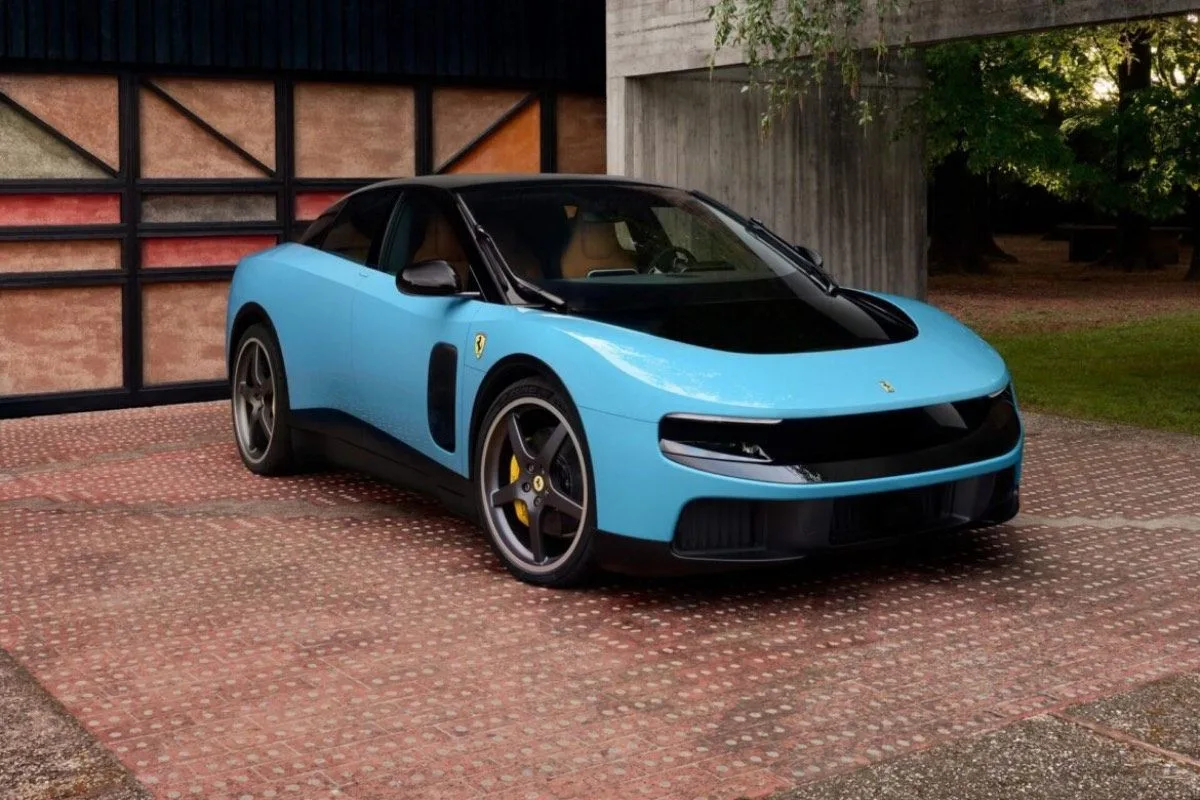
The automotive world stopped turning for a few hours this week when Ferrari unveiled the Luce. This all-electric four-door vehicle has sent investors running for the hills. Despite the glitz of a Roman launch party featuring Formula 1 icons Lewis Hamilton and Charles Leclerc, the markets weren't impressed. By the time the dust settled on the trading floor, the company’s market valuation had shrunk by roughly R85 billion to R100 billion. This wiped out between 4 and 5 billion euros in value.
At a starting price of 550 000 euros—that’s north of R10.5 million before you even clear customs or pay a single cent in local luxury taxes—the Luce is designed to be a status symbol for the ultra-wealthy. The engineering team leaned heavily on the expertise of Jony Ive, the man who spent years shaping the sleek, minimalist look of Apple’s iPhones and iMacs. He was tasked with bringing a touch of modern tech-giant elegance to a brand that has spent decades perfecting the raw, mechanical scream of a combustion engine.
We risk destroying a legend, and I’m truly sorry about that. I hope they at least remove the prancing horse from that car.
That biting assessment came from Luca di Montezemolo, the 78-year-old former Ferrari president who clearly hasn't lost his taste for drama. His comments, published across the Italian media, hit the brand where it hurts most: its identity. He even went as far as mocking the aesthetics, suggesting the vehicle was so unconventional that it wasn't even a design the Chinese would bother to knock off. For a brand defined by the sound of V12 engines and the prestige of Italian racing history, being told you’ve produced a car that lacks the ‘prancing horse’ spirit is a massive PR headache.
Ferrari CEO Benedetto Vigna has been playing the role of the calm captain in a storm. He’s telling anyone who will listen that he isn't losing sleep over the negative headlines. Vigna insists that the Luce wasn't a sudden impulse. It’s a project backed by meticulous financial modeling meant to ensure long-term profitability. He’s betting that the shift to battery power won't just keep the brand afloat in a world of tightening emissions laws, but will eventually set the standard for high-end luxury EVs.
The share price plummeted between 6% and 8% in a single day of trading following the reveal. The vehicle marks a departure from the company's traditional ICE, or internal-combustion-engine, heritage. Ferrari is currently among the F1 manufacturers pushing back against proposals to simplify engine regulations for the 2027 season. Jony Ive’s involvement signifies a deeper shift toward integrating Silicon Valley design philosophy into Italian performance engineering. The R10.5 million price tag positions the car specifically for a global niche of collectors who prioritize brand pedigree over powertrain tradition.
This isn't just about a new car; it’s about a company trying to survive the inevitable end of the petrol era without alienating the base that made them an icon. While enthusiasts are crying foul over the loss of the engine note, the reality is that the European market is rapidly moving toward mandatory electric adoption. Vigna’s defense suggests the company knows they can't live on the past forever, even if the present is currently costing them billions in share value. The company has risked its reputation to secure its future in a carbon-neutral market, and shareholders are now waiting to see if this bet pays off.