

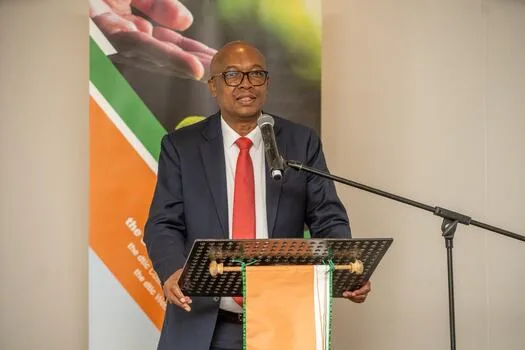
South African exports are officially under pressure, and it isn't because of weak demand. The European Union’s new Carbon Border Adjustment Mechanism (CBAM) is now forcing local manufacturers to pay a premium for the carbon footprint embedded in their goods. If your factory runs on coal-heavy power, that final price tag on your steel or cars heading to Europe is going to spike. Minister of Trade, Industry and Competition, Parks Tau, laid out this reality during a stakeholder meeting at the Southern Sun Cullinan in Cape Town this week.
Tau, who took to the podium right after tabling his 2026 Budget Vote, didn’t mince words. He noted that while the country volunteered its own path toward a greener future, the reality of trade policy is far less friendly. The EU and the UK are essentially using these policy instruments to protect their own markets, and they don't appreciate being told it feels like a forced hand. For our local captains of industry, this isn't just about environmental responsibility anymore; it's a cold, hard matter of whether their products remain competitively priced on the global stage.
"The automotive industry, steel and others will be impacted if we haven't produced these in low-carbon-intensity factories. So if our production line and our industrial network aren't decarbonised, they place an extra premium on what you export into those markets based on your energy production and the way in which you transfer it."
The reach of this tax goes beyond just the factory floor. It follows the product all the way to the docks. If you load your goods onto a truck, a train, or a ship powered by fossil fuels, the carbon output of that entire logistical chain gets calculated into the tax. It’s an exhausting level of scrutiny. It could leave South African goods sitting in the warehouse if producers don't adapt their energy sources fast enough.
Nyakallo Dlambulo, the department's director of ferrous metals, shared the stage in Johannesburg to explain that this transition is now the price of entry into the global economy. She noted that South Africa is currently working on a steel value chain roadmap that covers everything from local technological upgrades to demand-side interventions. This roadmap balances keeping our workers employed with meeting global climate standards that weren't designed with a developing economy like ours in mind.
Government planners are now pointing to potential silver linings. There is talk of leaning heavily into green hydrogen, renewable energy components, and a more circular economy where waste is reused rather than dumped. The goal is to move from being an exporter of carbon-heavy materials to being a leader in green industrial technology. It sounds like a lekker plan on paper. However, turning a coal-dependent industrial base into a clean-energy powerhouse requires massive investment that the state currently struggles to fund alone.
This climate-trade squeeze forces our biggest industries to innovate or face obsolescence. For a country dealing with high unemployment, the stakes are massive. If the steel sector fails to pivot, we aren't just talking about lost tax revenue. We are talking about thousands of jobs vanishing into thin air. The transition pathways being discussed involve energy efficiency targets that the industry has already begun to map out, but the pace isn't yet where it needs to be to satisfy European regulators.