

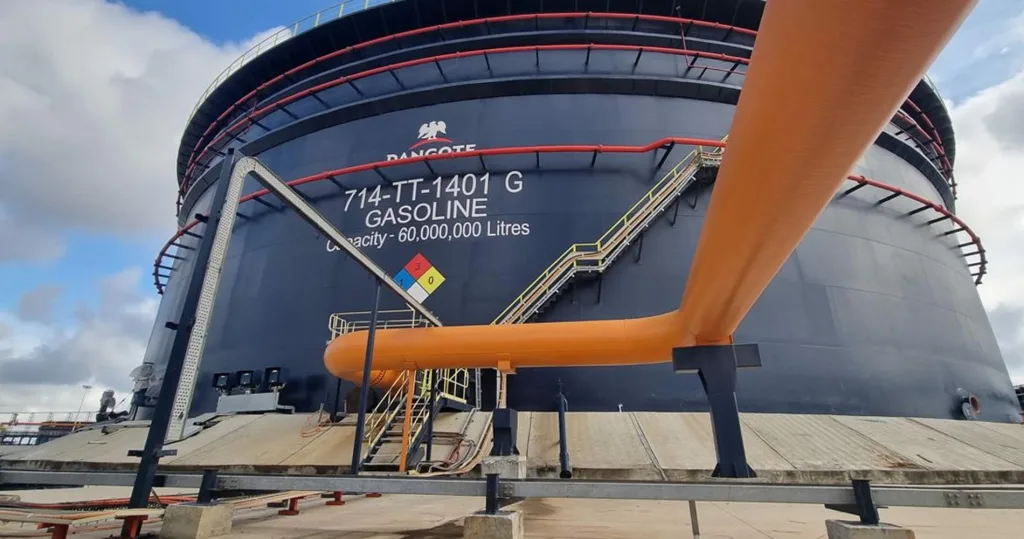
A Federal High Court in Lagos has stepped in, granting Dangote Petroleum Refinery a reprieve against the Nigerian Midstream and Downstream Petroleum Regulatory Authority (NMDPRA). Justice Akintayo Aluko issued an order on Monday, August 31, 2026, stopping the NMDPRA from shutting down the refinery or interfering with its operations. The regulatory body had previously attempted to suspend all product loading and truck-out activities from the refinery. This move by the court effectively halts any immediate action by the NMDPRA based on its August 24, 2026 directive, pending a further hearing on the matter.
Dangote Refinery, represented by lawyers led by Olawale Akoni, SAN, had approached the court seeking to prevent the NMDPRA from enforcing its directive. They argued that the NMDPRA lacks the legal authority to exercise regulatory or oversight functions over operations within the designated free zones, including the Dangote Industrial Free Zone where the refinery is located. The application for the interim injunction was supported by a detailed 42-paragraph affidavit sworn to by Wale Aroge, along with documentary evidence.
In his ruling, Justice Aluko noted that the court's intervention was necessary to preserve the subject matter of the litigation. He specifically referenced a letter from the Attorney-General of the Federation dated March 2, 2026, which he stated clearly indicated the NMDPRA's lack of entitlement to exercise regulatory powers over operations within free zones. The judge found that the depositions in the affidavit, particularly concerning the urgency of the situation and the potential for irreparable harm, met the conditions for granting an interim injunction. The refinery has also provided an undertaking to indemnify the NMDPRA in damages should the court later find that the order was wrongly granted.
The dispute centres on regulatory jurisdiction. The NMDPRA, established to regulate, monitor, and supervise operations in the midstream and downstream petroleum value chain, appears to be asserting its authority over the Dangote Refinery. However, the refinery's argument, supported by the Attorney-General's letter, suggests that its location within the Lekki Free Zone might place it outside the NMDPRA's direct purview for certain operational aspects. This legal battle highlights potential clashes over the scope of regulatory powers when large industrial projects are situated in special economic zones designed to offer incentives and streamlined operations.
The refinery, a massive project with a stated capacity of 650,000 barrels per day, is a significant player in Nigeria's quest for energy self-sufficiency and a major boost to the nation's refining capabilities. Its operational stability is crucial for the downstream sector and the broader economy, impacting fuel availability and foreign exchange savings. Any shutdown or disruption could have far-reaching consequences, affecting product supply chains and market dynamics.
The court has adjourned the case to September 9, 2026, for the hearing of the motion on notice, where both parties will likely present their full arguments. Until then, the operations at the Dangote Petroleum Refinery are expected to continue unhindered by the NMDPRA's regulatory actions, as per the court's order.