

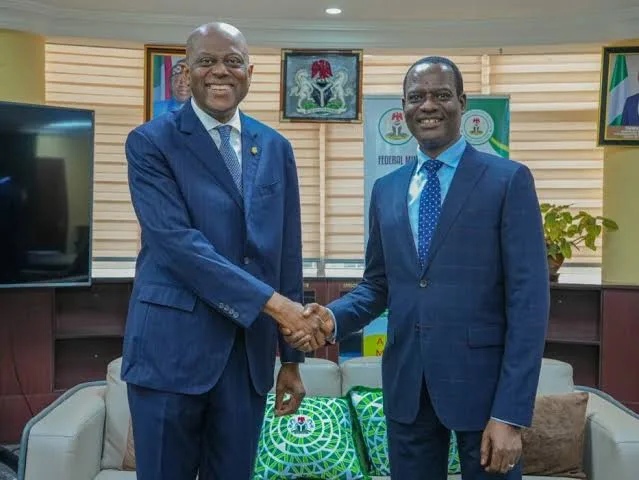
The Central Bank of Nigeria (CBN) and the Federal Ministry of Finance have officially inked a Memorandum of Understanding (MOU) aimed at coordinating monetary and fiscal policies. This handshake, signed this morning at the CBN headquarters in Abuja by Governor Olayemi Cardoso and Minister of Finance Taiwo Oyedele, is designed to forge a stronger partnership for better economic management and lasting stability.
Governor Cardoso highlighted that this isn't a new relationship, but a formalisation of decades of collaboration. He explained that while fiscal policy uses government spending, taxation, and borrowing to influence the economy, monetary policy tackles price stability and financial health through managing money supply, interest rates, and liquidity. The real power, he said, comes when these two work together. Their combined impact is much greater than the sum of their parts.
"This Memorandum provides a structured framework for regular consultation, information exchange and policy coordination."
This MOU moves their relationship from one based on individual discretion to one anchored by clear processes and institutional commitment. This means more structured consultations, better information sharing, and coordinated policies in areas like government cash management, debt issuance planning, and forecasting. Cardoso stressed that this structured approach will improve decision-making quality and reduce uncertainty. This will make Nigeria better equipped to handle economic challenges. The timing is also key.
The CBN is transitioning to an inflation targeting framework, a strategy that globally thrives on a supportive fiscal environment.
Minister Oyedele chimed in, emphasizing that while both institutions need to maintain their independence, they must also work closely together since they serve the same economy. He pointed out how interconnected their actions are. Government borrowing affects liquidity and interest rates. Monetary policy impacts the government's financing costs. Similarly, tariffs and exchange rates influence prices and government revenue, just as spending directly affects demand.
This MOU essentially institutionalizes this vital coordination. Oyedele noted that mechanisms like the Economic Management Team and the National Economic Council already exist. The CBN Act itself provides for the bank's autonomy while also allowing for ministry representation. However, this agreement makes these links more deliberate. It aims for better information sharing, aligned macroeconomic assumptions, and clearer ways to resolve any policy conflicts.
Both Cardoso and Oyedele signed the document. This officially cements a commitment to align their actions, minimise policy trade-offs, and pursue shared national goals for a more stable, resilient, and productive economy. This economy can deliver broad-based prosperity for all Nigerians.