

The single sharpest fact in one or two punchy sentences. Who did what, where, when, and why it matters. Not a summary of everything — the one thing that makes someone stop scrolling. A reader who only reads this paragraph must understand what happened.
A NASA telescope called Swift Observatory is in danger of crashing back to Earth, and a rescue mission is underway to save it. Launched in 2004, Swift is sinking faster than ever because of recent solar storms. This makes it a critical priority for NASA to capture the telescope and boost its orbit so it can continue tracking some of the biggest explosions in the universe. NASA is paying $30 million for Katalyst Space Technologies to carry out the rescue mission. The company is working with Northrop Grumman to launch a three-armed spacecraft called Link into orbit.
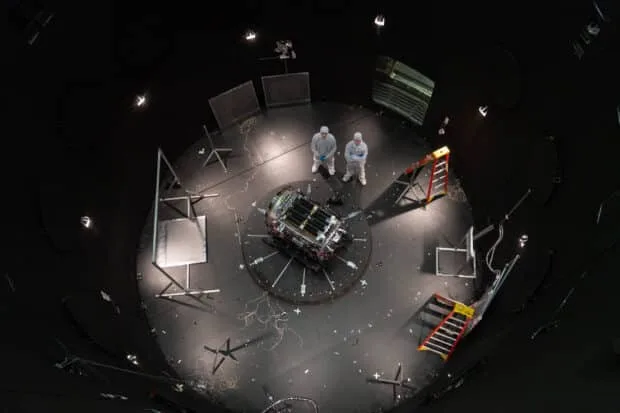
Katalyst Space Technologies is a private aerospace company based in the United States, and it has been working with NASA for several years on various projects. Northrop Grumman, on the other hand, is a major defence contractor that has been involved in numerous space-related projects. The Link spacecraft, which is being launched by Northrop Grumman, is a state-of-the-art spacecraft designed specifically for this mission. It will reach the Swift Observatory in about a month and capture the telescope using a specialized robotic arm.
The rescue mission is a complex and challenging operation that requires precise navigation and a high degree of technical expertise. The Swift Observatory is a vital tool for scientists studying cosmic explosions, and its loss would be a major setback for the space science community. NASA has chosen to pay $30 million for Katalyst Space Technologies to carry out the rescue mission, which is a significant investment in the face of a potentially catastrophic loss. The company's expertise and experience make it an ideal partner for this project.
The Link spacecraft is equipped with advanced communication systems and navigation tools that will enable it to accurately locate and capture the Swift Observatory. It will also have to withstand the extreme conditions of space, including intense heat and radiation. Northrop Grumman has designed the spacecraft to meet the demanding requirements of this mission, and the team at Katalyst Space Technologies is confident in their ability to succeed. The success of the rescue mission will depend on the precise execution of a complex sequence of events, and the stakes are high.
The NASA-orchestrated rescue mission is a high-stakes operation that has far-reaching implications for the space science community. The Swift Observatory is a unique and valuable instrument that has made significant contributions to our understanding of the universe. Its loss would be a major setback for the scientific community, and the rescue mission is a testament to the ingenuity and expertise of the space industry.
Key Facts
- NASA is paying $30 million for Katalyst Space Technologies to carry out the rescue mission.
- The Swift Observatory was launched in 2004 and is currently sinking faster than ever due to recent solar storms.
- The Link spacecraft will capture the Swift Observatory using a specialized robotic arm.
- The rescue mission requires precise navigation and a high degree of technical expertise.
- The Link spacecraft is equipped with advanced communication systems and navigation tools.