

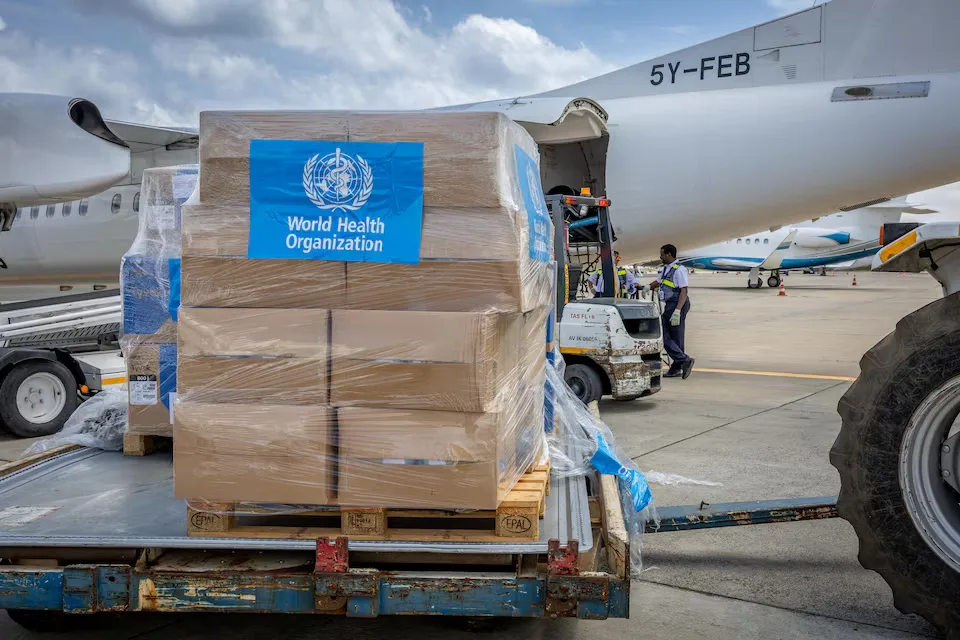
A Kenyan court has suspended a US plan to set up an Ebola quarantine facility in Kenya, citing grave constitutional concerns. The court's order comes after a lawsuit filed by the Katiba Institute, a legal advocacy group, arguing that the quarantine plan could endanger public health.
Kenya's High Court Judge Patricia Nyaundi made the decision on Thursday, ordering the government to suspend admitting anyone exposed to or infected by Ebola under the planned agreement until the lawsuit was resolved. The US plan, which was set to become operational on Friday, aimed to offer quarantine services to over 50 Americans exposed to the virus who still showed no symptoms.
The U.S. Public Health Service, a uniformed branch of the Department of Health and Human Services, was set to staff the facility, which had already seen more than 30 trained members leave for Kenya on Wednesday night.
More than 1,000 suspected and confirmed cases of Ebola have been reported in the Democratic Republic of Congo, with 246 deaths, according to the World Health Organization. Health experts warn that the real number of cases and deaths is likely much higher due to late detection and difficulties tracing contacts in the conflict-ridden eastern DRC region.
Kenya's main medical union has threatened to initiate industrial action unless the terms of the agreement with the U.S. government are released within 48 hours. The Katiba Institute legal advocacy group has argued that the quarantine plan raises grave constitutional concerns regarding public health, life, fair administrative action, public participation, and parliamentary oversight.
The Trump administration has said it "cannot and will not allow" any cases of Ebola to enter the United States. Unlike during the 2014-2016 Ebola outbreak in West Africa, several infected U.S. nationals were treated on U.S. soil. The U.S. State Department has committed $13.5 million toward Kenya's Ebola preparedness efforts.
In a statement, the U.S. State Department said, "The United States is committed to supporting Kenya's efforts to prevent and respond to the Ebola outbreak."
A U.S. citizen who was treating patients in the DRC as a medical missionary was confirmed to have contracted Ebola and moved to Germany for treatment along with five others who were exposed. Another seventh person was taken to the Czech Republic for treatment.
The Kenyan government had provided written approval for the plan on Thursday, but the government made no public comments on the matter. The planned facility was set to be open to all nationalities, not just U.S. citizens, but it's unclear if that will still be the case.
Key Facts
- 1,000 suspected and confirmed cases of Ebola have been reported in the DRC.
- 246 deaths have been reported by the WHO.
- The U.S. State Department has committed $13.5 million toward Kenya's Ebola preparedness efforts.
- Over 30 U.S. Public Health Service members, trained in Washington, have left for Kenya on Wednesday night.
- Seven people exposed to Ebola in the DRC have been taken to Germany or the Czech Republic for treatment.
- The planned U.S. Ebola quarantine facility is set to become operational on Friday, with a capacity for 50 beds.
- The facility is set to be staffed by the U.S. Public Health Service.
- The Katiba Institute has filed a lawsuit against the U.S. plan to set up an Ebola quarantine facility in Kenya.
The court's decision to suspend the U.S. Ebola quarantine plan is a significant development in the ongoing efforts to contain the outbreak in eastern Democratic Republic of Congo and Uganda. This decision highlights the concerns of Kenyan citizens and civil society groups regarding the handling of the outbreak and the involvement of foreign entities in responding to it.
The U.S. plan to set up an Ebola quarantine facility in Kenya was initially met with resistance from some Kenyan citizens, who expressed fears about the safety and effectiveness of the facility. The lawsuit filed by the Katiba Institute was the latest in a series of challenges to the plan, demonstrating the complexities and challenges involved in responding to the outbreak.
In recent years, Kenya has made significant strides in strengthening its healthcare system and improving its preparedness for infectious disease outbreaks. The country has also strengthened its cooperation with the international community, including the World Health Organization, to improve its ability to respond to outbreaks.
The suspension of the U.S. Ebola quarantine plan is a significant setback for the efforts to contain the outbreak, but it also provides an opportunity for the Kenyan government and civil society groups to re-examine the plan and find alternative solutions that better address the needs of the country and its citizens.
Kenya's main medical union has threatened to initiate industrial action if the terms of the agreement with the U.S. government are not released within 48 hours. The Katiba Institute legal advocacy group has argued that the quarantine plan raises serious constitutional concerns regarding public health, life, fair administrative action, public participation, and parliamentary oversight.
The court's decision is a significant development in the ongoing efforts to contain the outbreak in eastern Democratic Republic of Congo and Uganda. It highlights the concerns of Kenyan citizens and civil society groups regarding the handling of the outbreak and the involvement of foreign entities in responding to it.
Several infected U.S. nationals were treated on U.S. soil during the 2014-2016 Ebola outbreak in West Africa. The U.S. State Department has committed $13.5 million toward Kenya's Ebola preparedness efforts. In addition, a U.S. citizen who was treating patients in the DRC as a medical missionary was confirmed to have contracted Ebola and moved to Germany for treatment along with five others who were exposed.
### Image query: Photo of a Kenyan court hearing or a crowd of protesters
### Image query: Photo of a US Ebola quarantine facility or medical staff
### Image query: Photo of a Kenyan medical worker or a patient in an Ebola treatment center