

The single sharpest fact in one or two punchy sentences. Who did what, where, when, and why it matters. Not a summary of everything — the one thing that makes someone stop scrolling. A reader who only reads this paragraph must understand what happened.
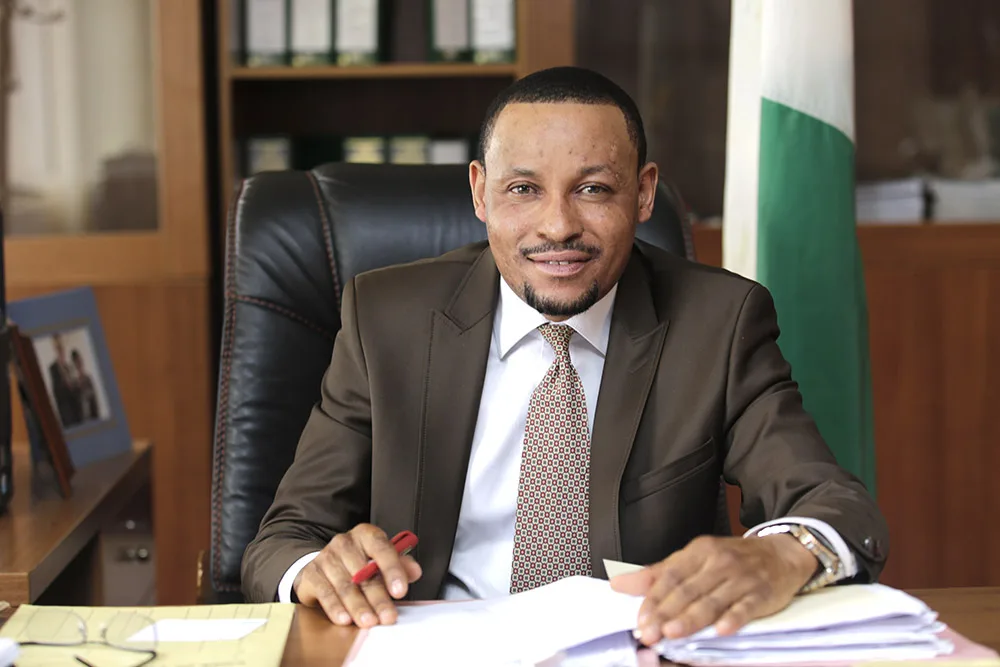
The Economic and Financial Crimes Commission (EFCC) has arraigned the former Chairman of the Code of Conduct Tribunal (CCT), Danladi Umar, on corruption charges.
Justice Peter Kekemeke gave the order after the federal government arraigned the erstwhile CCT boss on four-count corruption charge.
The judge adjourned the case until 15 July 15 for hearing of Mr Umar’s bail application.
But who is Danladi Umar and what are his charges? Danladi Umar, a former Chairman of the Code of Conduct Tribunal (CCT), was appointed by President Muhammadu Buhari in 2015 and has since been involved in several high-profile corruption cases.
The EFCC charged Mr Umar with abuse of office, alleging that in 2021 he used his wife’s bank account to collect N5.5 million from a contractor engaged to paint the headquarters of the CCT in Abuja.
The anti-graft agency further alleged that on 25 January 2024, the defendant also used his wife’s account to collect N6 million from a contractor who handled the digitisation of the CCT’s records.
Also, the defendant was accused of directing another contractor to pay N2.43 million for the tuition fee of his daughter at Baze University, Abuja.
He was said to have committed offences punishable under section 19 of the Corrupt Practices and Other Related Offences Act, 2000.
The Economic and Financial Crimes Commission (EFCC) Counsel, Christopher Mshelia, prayed the court to remand Mr Umar and urged the judge to set a date for the commencement of trial.
However, the Defence Counsel, Sunday Edward, urged the court to release Mr Umar on bail pending the determination of the case.
Justice Kekemeke then adjourned until 15 July for the hearing of the bail application.
In 2015, Mr Umar was appointed Chairman of the CCT by President Muhammadu Buhari, marking a significant change in the leadership of the controversial tribunal.
As Chairman, Mr Umar led the CCT in several high-profile corruption cases against top government officials, including the former Director-General of the National Intelligence Agency (NIA), Ayodele Oke.
However, his appointment was also met with controversy, with many questioning his suitability for the role given his background in politics and his alleged connections to the Peoples Democratic Party (PDP).
In recent years, the CCT has come under criticism for its handling of corruption cases, with many accusing the tribunal of bias and abuse of power.
Mr Umar’s case is the latest in a string of high-profile corruption cases involving top government officials and their associates.
The EFCC has been working tirelessly to investigate and prosecute those involved in these cases, with many successful convictions and recoveries of stolen funds.
But the case against Mr Umar is unique, given his high-profile status and the seriousness of the charges against him.
As the case unfolds, Nigerians are eagerly waiting to see the outcome and what it means for the anti-corruption efforts in the country.
The court’s decision to remand Mr Umar pending his bail application has sparked a heated debate, with many calling for his immediate release and others demanding that he be held accountable for his alleged crimes.
As the case continues, it is clear that the spotlight is on the EFCC and the court to ensure that justice is served and the rule of law is upheld.