

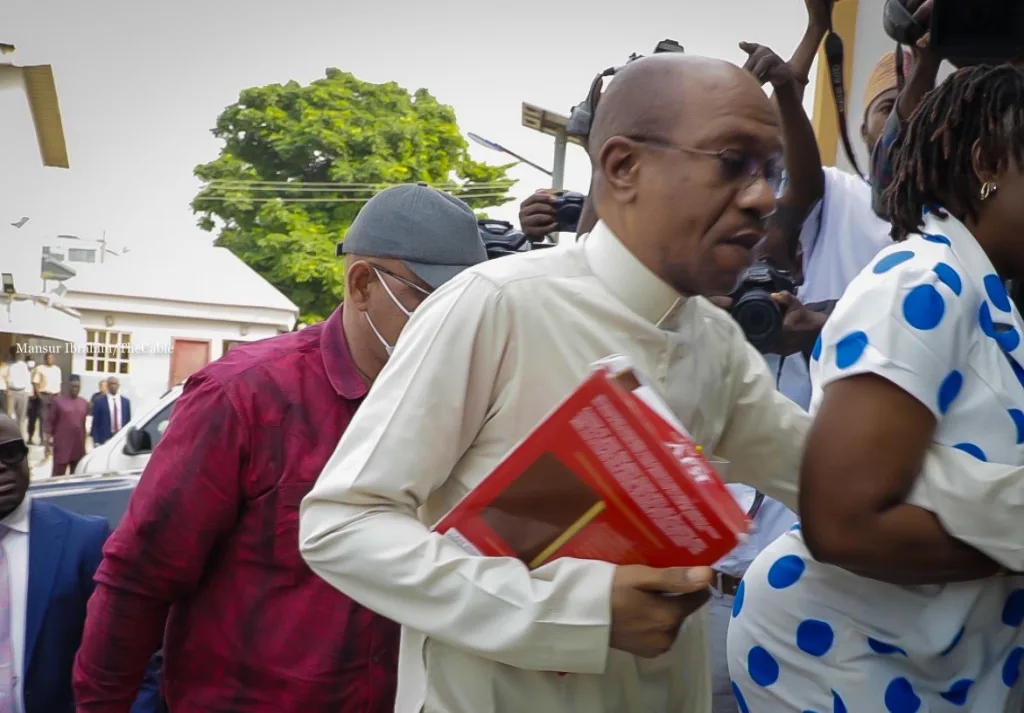
The trial of Godwin Emefiele, a high-profile figure in Nigeria's financial sector, has taken an unexpected turn. On May 11, 2026, the court admitted newspaper publications as evidence in the case. This move has sparked debate about the reliability of such evidence. The witness, who was responsible for certifying the newspapers, testified that they couldn't 100 percent confirm the accuracy of the contents. This raises questions about the weight that should be given to these publications.
The case is being closely watched, and the outcome could have significant implications for the country's financial sector.

The trial is taking place in a Nigerian court, where Emefiele is facing charges related to his actions while in office. The prosecution is seeking to prove that Emefiele engaged in wrongdoing, and the newspaper publications are being used as part of the evidence. However, the defense has raised concerns about the reliability of these publications, arguing that they are not a trustworthy source of information. The court's decision to admit the publications as evidence has added a new layer of complexity to the case.
The witness's testimony highlighted the limitations of using newspaper publications as evidence. They explained that their role was to certify the newspapers, but they couldn't verify the accuracy of the contents. This means that the court will have to carefully consider the weight to be given to these publications. The prosecution will need to demonstrate that the publications are reliable and relevant to the case, while the defense will seek to undermine their credibility.
The case against Emefiele is part of a broader effort to hold public officials accountable for their actions. The Nigerian government has been working to improve transparency and accountability in the financial sector, and this trial is seen as a test of these efforts. The outcome of the case will be closely watched, both in Nigeria and internationally, as it could have significant implications for the country's reputation and its ability to attract investment.

Key Facts
- The court admitted newspaper publications as evidence in Emefiele's trial on May 11, 2026.
- The witness testified that they can only certify the newspapers, not verify the contents.
- Emefiele is facing charges related to his actions while in office.
- The prosecution is seeking to prove that Emefiele engaged in wrongdoing.
- The defense has raised concerns about the reliability of the newspaper publications.
- The case is being closely watched due to its potential impact on Nigeria's financial sector.
- The Nigerian government has been working to improve transparency and accountability in the financial sector.
Background on Emefiele
Godwin Emefiele is a well-known figure in Nigeria's financial sector. He has held several high-profile positions, including governor of the Central Bank of Nigeria. Emefiele's career has been marked by controversy, with some praising his efforts to stabilize the economy and others criticizing his handling of key issues. The trial is the latest development in a long and complex saga that has seen Emefiele face numerous challenges and criticisms.
Emefiele's background is in economics and finance, and he has worked in the financial sector for many years. He has been credited with implementing policies that have helped to stabilize the Nigerian economy, but he has also faced criticism for his handling of certain issues. The trial is a significant test of Emefiele's reputation and could have far-reaching implications for his future in the financial sector.
The Nigerian financial sector is a complex and challenging environment, with many different stakeholders and interests at play. Emefiele's trial is just one part of a larger story that involves the government, the central bank, and the private sector. The outcome of the case will be closely watched by all of these stakeholders, as it could have significant implications for the future of the financial sector.
The Role of the Witness
The witness who testified in the case played a crucial role in the proceedings. Their testimony highlighted the limitations of using newspaper publications as evidence and raised questions about the reliability of these publications. The witness explained that their role was to certify the newspapers, but they couldn't verify the accuracy of the contents. This testimony was significant, as it underscored the challenges of using newspaper publications as evidence in a court of law.
The witness's testimony was also notable for its honesty and candor. They acknowledged the limitations of their role and the potential flaws in the evidence. This kind of testimony is essential in a trial, as it helps to ensure that the court has a clear understanding of the evidence and its limitations. The witness's testimony will be carefully considered by the court as it weighs the evidence and reaches a verdict.
The use of witnesses in trials is a critical aspect of the judicial process. Witnesses provide firsthand testimony and help to establish the facts of a case. In Emefiele's trial, the witness's testimony has added a new layer of complexity to the proceedings. The court will need to carefully evaluate the witness's testimony and consider its implications for the case.
The Implications of the Trial
The trial of Emefiele has significant implications for the Nigerian financial sector. The outcome of the case could have far-reaching consequences for the sector, including the potential for reforms and changes to the way that the sector is regulated. The trial is also a test of the country's judicial system, as it seeks to hold public officials accountable for their actions.
The Nigerian government has been working to improve transparency and accountability in the financial sector, and the trial is an important part of these efforts. The government has implemented several reforms aimed at strengthening the sector and reducing the risk of corruption. The trial is a key aspect of these efforts, as it seeks to hold Emefiele accountable for his actions while in office.
The international community is also watching the trial closely. Nigeria is a significant player in the global economy, and the outcome of the case could have implications for the country's reputation and its ability to attract investment. The trial is a test of the country's commitment to transparency and accountability, and the outcome will be closely watched by investors and other stakeholders.
The Defense's Strategy
The defense team in Emefiele's trial is working to undermine the credibility of the evidence presented against their client. They have raised concerns about the reliability of the newspaper publications and have questioned the witness's testimony. The defense is seeking to create doubt about the prosecution's case and to raise questions about the fairness of the trial.
The defense team is led by experienced lawyers who have a deep understanding of the Nigerian judicial system. They are using a range of strategies to defend Emefiele, including challenging the evidence and questioning the witness's testimony. The defense is also seeking to raise questions about the prosecution's motives and to create doubt about the fairness of the trial.
The defense team is doing everything in its power to defend Emefiele and to ensure that he receives a fair trial. As one of the lawyers noted, "We are committed to defending our client and to ensuring that justice is served." The defense team is working tirelessly to prepare for the next stage of the trial, and they are confident that they can create doubt about the prosecution's case.
The Road Ahead
The trial of Emefiele is far from over, and the road ahead will be challenging for all parties involved. The court will need to carefully consider the evidence and weigh the arguments presented by both sides. The prosecution will need to demonstrate that Emefiele is guilty beyond a reasonable doubt, while the defense will seek to create doubt about the prosecution's case.
The outcome of the trial is uncertain, and it is difficult to predict what the court will decide. However, one thing is clear: the trial will have significant implications for the Nigerian financial sector and for the country's reputation. The trial is a test of the country's commitment to transparency and accountability, and the outcome will be closely watched by investors and other stakeholders.
The Nigerian government is watching the trial closely, as it seeks to demonstrate its commitment to transparency and accountability. The government has implemented several reforms aimed at strengthening the financial sector and reducing the risk of corruption. The trial is an important part of these efforts, as it seeks to hold Emefiele accountable for his actions while in office. The outcome of the case will be a significant test of the government's efforts to improve transparency and accountability in the financial sector.