

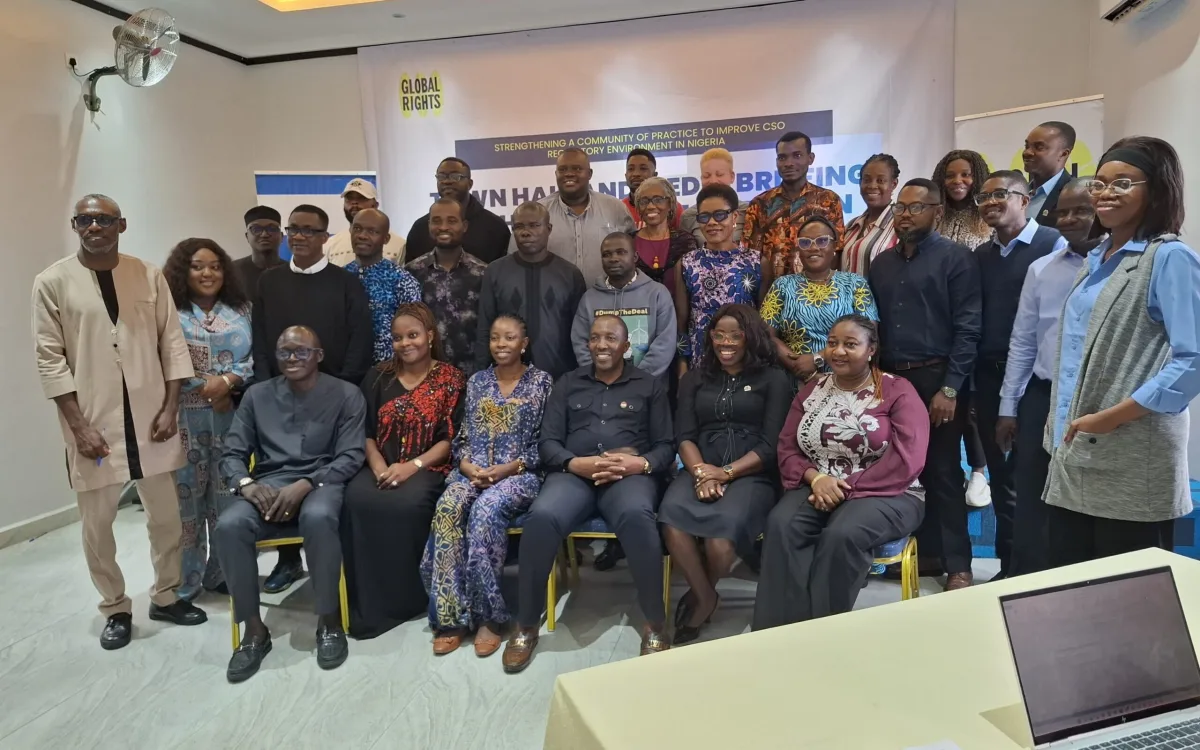
Stakeholders Review Proposed Legislation
The Community of Practice on Civic Space Strengthening, supported by Global Rights, held a town hall meeting on the draft Civil Society Organisation Registration Bill 2026 in Uyo on July 9. The meeting brought together civil society leaders, governance stakeholders, and media practitioners to review the proposed legislation.
According to a communiqué issued at the end of the meeting, stakeholders argued that the absence of a harmonised registration framework has subjected organisations to repeated registration processes and administrative charges across ministries, departments, and agencies, increasing operational costs and bureaucratic bottlenecks.
### Proposed Harmonised Registration Framework
The stakeholders proposed that the Akwa Ibom State CSO Registry should be domiciled under the Ministry of Humanitarian Affairs and serve as the sole entry point for registering civil society organisations in the state. They argued that this arrangement would abolish parallel registration systems and duplicate levies currently imposed by different government institutions.
### Digitising Registration and Document Exchange
The stakeholders also endorsed provisions in the draft bill requiring an online registration and directory system. They argued that digitising registration and document exchange would reduce opportunities for extortion and unnecessary delays associated with manual processes. They said the digital platform should comply with Nigeria's data protection laws and remain a permanent feature of the proposed legal framework to promote transparency and accountability.
### Call for Independence of Registry Board
The participants also urged lawmakers to retain provisions guaranteeing the independence of the proposed five-member registry board. They recommended that civil society organisations should independently nominate three of the five members while all board members should have equal voting rights to prevent political interference in the administration of the registry.
### Implementation of Harmonised Framework
Recognising that the bill could face delays before receiving gubernatorial assent, the stakeholders proposed that the Akwa Ibom Head of Service issue an administrative circular to begin implementing the harmonised registration framework pending the passage of the legislation. They described this measure as an interim safeguard to prevent further delays in reforming the state's regulatory environment for civil society organisations.
### Advocacy for Speedy Passage of Bill
The stakeholders also appealed to the media to sustain advocacy for the speedy passage of the bill by the Akwa Ibom State House of Assembly. They stressed that although the European Union-funded project supporting the initiative ends on July 13, efforts to reform the state's civic regulatory framework should continue beyond the project's lifespan.
### Key Facts
- The proposed Civil Society Organisation Registration Bill 2026 seeks to harmonise the registration framework for civil society organisations in Akwa Ibom State.
- The bill recommends the establishment of a sole entry point for registering civil society organisations under the Ministry of Humanitarian Affairs.
- The stakeholders proposed that the bill should be digitised to reduce opportunities for extortion and unnecessary delays associated with manual processes.
- The proposed registry board should be independent, with civil society organisations independently nominating three of the five members.
- The Akwa Ibom Head of Service is proposed to issue an administrative circular to begin implementing the harmonised registration framework pending the passage of the bill.
### Context
The proposed legislation is part of ongoing efforts to strengthen the civic space in Nigeria, which has been hampered by bureaucratic bottlenecks and multiple registration requirements. The move is seen as a significant step towards promoting transparency and accountability in the governance of civil society organisations in the state.
### Quote
“A fragmented regime has for too long taxed civil society’s time, resources, and goodwill.”
— Communiqué on the draft Civil Society Organisation Registration Bill 2026