

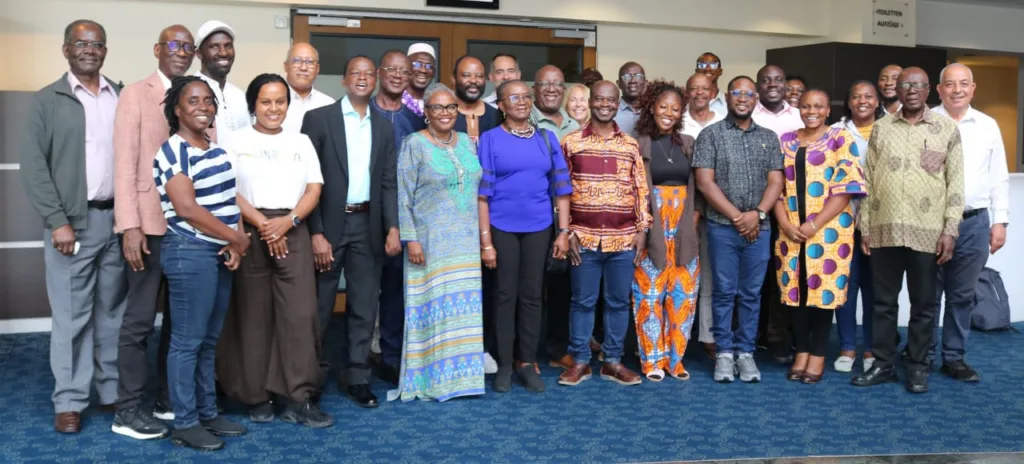
Africa's climate negotiators have reaffirmed their commitment to placing health at the centre of global climate negotiations, recognising climate change as a growing public health emergency. This was stated by Nana Dr Antwi-Boasiako Amoah, Chair of the African Group of Negotiators on Climate Change, during a Climate and Health Capacity Building Workshop convened in Bonn, Germany.
Nana Dr Amoah emphasized that climate and health are inseparable realities for Africa. He noted that rising temperatures, recurrent floods and droughts, food insecurity, malnutrition, air pollution, and changing disease patterns are placing unprecedented strain on health systems and communities across the continent. Climate change is, therefore, a major public health threat, and Africa is on the front lines.
The workshop builds on the momentum generated by the launch of the first-ever African Negotiators Climate and Health Curriculum developed by Amref Health Africa and launched in Dar es Salaam last year. Since then, evidence of climate-related health impacts has continued to mount, with climate-sensitive diseases expanding into new regions and extreme weather events damaging critical health infrastructure, Dr Amoah said. This has led to significant increases in respiratory problems, heat stress, and waterborne diseases, causing immense suffering for millions of Africans.
Climate finance remains a top priority for the continent, and the AGN Chair noted that despite escalating climate-related health risks, the health sector continues to receive only a fraction of the adaptation finance required. Developed countries are expected to deliver on their climate finance commitments and ensure that health considerations are reflected within broader discussions on loss and damage, given the significant social and economic costs associated with climate-related health impacts. The current gap in health financing is staggering, with the health sector requiring billions of dollars in additional funding to address the pressing health needs of African countries.
The workshop highlighted the critical role of young negotiators and technical experts in ensuring continuity and long-term leadership of Africa's climate and health agenda. Participants agreed that stronger collaboration between AGN, WHO-AFRO, Africa CDC, Amref Health Africa, and other partners will be essential in advancing coordinated African positions ahead of upcoming negotiations. This will enable Africa to present a united front in climate negotiations and push for greater climate justice.
The Climate and Health Capacity Building Workshop, supported by the International Institute for Sustainable Development (IISD), is a major step towards elevating climate and health as a strategic continental priority. Nana Dr Amoah urged negotiators to develop coherent African messages and negotiation strategies to ensure health remains fully integrated into climate policy discussions. This is crucial for Africa's long-term development and the health and well-being of its people.
The workshop also marked a historic opportunity for the continent to shape global climate priorities, including climate and health, ahead of COP31, which is expected to be a strong building block for COP32. The event underscored the urgent need for increased adaptation finance and the importance of context-specific health indicators that reflect the realities and vulnerabilities of African countries. The lack of context-specific health indicators has resulted in climate policies that are often ineffective and do not address the unique health challenges facing African countries.
Key Facts
- The African Group of Negotiators on Climate Change (AGN) has reaffirmed its commitment to placing health at the centre of global climate negotiations.
- The Climate and Health Capacity Building Workshop was convened in Bonn, Germany, ahead of the 64th Session of the UNFCCC Subsidiary Bodies (SB64).
- The workshop was supported by the International Institute for Sustainable Development (IISD) and attended by representatives from key institutions, including the WHO-AFRO, Africa CDC, Amref Health Africa, and the IISD.
- Climate finance remains a top priority for the continent, with the health sector receiving only a fraction of the adaptation finance required.
- The workshop highlighted the critical role of young negotiators and technical experts in ensuring continuity and long-term leadership of Africa's climate and health agenda.