

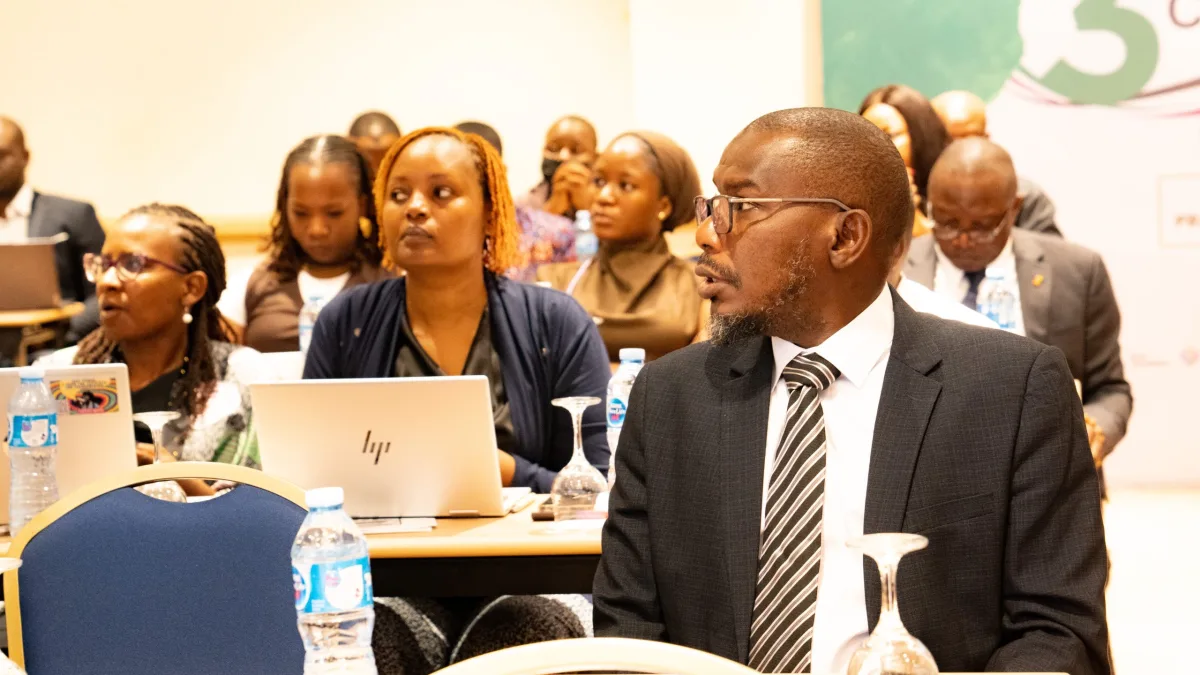
The African civil society community is urging governments and financial regulators to collaborate more closely with them in shaping anti-terrorism financing policies.
African civil society organizations are pressing governments and financial regulators to collaborate more closely with them on anti-terrorism financing policies. This comes at the heels of the recent pre-masterclass hosted by Spaces for Change (S4C) in Abuja, where experts emphasized the need for NGOs to have a seat at the table in order to ensure anti-money laundering and counter-terrorism financing laws effectively tackle illegal networks without inadvertently restricting legitimate humanitarian aid.
Victoria Ibezim-Ohaeri, the Executive Director of Spaces for Change, urged civil society organizations to actively participate in national risk assessments, saying that NGOs have a responsibility to provide data and practical information that can improve policy decisions and prevent unintended restrictions on legitimate organizations. She added that many government officials often misunderstand how international grants work, which leads to exaggerated perceptions about the financial capacity of non-profit organizations and influences regulatory decisions.
Fulco van Deventer, the Deputy Director of Human Security Collective, emphasized that the global approach to civil society had shifted from viewing non-profit organizations as potential risks to recognizing them as critical partners in preventing violent extremism. He cautioned against policies that undermine humanitarian organizations, saying that such policies are not only ineffective but also counterproductive.
Hina Gul Roy, the Programme Coordinator of Community World Service Asia, shared her country's experience with hurried legislative reforms that created significant challenges for civil society organizations. She said that around 1,000 NGOs across Pakistan have obtained the required Memorandum of Understanding (MOU) through help desks established by her organization.
Yona Wonjala, the Civic Advisory Hub from Uganda, said that sustained dialogue with regulators had produced reforms in several African countries, replacing confrontation with constructive engagement on financial crime regulations. He noted that many African countries rushed to pass laws simply to exit the Financial Action Task Force (FATF) grey list, sometimes introducing measures that failed to reflect international standards.
The pre-masterclass served as a curtain-raiser for the upcoming 3rd Africa High-Level Civil Society Conference on AML/CFT, themed “Implementing FATF Recommendation 8 Correctly: Practices, Lessons Learned and Opportunities for Reforms.” The conference examined how African countries can strengthen compliance with international standards while safeguarding civic space and humanitarian activities.
Key Facts
- Around 1,000 NGOs across Pakistan have obtained the required Memorandum of Understanding (MOU) through help desks established by Community World Service Asia.
- The 3rd Africa High-Level Civil Society Conference on AML/CFT will focus on implementing FATF Recommendation 8 correctly to balance security concerns with humanitarian aid.
- The conference aims to strengthen compliance with international standards while safeguarding civic space and humanitarian activities.
- Many African countries rushed to pass laws simply to exit the Financial Action Task Force (FATF) grey list, sometimes introducing measures that failed to reflect international standards.
- Victoria Ibezim-Ohaeri, Executive Director of Spaces for Change, urged civil society organizations to actively participate in national risk assessments to prevent unintended restrictions on legitimate organizations.